Committee sends SB 523 to study commission after builders press for statewide registration
April 22, 2026 | Housing, House of Representatives, Committees , Legislative, New Hampshire
This article was created by AI summarizing key points discussed. AI makes mistakes, so for full details and context, please refer to the video of the full meeting. Please report any errors so we can fix them. Report an error »
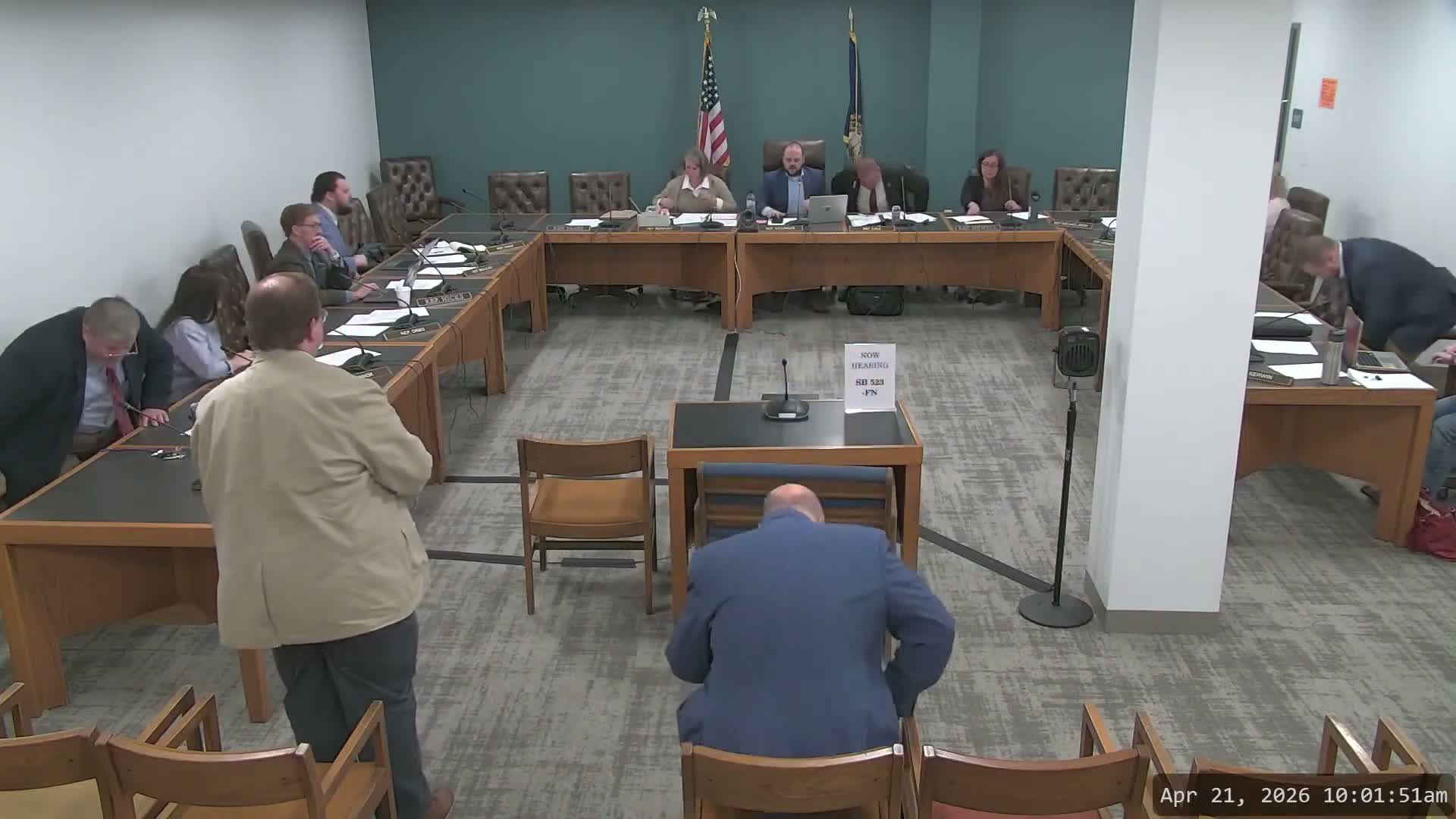
Chairman Alexander opened public testimony on SB 523 and invited Grant Bossi, deputy chief of staff to Senator Ruth Ward, to introduce the bill on Ward’s behalf. Bossi said the measure was prompted by complaints that unscrupulous contractors take deposits and then disappear and asked the committee to study whether a statewide registration could better protect consumers.
Matt Mayberry, chief executive officer of the New Hampshire Home Builders Association, told the committee the industry now wants a way to police itself. “When I joined the Home Builders five years ago, about 90% of my builders said they would fire us if we proposed registration,” Mayberry said. He described frequent consumer complaints, including what he said was a recent prosecution in which a builder stole about $2,500,000 from clients. “This happens often,” Mayberry said, arguing the proposal is registration, not licensing, and would target residential work where fraud typically occurs.
Mayberry outlined key features the association supports: exemptions for jobs under $10,000, exclusion of commercial builders, a two-year registration cycle, an estimated fee of roughly $350 per year, three hours of continuing-education focused on building codes, the requirement that a registrant display a registration number on company vehicles and estimates, and a toll-free consumer hotline. He said enforcement and verification of workers’ compensation made the Department of Labor the preferred administrator rather than the Office of Professional Licensure.
Lawmakers pressed Mayberry on practical issues. Representative Thackston asked whether the proposal would lock small operators out of business and whether it would stop door-to-door fraud. Mayberry replied the exemptions would protect very small jobs and owner-performed work, that towns would check registration at the permit stage, and that a public registry could flag complaints for consumers and officials.
Representative Bollier questioned why government rather than a trade association must act; Mayberry said the existing options (for example, the real estate commission’s authority over licensees) provide more enforceable remedies than voluntary seals of approval, and consumers often must go to the Attorney General rather than a local enforcement body.
In executive session the committee adopted an amendment to SB 523 narrowing the study commission to legislative members while preserving the opportunity for public testimony. The amendment passed 13–1; the final 'ought to pass as amended' motion then passed by roll call, which the chair announced as 14–0. Representative Cole was assigned to write the committee report; the legislation requires the commission to report by Nov. 1, 2026.
The committee placed the bill on the consent calendar. The hearing and the executive-session debate focused on balancing consumer protections against regulatory burden and on whether a study commission or immediate regulation is the appropriate next step.
Matt Mayberry, chief executive officer of the New Hampshire Home Builders Association, told the committee the industry now wants a way to police itself. “When I joined the Home Builders five years ago, about 90% of my builders said they would fire us if we proposed registration,” Mayberry said. He described frequent consumer complaints, including what he said was a recent prosecution in which a builder stole about $2,500,000 from clients. “This happens often,” Mayberry said, arguing the proposal is registration, not licensing, and would target residential work where fraud typically occurs.
Mayberry outlined key features the association supports: exemptions for jobs under $10,000, exclusion of commercial builders, a two-year registration cycle, an estimated fee of roughly $350 per year, three hours of continuing-education focused on building codes, the requirement that a registrant display a registration number on company vehicles and estimates, and a toll-free consumer hotline. He said enforcement and verification of workers’ compensation made the Department of Labor the preferred administrator rather than the Office of Professional Licensure.
Lawmakers pressed Mayberry on practical issues. Representative Thackston asked whether the proposal would lock small operators out of business and whether it would stop door-to-door fraud. Mayberry replied the exemptions would protect very small jobs and owner-performed work, that towns would check registration at the permit stage, and that a public registry could flag complaints for consumers and officials.
Representative Bollier questioned why government rather than a trade association must act; Mayberry said the existing options (for example, the real estate commission’s authority over licensees) provide more enforceable remedies than voluntary seals of approval, and consumers often must go to the Attorney General rather than a local enforcement body.
In executive session the committee adopted an amendment to SB 523 narrowing the study commission to legislative members while preserving the opportunity for public testimony. The amendment passed 13–1; the final 'ought to pass as amended' motion then passed by roll call, which the chair announced as 14–0. Representative Cole was assigned to write the committee report; the legislation requires the commission to report by Nov. 1, 2026.
The committee placed the bill on the consent calendar. The hearing and the executive-session debate focused on balancing consumer protections against regulatory burden and on whether a study commission or immediate regulation is the appropriate next step.
Don't Miss a Word: See the Full Meeting!
Go beyond summaries. Unlock every video, transcript, and key insight with a Founder Membership.
✓
Get instant access to full meeting videos
✓
Search and clip any phrase from complete transcripts
✓
Receive AI-powered summaries & custom alerts
✓
Enjoy lifetime, unrestricted access to government data
30-day money-back guarantee
