Austin residents, advocates press council to pass "Safe to Call" protections for 911 callers
April 23, 2026 | Austin, Travis County, Texas
This article was created by AI summarizing key points discussed. AI makes mistakes, so for full details and context, please refer to the video of the full meeting. Please report any errors so we can fix them. Report an error »
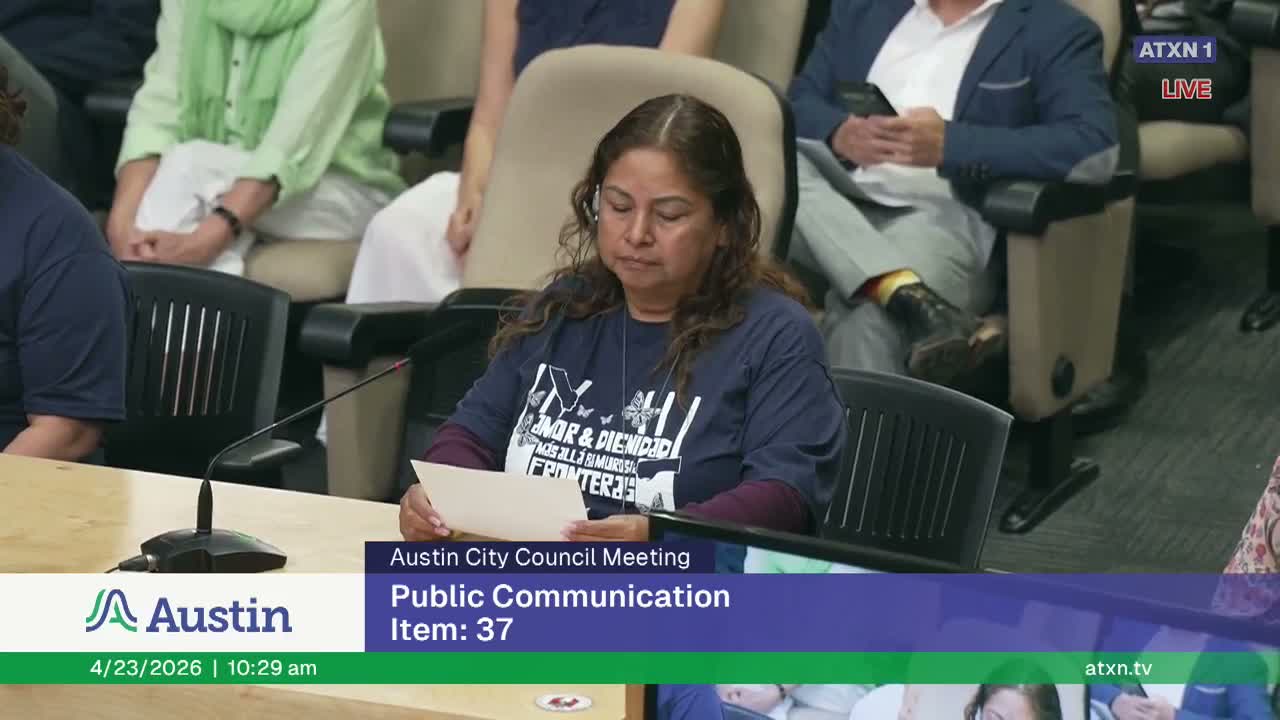
Dozens of residents, service providers and advocates filled the Austin City Council chambers on April 23 to urge passage of a "Safe to Call" resolution they say will make it safer for immigrant families, survivors of violence and people with unpaid class C citations to call 911.
Supporters including Rebecca Leitz of American Gateways, community organizers and people with lived experience described arrest and deportation after routine emergency calls and said those incidents discourage people from seeking help. "We need public safety for people who need help but might be scared to ask," testified Catalina Juarez Mendez, recounting detention and family separation she said followed a traffic stop and ICE involvement. Several speakers referenced the Fourth Amendment and urged the city to shield victims and witnesses from unnecessary immigration enforcement during emergency responses.
The resolution, sponsored by Councilmember Siegel and co‑sponsored by several colleagues, directs a stakeholder process to develop policies on three linked topics: clarifying when officers should refrain from running optional warrant checks on victims and witnesses; exploring alternatives to arrests for class C offenses and reducing outstanding class C warrants; and addressing administrative warrants, including non‑judicial immigration warrants. Mayor Pro Tem Vela described the proposal as a starting point to rebuild trust and said the Austin Police Department has already made some policy clarifications related to administrative ICE warrants.
Opponents during public comment urged caution. Some residents argued limiting warrant checks during emergency calls could put officers and bystanders at increased risk if responding officers arrive without knowledge of a person's violent history. A few speakers said the proposed policies could reduce deterrence and lead to more disorder.
Councilmembers who spoke in favor said they were moved by testimony from survivors and immigrant families. The council recorded several cosponsor additions during debate and directed staff to pursue the stakeholder engagement process described in the resolution. The item drew sustained attention to a practical tradeoff the city faces: protecting vulnerable residents from immigration consequences while preserving officer safety and public accountability. The council also noted the scale of the problem, with repeated references during the meeting to more than 60,000 outstanding class C warrants in Austin.
Next steps: the resolution establishes a stakeholder process; staff and community partners will convene to draft operational policies and return recommendations to the council for any policy changes or formal orders.
Supporters including Rebecca Leitz of American Gateways, community organizers and people with lived experience described arrest and deportation after routine emergency calls and said those incidents discourage people from seeking help. "We need public safety for people who need help but might be scared to ask," testified Catalina Juarez Mendez, recounting detention and family separation she said followed a traffic stop and ICE involvement. Several speakers referenced the Fourth Amendment and urged the city to shield victims and witnesses from unnecessary immigration enforcement during emergency responses.
The resolution, sponsored by Councilmember Siegel and co‑sponsored by several colleagues, directs a stakeholder process to develop policies on three linked topics: clarifying when officers should refrain from running optional warrant checks on victims and witnesses; exploring alternatives to arrests for class C offenses and reducing outstanding class C warrants; and addressing administrative warrants, including non‑judicial immigration warrants. Mayor Pro Tem Vela described the proposal as a starting point to rebuild trust and said the Austin Police Department has already made some policy clarifications related to administrative ICE warrants.
Opponents during public comment urged caution. Some residents argued limiting warrant checks during emergency calls could put officers and bystanders at increased risk if responding officers arrive without knowledge of a person's violent history. A few speakers said the proposed policies could reduce deterrence and lead to more disorder.
Councilmembers who spoke in favor said they were moved by testimony from survivors and immigrant families. The council recorded several cosponsor additions during debate and directed staff to pursue the stakeholder engagement process described in the resolution. The item drew sustained attention to a practical tradeoff the city faces: protecting vulnerable residents from immigration consequences while preserving officer safety and public accountability. The council also noted the scale of the problem, with repeated references during the meeting to more than 60,000 outstanding class C warrants in Austin.
Next steps: the resolution establishes a stakeholder process; staff and community partners will convene to draft operational policies and return recommendations to the council for any policy changes or formal orders.
View the Full Meeting & All Its Details
This article offers just a summary. Unlock complete video, transcripts, and insights as a Founder Member.
✓
Watch full, unedited meeting videos
✓
Search every word spoken in unlimited transcripts
✓
AI summaries & real-time alerts (all government levels)
✓
Permanent access to expanding government content
30-day money-back guarantee
