Committee member urges phased business-license redesign, data collection ahead of FY28 implementation
April 20, 2026 | Norcross City, Gwinnett County, Georgia
This article was created by AI summarizing key points discussed. AI makes mistakes, so for full details and context, please refer to the video of the full meeting. Please report any errors so we can fix them. Report an error »
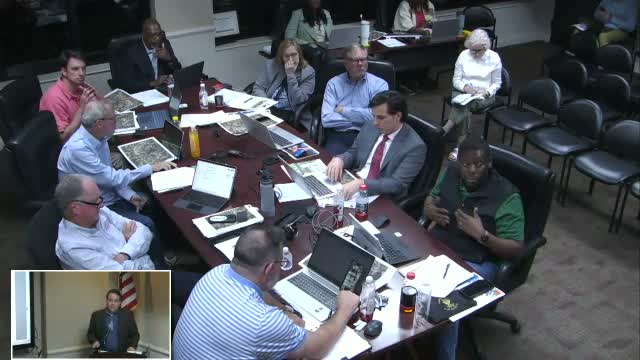
A Committee member outlined a plan to redesign Norcross City’s business-license and tax-class approach, urging officials to collect business contact and revenue data now and phase in new rates to be ready by fiscal year 2028.
The Committee member said the city should avoid presenting 'do nothing' as an automatic loss and called for accurate, historically grounded projections: "I just wanna be as be careful about saying, oh, we're gonna have losses if we do nothing," the Committee member said. They cautioned that some plant-level and other cost assumptions in past proposals "never all pan out."
The official proposed a class-based tax structure tied to existing registries such as the Secretary of State and the IRS rather than area-based distinctions, arguing that using industry or tax classifications would simplify implementation for business owners. "I use sector secretary of state. I think the secretary of state. IRS, everything is based on that," the Committee member said.
To minimize disruption, the Committee member recommended a phased rollout: a modest "phase 1" to include data collection and a limited rate nudge in FY27, with fuller implementation in later phases. They said the city should start collecting information during the FY27 business-license cycle — "we're asking for it now in fiscal year 27. We're not gonna do anything with it until '28" — so officials can communicate changes to roughly "all 1,500 businesses" and be "game ready by FY '28."
The Committee member also tied the discussion to competitive fairness, noting that national retailers sometimes pay lower effective charges than downtown businesses and that targeted tax classes could help local economic development. They suggested the city identify which industries it wants to attract and overlay tax strategy on that target list, with examples from other cities to guide policy.
On implementation logistics, the Committee member urged the city to coordinate with code enforcement, use temporary signage during rollout, and set consistent policy standards for future projects such as trailheads. They distinguished routine home maintenance from new construction, saying fees for new development (for example, ADUs) may need to rise while protecting residents who are maintaining existing homes.
No formal motion, vote, or final decision was recorded in the transcript. The discussion closed with a reiteration that the city should collect baseline data now and plan for deliberate, multi-year implementation.
The Committee member said the city should avoid presenting 'do nothing' as an automatic loss and called for accurate, historically grounded projections: "I just wanna be as be careful about saying, oh, we're gonna have losses if we do nothing," the Committee member said. They cautioned that some plant-level and other cost assumptions in past proposals "never all pan out."
The official proposed a class-based tax structure tied to existing registries such as the Secretary of State and the IRS rather than area-based distinctions, arguing that using industry or tax classifications would simplify implementation for business owners. "I use sector secretary of state. I think the secretary of state. IRS, everything is based on that," the Committee member said.
To minimize disruption, the Committee member recommended a phased rollout: a modest "phase 1" to include data collection and a limited rate nudge in FY27, with fuller implementation in later phases. They said the city should start collecting information during the FY27 business-license cycle — "we're asking for it now in fiscal year 27. We're not gonna do anything with it until '28" — so officials can communicate changes to roughly "all 1,500 businesses" and be "game ready by FY '28."
The Committee member also tied the discussion to competitive fairness, noting that national retailers sometimes pay lower effective charges than downtown businesses and that targeted tax classes could help local economic development. They suggested the city identify which industries it wants to attract and overlay tax strategy on that target list, with examples from other cities to guide policy.
On implementation logistics, the Committee member urged the city to coordinate with code enforcement, use temporary signage during rollout, and set consistent policy standards for future projects such as trailheads. They distinguished routine home maintenance from new construction, saying fees for new development (for example, ADUs) may need to rise while protecting residents who are maintaining existing homes.
No formal motion, vote, or final decision was recorded in the transcript. The discussion closed with a reiteration that the city should collect baseline data now and plan for deliberate, multi-year implementation.
View the Full Meeting & All Its Details
This article offers just a summary. Unlock complete video, transcripts, and insights as a Founder Member.
✓
Watch full, unedited meeting videos
✓
Search every word spoken in unlimited transcripts
✓
AI summaries & real-time alerts (all government levels)
✓
Permanent access to expanding government content
30-day money-back guarantee
