Albany commissioners authorize staff to finalize $2 million term sheet for Look Again bridge loan after contested debate
April 23, 2026 | Albany, Dougherty County, Georgia
This article was created by AI summarizing key points discussed. AI makes mistakes, so for full details and context, please refer to the video of the full meeting. Please report any errors so we can fix them. Report an error »
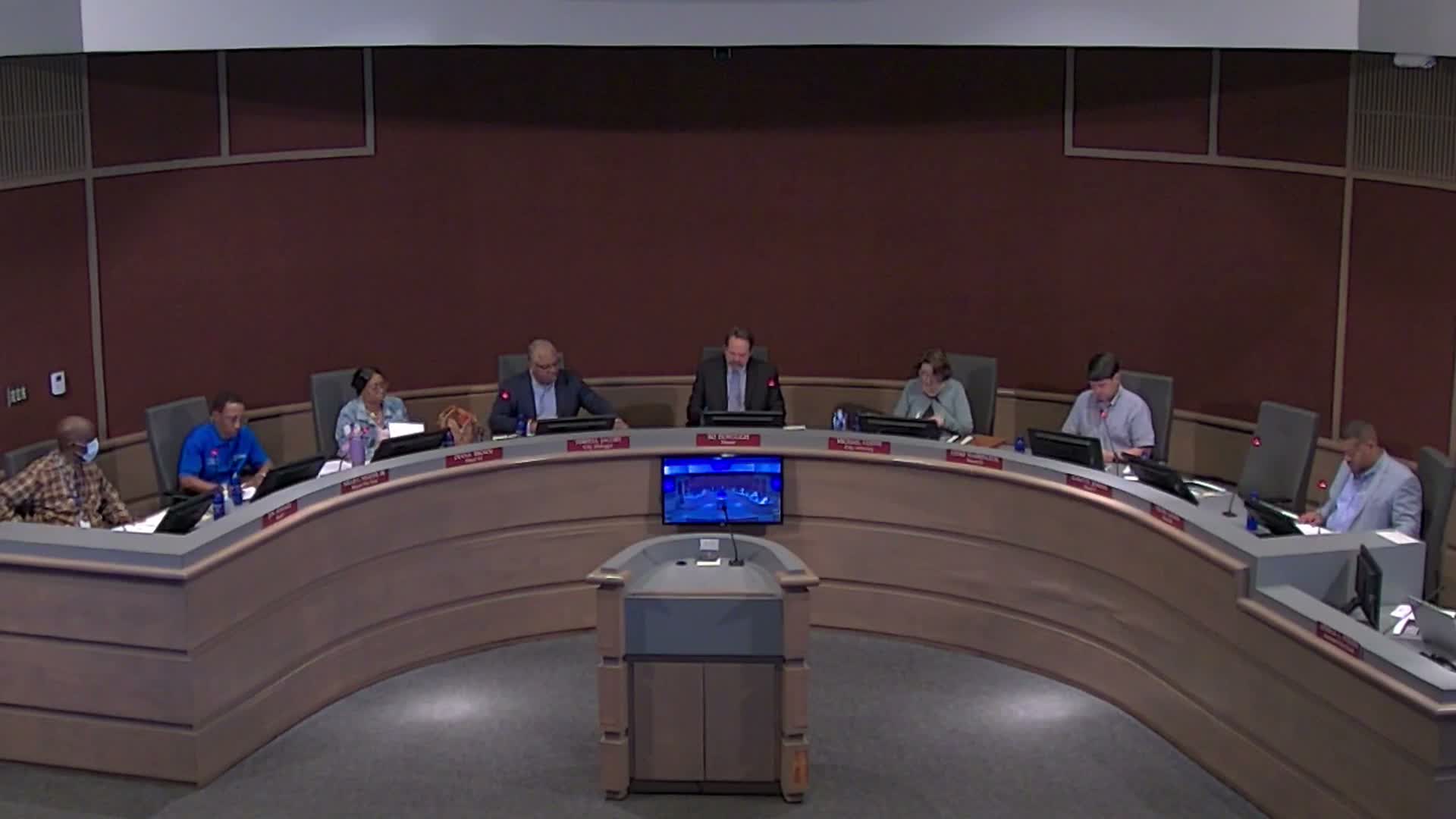
The Albany City Commission on March 10 authorized staff to finalize a term sheet for a short-term bridge loan to Look Again LLC that would provide up-front capital tied to a $2,000,000 financing commitment, after hours of presentations and questioning about appraisals, related-party transactions and required safeguards.
City Manager Terrell Jacobs told commissioners the request arose because developer deadlines and seller financing put two downtown parcels at risk of foreclosure and staff had retained Butler Snow to produce defensible loan documents. Attorney Jamie Gardner, working with staff, described a redevelopment plan for three downtown parcels on North Washington Street that would include upper-floor apartments, a food-court incubator and space for Albany Technical College. Gardner said the proposed bridge funds would be short-term (maximum two years) to allow the developer to complete predevelopment work, apply for tax credits and secure permanent financing.
The legal crux of the debate centered on Georgia’s constitutional "gratuities" clause. Gardner said the transaction involved related parties — Destiny Transportation Group and Look Again LLC — and noted the city’s appraisal valuing two of the parcels at a combined $655,000 versus the borrower’s appraisal at $890,000. Staff proposed splitting the difference and using $772,500 as an acquisition valuation for lending purposes to avoid an appearance of conferring an undue private benefit. "We cannot allow an acquisition cost that exceeds what the reasonable value is," Gardner said, and emphasized that milestone-driven disbursements and contractual safeguards would be included in the term sheet.
Commissioners pressed staff on missing documentation, asking for bank commitment letters, tax-credit certifications and other paperwork before any final approval. Commissioner Diana Brown repeatedly asked that all evidentiary documents — bank commitments, tax-credit approvals and related certification — be placed in the permanent record before the commission advances public funds, citing prior projects that resulted in losses and the city's current fiscal constraints.
Developers and their consultants defended the request. A representative of Look Again said consultants had already provided work without retainers and that the team members would personally guarantee the loan. Attorney Sherman Golden, representing the developer, told the commission his view that a gratuities analysis should weigh the overall public benefit — jobs, sales tax and property revitalization — and that the city’s role in reducing private risk in distressed census tracts is lawful. New market and historic tax credit consultants explained that timely, shovel‑ready projects are more likely to close on awards and that architectural drawings and ownership or control letters are necessary to complete credit applications.
Staff and counsel said the term sheet would tie disbursements to verified milestones — including submission of tax-credit applications, completion of design stages, and invoice-supported draws — and that the DDA (Downtown Development Authority) would hold the first-priority security interest. Gardner said certain fees and acquisition-related payoffs (forbearance satisfaction on the 114 North Washington parcel) could be covered without creating a gratuities violation, while an inflated purchase price paid to a related party would be a legal concern.
A motion was offered on a term sheet consistent with a $2,000,000 bridge loan and to authorize staff to finalize the documents for return to the commission. The motion passed on a roll-call vote with commissioners representing Wards 1, 2, 3 and 5 and the mayor voting yes and the representatives for Wards 4 and 6 voting no. The commission recorded the vote answers (Ward 1: yes; Ward 2: yes; Ward 3: yes; Ward 4: no; Ward 5: yes; Ward 6: no) and directed staff and legal counsel to complete the term sheet and bring final loan documents back for formal approval.
The term sheet discussed sets a maximum bridge term of 24 months, a low interest rate (staff noted a proposed 3% interest rate with interest-only payments during the term and a balloon principal due at maturity or upon earlier permanent financing), and milestone-based disbursement and escrow mechanisms intended to protect the city. Staff and counsel said some loan proceeds would be advanced only upon receipt of third-party invoices or closing statements and that a portion of interest was expected to be capitalized for the first 12 months.
Next steps: staff will complete the term sheet and loan documentation incorporating the milestones and oversight measures discussed and return to the commission for a formal vote on final loan documents and any required resolution or MOU. The commission adjourned following the vote.
City Manager Terrell Jacobs told commissioners the request arose because developer deadlines and seller financing put two downtown parcels at risk of foreclosure and staff had retained Butler Snow to produce defensible loan documents. Attorney Jamie Gardner, working with staff, described a redevelopment plan for three downtown parcels on North Washington Street that would include upper-floor apartments, a food-court incubator and space for Albany Technical College. Gardner said the proposed bridge funds would be short-term (maximum two years) to allow the developer to complete predevelopment work, apply for tax credits and secure permanent financing.
The legal crux of the debate centered on Georgia’s constitutional "gratuities" clause. Gardner said the transaction involved related parties — Destiny Transportation Group and Look Again LLC — and noted the city’s appraisal valuing two of the parcels at a combined $655,000 versus the borrower’s appraisal at $890,000. Staff proposed splitting the difference and using $772,500 as an acquisition valuation for lending purposes to avoid an appearance of conferring an undue private benefit. "We cannot allow an acquisition cost that exceeds what the reasonable value is," Gardner said, and emphasized that milestone-driven disbursements and contractual safeguards would be included in the term sheet.
Commissioners pressed staff on missing documentation, asking for bank commitment letters, tax-credit certifications and other paperwork before any final approval. Commissioner Diana Brown repeatedly asked that all evidentiary documents — bank commitments, tax-credit approvals and related certification — be placed in the permanent record before the commission advances public funds, citing prior projects that resulted in losses and the city's current fiscal constraints.
Developers and their consultants defended the request. A representative of Look Again said consultants had already provided work without retainers and that the team members would personally guarantee the loan. Attorney Sherman Golden, representing the developer, told the commission his view that a gratuities analysis should weigh the overall public benefit — jobs, sales tax and property revitalization — and that the city’s role in reducing private risk in distressed census tracts is lawful. New market and historic tax credit consultants explained that timely, shovel‑ready projects are more likely to close on awards and that architectural drawings and ownership or control letters are necessary to complete credit applications.
Staff and counsel said the term sheet would tie disbursements to verified milestones — including submission of tax-credit applications, completion of design stages, and invoice-supported draws — and that the DDA (Downtown Development Authority) would hold the first-priority security interest. Gardner said certain fees and acquisition-related payoffs (forbearance satisfaction on the 114 North Washington parcel) could be covered without creating a gratuities violation, while an inflated purchase price paid to a related party would be a legal concern.
A motion was offered on a term sheet consistent with a $2,000,000 bridge loan and to authorize staff to finalize the documents for return to the commission. The motion passed on a roll-call vote with commissioners representing Wards 1, 2, 3 and 5 and the mayor voting yes and the representatives for Wards 4 and 6 voting no. The commission recorded the vote answers (Ward 1: yes; Ward 2: yes; Ward 3: yes; Ward 4: no; Ward 5: yes; Ward 6: no) and directed staff and legal counsel to complete the term sheet and bring final loan documents back for formal approval.
The term sheet discussed sets a maximum bridge term of 24 months, a low interest rate (staff noted a proposed 3% interest rate with interest-only payments during the term and a balloon principal due at maturity or upon earlier permanent financing), and milestone-based disbursement and escrow mechanisms intended to protect the city. Staff and counsel said some loan proceeds would be advanced only upon receipt of third-party invoices or closing statements and that a portion of interest was expected to be capitalized for the first 12 months.
Next steps: staff will complete the term sheet and loan documentation incorporating the milestones and oversight measures discussed and return to the commission for a formal vote on final loan documents and any required resolution or MOU. The commission adjourned following the vote.
Don't Miss a Word: See the Full Meeting!
Go beyond summaries. Unlock every video, transcript, and key insight with a Founder Membership.
✓
Get instant access to full meeting videos
✓
Search and clip any phrase from complete transcripts
✓
Receive AI-powered summaries & custom alerts
✓
Enjoy lifetime, unrestricted access to government data
30-day money-back guarantee
