Lawmakers lay over bill to exempt rare‑disease drugs from state affordability reviews after emotional testimony
April 22, 2026 | 2026 Legislature CO, Colorado
This article was created by AI summarizing key points discussed. AI makes mistakes, so for full details and context, please refer to the video of the full meeting. Please report any errors so we can fix them. Report an error »
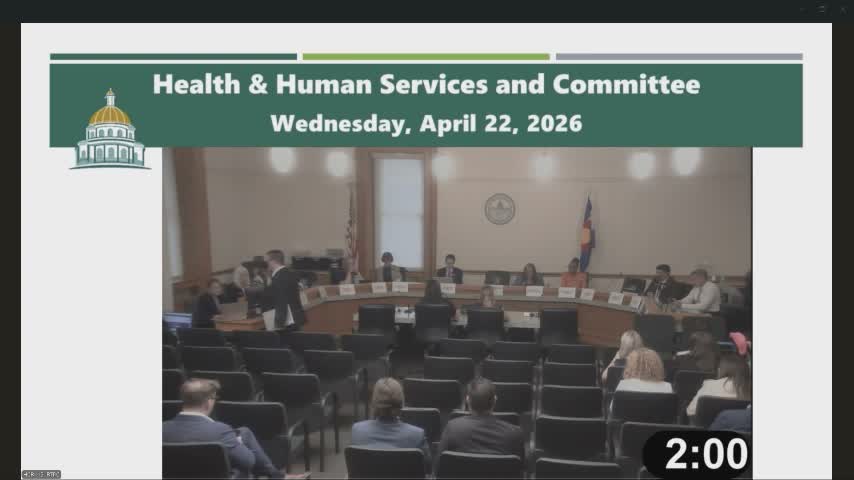
Sponsors of Senate Bill 140 sought to exempt certain orphan (rare‑disease) drugs and plasma‑derived therapies from review by Colorado’s Prescription Drug Affordability Review Board (PDAB), arguing that the review process—if applied to treatments with no alternatives—threatens patient access to life‑sustaining medicines.
Representative Gilchrist, who introduced the bill in the House with co‑prime Representative Johnson, said the legislation would protect rare‑disease patients and allow lawmakers time to strengthen patient engagement with PDAB. "It is incredibly important for access for rare disease patients to have the right medications," Gilchrist said, noting the unique treatment needs of that population. Representative Johnson, who described her own rare condition and reliance on specialized therapies, urged care so patients are not left without options.
Opponents included patient advocates who said removing PDAB review would strip state tools that can lower unaffordable prices and leave patients exposed to sudden price increases. Debbie Horner, representing AARP and speaking as a rare‑disease survivor, said she supports patient input but warned the bill would remove protections at the very moment patients need them. Lila Cummings, Deputy Commissioner at the Division of Insurance and former PDAB director, said the bill would exclude more than two‑thirds of currently eligible drugs from review and that recent 2024 changes were intended to increase rare‑disease patient engagement in the board’s process.
Witness panels were deeply personal: multiple patients and family members described trauma when PDAB reviews threatened access to essential medications such as Trikafta for cystic fibrosis and cautioned that upper payment limits can lead pharmacies and infusion centers to stop offering therapies. Supporters of the exemption argued those same scenarios demonstrate why rare‑disease drugs require special treatment.
Committee members pressed DOI and stakeholders on safeguards. DOI staff described mechanisms the board and regulators can use if access problems arise (engaging manufacturers, rule adjustments, and expedited reviews for individual patients). Committee members also asked how many drugs would be excluded under different definitions of the carve‑out; DOI estimated that a broad orphan drug carve‑out would remove roughly two‑thirds of currently eligible drugs from review and that narrowing the exemption to drugs approved for only a single rare condition would still remove about half.
Given the volume and intensity of testimony, Representative Gilchrist moved to lay the bill over to May 15 so sponsors and stakeholders can continue work; the motion passed at the sponsors’ request with the clerk recording "Eleven‑zero with 2 excused." The committee did not adopt amendments; sponsors said they will continue stakeholdering and may return the bill with technical changes.
Representative Gilchrist, who introduced the bill in the House with co‑prime Representative Johnson, said the legislation would protect rare‑disease patients and allow lawmakers time to strengthen patient engagement with PDAB. "It is incredibly important for access for rare disease patients to have the right medications," Gilchrist said, noting the unique treatment needs of that population. Representative Johnson, who described her own rare condition and reliance on specialized therapies, urged care so patients are not left without options.
Opponents included patient advocates who said removing PDAB review would strip state tools that can lower unaffordable prices and leave patients exposed to sudden price increases. Debbie Horner, representing AARP and speaking as a rare‑disease survivor, said she supports patient input but warned the bill would remove protections at the very moment patients need them. Lila Cummings, Deputy Commissioner at the Division of Insurance and former PDAB director, said the bill would exclude more than two‑thirds of currently eligible drugs from review and that recent 2024 changes were intended to increase rare‑disease patient engagement in the board’s process.
Witness panels were deeply personal: multiple patients and family members described trauma when PDAB reviews threatened access to essential medications such as Trikafta for cystic fibrosis and cautioned that upper payment limits can lead pharmacies and infusion centers to stop offering therapies. Supporters of the exemption argued those same scenarios demonstrate why rare‑disease drugs require special treatment.
Committee members pressed DOI and stakeholders on safeguards. DOI staff described mechanisms the board and regulators can use if access problems arise (engaging manufacturers, rule adjustments, and expedited reviews for individual patients). Committee members also asked how many drugs would be excluded under different definitions of the carve‑out; DOI estimated that a broad orphan drug carve‑out would remove roughly two‑thirds of currently eligible drugs from review and that narrowing the exemption to drugs approved for only a single rare condition would still remove about half.
Given the volume and intensity of testimony, Representative Gilchrist moved to lay the bill over to May 15 so sponsors and stakeholders can continue work; the motion passed at the sponsors’ request with the clerk recording "Eleven‑zero with 2 excused." The committee did not adopt amendments; sponsors said they will continue stakeholdering and may return the bill with technical changes.
Don't Miss a Word: See the Full Meeting!
Go beyond summaries. Unlock every video, transcript, and key insight with a Founder Membership.
✓
Get instant access to full meeting videos
✓
Search and clip any phrase from complete transcripts
✓
Receive AI-powered summaries & custom alerts
✓
Enjoy lifetime, unrestricted access to government data
30-day money-back guarantee
