Senate committee weighs stormwater-utility language in capital bill H952
April 22, 2026 | Institutions, SENATE, Committees, Legislative , Vermont
This article was created by AI summarizing key points discussed. AI makes mistakes, so for full details and context, please refer to the video of the full meeting. Please report any errors so we can fix them. Report an error »
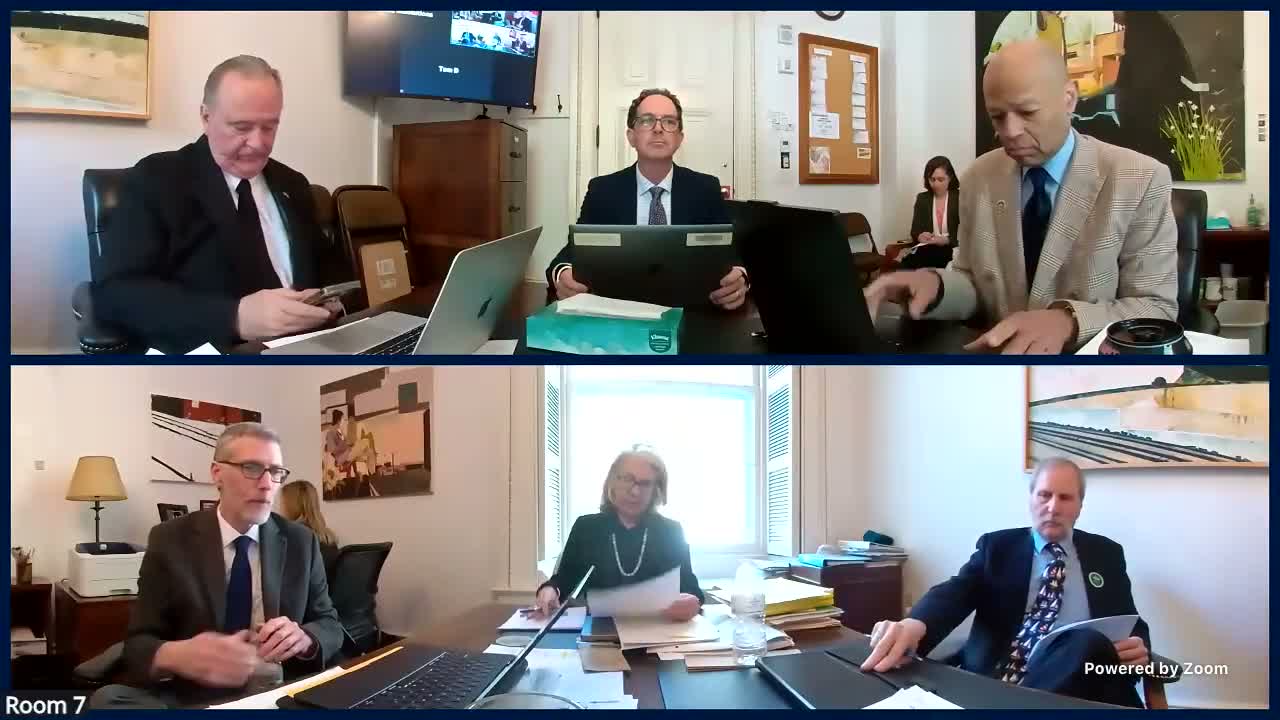
April 21, 2026 — The Senate Institutions committee heard testimony about language added to Capital Bill H952 that would authorize a regional stormwater utility while explicitly preserving a municipality's ability to adopt and operate its own stormwater utility.
Deputy Commissioner Neil, Department of Environmental Conservation, told the committee the bill text intends that the "creation of a regional stormwater utility under statute or rules of the agency shall not prevent a municipality from regulating stormwater, including adoption by the municipality of a bylaw establishing a municipal stormwater utility." He said the provision is intended as a guardrail while a legislatively created study committee completes work on regional models.
Why it matters: municipalities face mounting costs to meet EPA TMDL and state permitting requirements for parcels with three or more acres of impervious surface. Neil and other witnesses said the current 3-acre permit regime places the compliance burden on individual property owners; a regional model would pool resources but could shift revenue away from towns unless the statute and funding structures are carefully designed.
Tom DiPietro, director of public works for South Burlington, described how municipal stormwater utilities typically work and why some towns adopt them. "When employed correctly, they function more like your drinking water meter," DiPietro said, explaining that utilities use an equivalent residential unit system tied to impervious surface rather than a tax and that fees are restricted to stormwater uses. He offered a local cost example: a 2021 culvert replacement project with Williston exceeded $2,700,000.
Janet Patino, deputy director of the DEC water-investment division, reviewed the Clean Water Board's funding history (legislation and board policy dating from mid-2010s changes through Act 37 of 2025) and noted existing grant mechanics: the board has funded utilities at $25,000 per year for up to five years in the past and recommended a $125,000 line in the SFY27 appropriations package. Committee members discussed including $100,000 in capital funds in the bill as up-front assistance to help municipalities begin formation and permitting work.
Committee discussion focused on two tensions: (1) defining the regional entity's services before establishing fee structures, and (2) ensuring municipal authority and an adequate local revenue base are preserved. DiPietro and others cautioned against designs that could make the state fee indistinguishable from a tax or that would discourage municipalities from forming or maintaining local utilities.
Next steps: witnesses said the regional-utility study committee will deliver a report next January and that the Clean Water Board will incorporate legislative developments when setting budget priorities. The chair asked staff and agency witnesses to provide suggestions on administering any small up-front capital allocation if the committee includes it in the capital bill. The committee then moved on to its next agenda item.
Deputy Commissioner Neil, Department of Environmental Conservation, told the committee the bill text intends that the "creation of a regional stormwater utility under statute or rules of the agency shall not prevent a municipality from regulating stormwater, including adoption by the municipality of a bylaw establishing a municipal stormwater utility." He said the provision is intended as a guardrail while a legislatively created study committee completes work on regional models.
Why it matters: municipalities face mounting costs to meet EPA TMDL and state permitting requirements for parcels with three or more acres of impervious surface. Neil and other witnesses said the current 3-acre permit regime places the compliance burden on individual property owners; a regional model would pool resources but could shift revenue away from towns unless the statute and funding structures are carefully designed.
Tom DiPietro, director of public works for South Burlington, described how municipal stormwater utilities typically work and why some towns adopt them. "When employed correctly, they function more like your drinking water meter," DiPietro said, explaining that utilities use an equivalent residential unit system tied to impervious surface rather than a tax and that fees are restricted to stormwater uses. He offered a local cost example: a 2021 culvert replacement project with Williston exceeded $2,700,000.
Janet Patino, deputy director of the DEC water-investment division, reviewed the Clean Water Board's funding history (legislation and board policy dating from mid-2010s changes through Act 37 of 2025) and noted existing grant mechanics: the board has funded utilities at $25,000 per year for up to five years in the past and recommended a $125,000 line in the SFY27 appropriations package. Committee members discussed including $100,000 in capital funds in the bill as up-front assistance to help municipalities begin formation and permitting work.
Committee discussion focused on two tensions: (1) defining the regional entity's services before establishing fee structures, and (2) ensuring municipal authority and an adequate local revenue base are preserved. DiPietro and others cautioned against designs that could make the state fee indistinguishable from a tax or that would discourage municipalities from forming or maintaining local utilities.
Next steps: witnesses said the regional-utility study committee will deliver a report next January and that the Clean Water Board will incorporate legislative developments when setting budget priorities. The chair asked staff and agency witnesses to provide suggestions on administering any small up-front capital allocation if the committee includes it in the capital bill. The committee then moved on to its next agenda item.
Don't Miss a Word: See the Full Meeting!
Go beyond summaries. Unlock every video, transcript, and key insight with a Founder Membership.
✓
Get instant access to full meeting videos
✓
Search and clip any phrase from complete transcripts
✓
Receive AI-powered summaries & custom alerts
✓
Enjoy lifetime, unrestricted access to government data
30-day money-back guarantee
