Parents' bill of rights would mandate parental consent for social transitioning, add civil-liability penalties
April 21, 2026 | 2026 Legislature Arizona, Arizona
This article was created by AI summarizing key points discussed. AI makes mistakes, so for full details and context, please refer to the video of the full meeting. Please report any errors so we can fix them. Report an error »
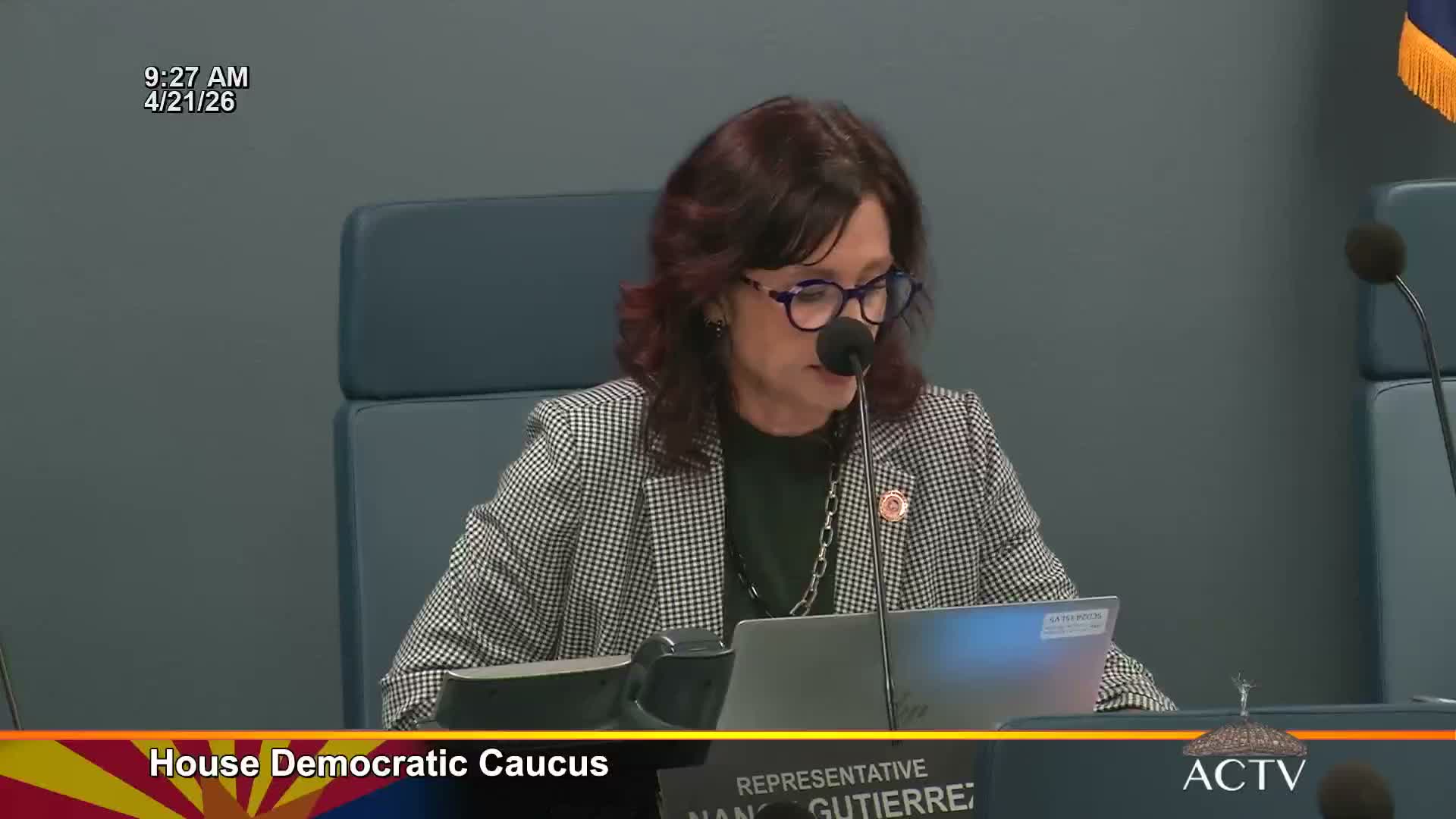
Michael (floor presenter for the sponsor) told caucus that HB 2249 expands the parents' bill of rights to require notification and written consent from both parents before a school employee facilitates or implements social transitioning for a minor. The amendment also creates civil remedies and waives certain state immunities.
Michael summarized the amendment's penalties: the bill establishes a minimum civil liability of $500,000 for a governmental-entity violation and $20,000 for a violation by a government employee or official, and it waives sovereign, qualified and discretionary immunities for the state or political subdivision in those cases. “It specifies that a cause of action accrues separately for each distinct act of facilitating, encouraging, or coercing a minor child to withhold information from their parent,” Michael said, describing how the amendment treats repeated acts.
The chair expressed alarm at potential effects on educators. “Again, we're punishing teachers for respecting students and providing an environment that feels safe for students,” the chair said, adding that the bill could force teachers to out students and be ‘detrimental.’
Michael confirmed to members that, under the amendment, each instance of using a preferred pronoun could be treated as a separate violation, exposing a teacher to multiple civil claims for repeated conduct. Members asked whether the bill's scope and overlap with other education‑policy bills might create enforcement or constitutional issues; the transcript records questions and expressions of concern but no legal analysis.
The sponsor signaled an intention to concur with Senate changes and to be available for follow-up questions; caucus did not record any formal floor vote in the transcript.
Michael summarized the amendment's penalties: the bill establishes a minimum civil liability of $500,000 for a governmental-entity violation and $20,000 for a violation by a government employee or official, and it waives sovereign, qualified and discretionary immunities for the state or political subdivision in those cases. “It specifies that a cause of action accrues separately for each distinct act of facilitating, encouraging, or coercing a minor child to withhold information from their parent,” Michael said, describing how the amendment treats repeated acts.
The chair expressed alarm at potential effects on educators. “Again, we're punishing teachers for respecting students and providing an environment that feels safe for students,” the chair said, adding that the bill could force teachers to out students and be ‘detrimental.’
Michael confirmed to members that, under the amendment, each instance of using a preferred pronoun could be treated as a separate violation, exposing a teacher to multiple civil claims for repeated conduct. Members asked whether the bill's scope and overlap with other education‑policy bills might create enforcement or constitutional issues; the transcript records questions and expressions of concern but no legal analysis.
The sponsor signaled an intention to concur with Senate changes and to be available for follow-up questions; caucus did not record any formal floor vote in the transcript.
Don't Miss a Word: See the Full Meeting!
Go beyond summaries. Unlock every video, transcript, and key insight with a Founder Membership.
✓
Get instant access to full meeting videos
✓
Search and clip any phrase from complete transcripts
✓
Receive AI-powered summaries & custom alerts
✓
Enjoy lifetime, unrestricted access to government data
30-day money-back guarantee
