House subcommittee hearing presses for national robotics strategy to boost manufacturing and security
April 22, 2026 | House Committee on Science, Space, and Technology, House Committee, House, Legislative, Federal
This article was created by AI summarizing key points discussed. AI makes mistakes, so for full details and context, please refer to the video of the full meeting. Please report any errors so we can fix them. Report an error »
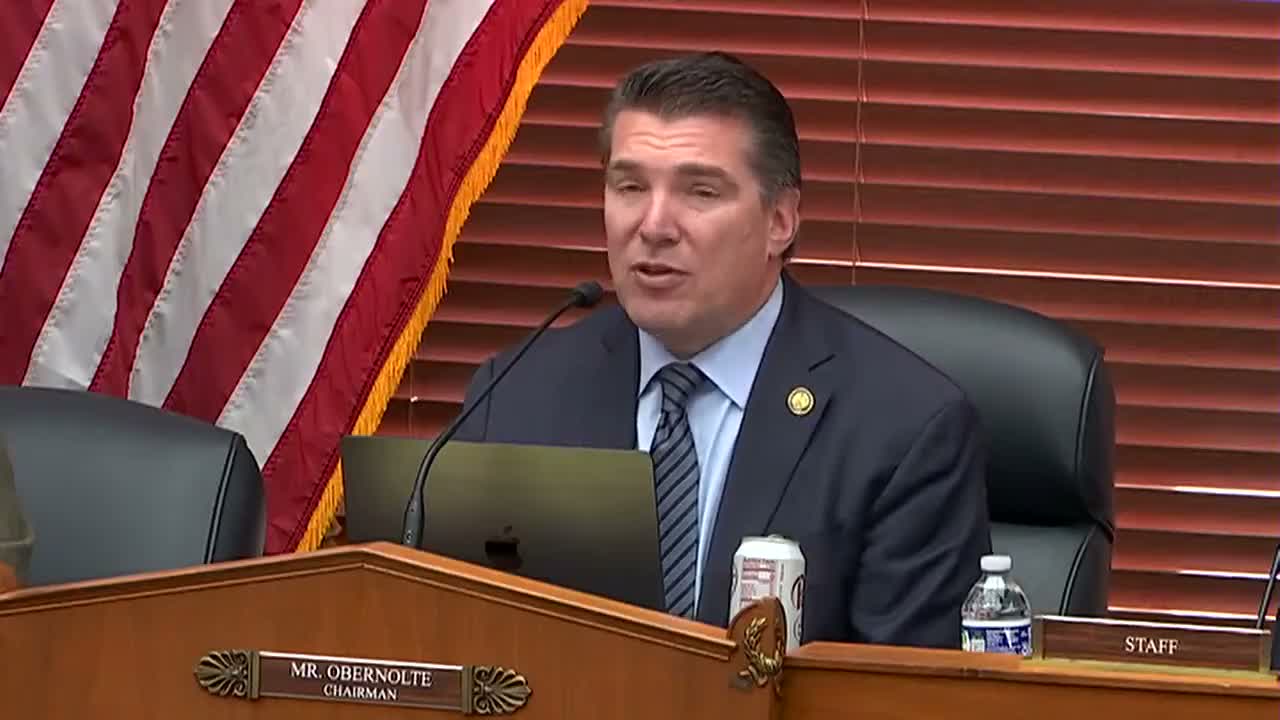
Chair Sherbin Oberonolte opened the Subcommittee on Research and Technology hearing titled "Robots Made in America: Advancing U.S. Leadership in Manufacturing and Automation," saying the United States must act decisively to remain competitive as artificial intelligence and robotics converge.
"Physical AI could unleash a robotics renaissance, and America must remain at the forefront," Oberonolte said in his opening remarks, framing a national strategy as central to industry and national-security interests.
Why it matters: witnesses and bipartisan members repeatedly said a patchwork of agency efforts is insufficient for the scale of the challenge. Industry leaders urged Congress to pass legislation creating a national commission on robotics and to consider a central government robotics coordinator to align research, standards, workforce development and procurement.
Evan Beard, cofounder and CEO of StandardBots, told the panel that the U.S. needs a national strategy and outlined a four-part plan: build American-made robots, establish a center of robotics and manufacturing excellence in every state, expand workforce training, and defend American manufacturing from foreign market manipulation. "We need a national robotics strategy," Beard said.
Jeff Bernstein, president of the Association for Advancing Automation, urged coordinated federal action and listed six priorities that include a central government robotics office, tax incentives to drive adoption, and government-led workforce training. Bernstein also recommended that agencies act as early adopters to spur civilian demand.
Dr. Susan Helper, professor of economics at Case Western Reserve University, emphasized deployment choices: "Worker centered automation is not a constraint on competitiveness. It is a strategy for competitiveness." She recommended co-design grants that bring engineers, manufacturers and labor together and suggested expanding testbeds and funding for community-of-practice centers.
On legislation: witnesses and members referenced HR 7334, the National Commission on Robotics Act, as a vehicle to evaluate U.S. competitiveness and coordinate policy recommendations. "If we could coordinate across all agencies of government, that would have tremendous value," Bernstein said when asked about the commission's purpose.
Practical steps discussed included reworking the Manufacturing Extension Partnership (MEP) into better-resourced centers of excellence, offering tax and procurement incentives to speed adoption by small and medium manufacturers, and funding regional test beds for co-design and training.
What’s next: the subcommittee left the record open for 10 days for additional comments and written questions and adjourned. Members signaled continued interest in moving legislation and securing sustained funding for centers and workforce programs.
"Physical AI could unleash a robotics renaissance, and America must remain at the forefront," Oberonolte said in his opening remarks, framing a national strategy as central to industry and national-security interests.
Why it matters: witnesses and bipartisan members repeatedly said a patchwork of agency efforts is insufficient for the scale of the challenge. Industry leaders urged Congress to pass legislation creating a national commission on robotics and to consider a central government robotics coordinator to align research, standards, workforce development and procurement.
Evan Beard, cofounder and CEO of StandardBots, told the panel that the U.S. needs a national strategy and outlined a four-part plan: build American-made robots, establish a center of robotics and manufacturing excellence in every state, expand workforce training, and defend American manufacturing from foreign market manipulation. "We need a national robotics strategy," Beard said.
Jeff Bernstein, president of the Association for Advancing Automation, urged coordinated federal action and listed six priorities that include a central government robotics office, tax incentives to drive adoption, and government-led workforce training. Bernstein also recommended that agencies act as early adopters to spur civilian demand.
Dr. Susan Helper, professor of economics at Case Western Reserve University, emphasized deployment choices: "Worker centered automation is not a constraint on competitiveness. It is a strategy for competitiveness." She recommended co-design grants that bring engineers, manufacturers and labor together and suggested expanding testbeds and funding for community-of-practice centers.
On legislation: witnesses and members referenced HR 7334, the National Commission on Robotics Act, as a vehicle to evaluate U.S. competitiveness and coordinate policy recommendations. "If we could coordinate across all agencies of government, that would have tremendous value," Bernstein said when asked about the commission's purpose.
Practical steps discussed included reworking the Manufacturing Extension Partnership (MEP) into better-resourced centers of excellence, offering tax and procurement incentives to speed adoption by small and medium manufacturers, and funding regional test beds for co-design and training.
What’s next: the subcommittee left the record open for 10 days for additional comments and written questions and adjourned. Members signaled continued interest in moving legislation and securing sustained funding for centers and workforce programs.
Don't Miss a Word: See the Full Meeting!
Go beyond summaries. Unlock every video, transcript, and key insight with a Founder Membership.
✓
Get instant access to full meeting videos
✓
Search and clip any phrase from complete transcripts
✓
Receive AI-powered summaries & custom alerts
✓
Enjoy lifetime, unrestricted access to government data
30-day money-back guarantee
