Senate approves bill shifting vaccine‑schedule authority to state commissioner; critics warn of weakening federal guardrails
April 22, 2026 | 2026 Legislature NY, New York
This article was created by AI summarizing key points discussed. AI makes mistakes, so for full details and context, please refer to the video of the full meeting. Please report any errors so we can fix them. Report an error »
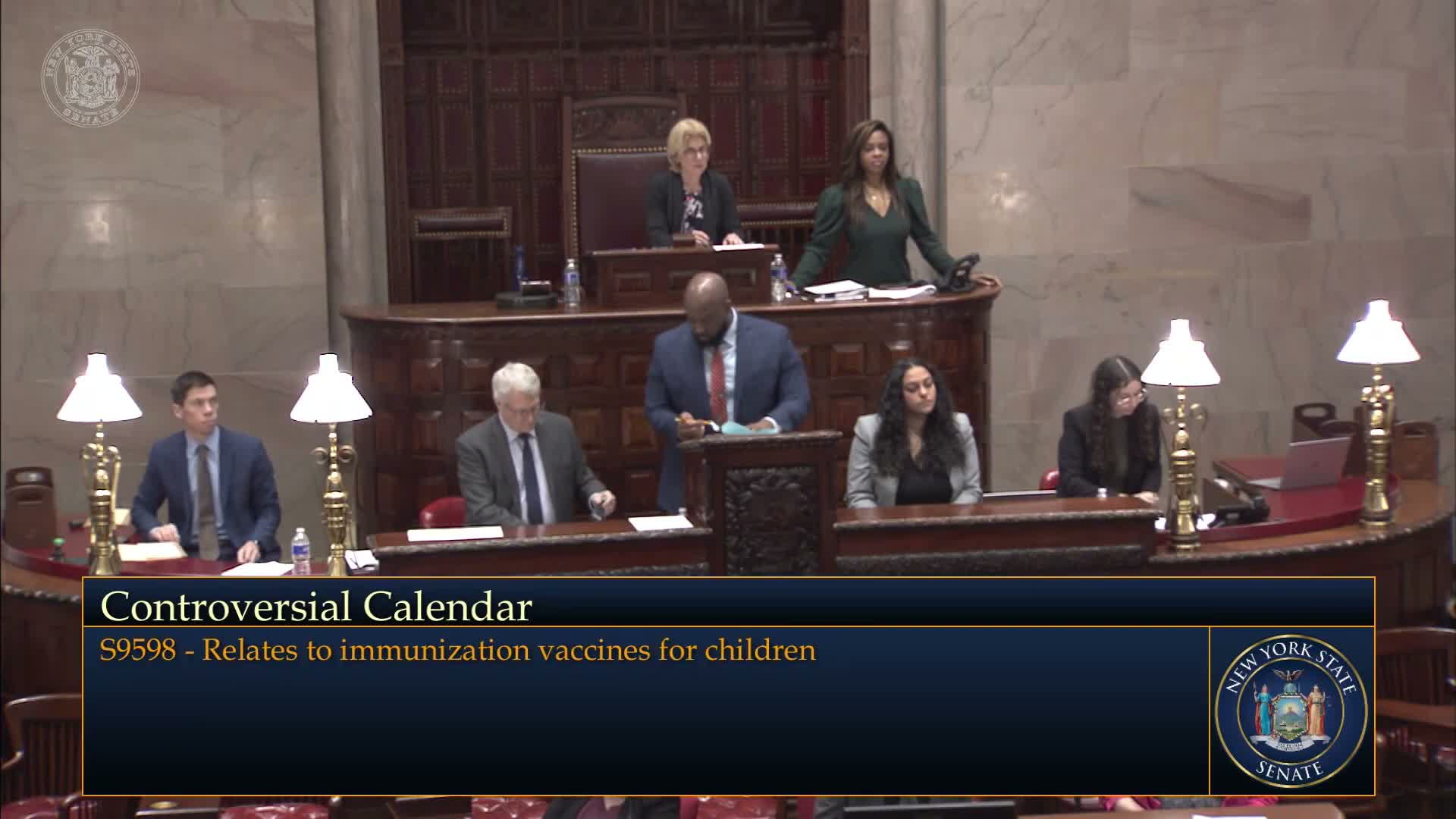
The Senate on April 20 passed legislation that alters New York’s statutory framework for immunization scheduling and administration: it permits pharmacists to administer the COVID‑19 vaccine to children two years and older under prescriptions and changes the statutory standard so the state health commissioner sets immunization schedules while consulting with federal and professional bodies rather than being bound by federal ACIP/FDA standards.
Sponsor Senator Stavisky said the measure clarifies who may provide vaccines and modernizes language around standards, noting the Department of Health will continue to take federal advice. But several senators pressed the sponsor on serious implications: Senator Rhodes and others warned that removing a statute requirement to follow ACIP/FDA guidance could jeopardize federal Vaccine for Children funds and the federal vaccine injury compensation program’s liability protections for providers and manufacturers if the state were to recommend or use products not approved by FDA. Rhodes also flagged the potential for private or international organizations to be listed among consulted bodies because the bill permits consultation with "nationally or internationally recognized scientific organizations."
The sponsor said the commissioner must consult specified professional bodies (American Academy of Pediatrics, American Academy of Family Physicians, ACOG and ACIP among others) and that the change intends to give the state more flexibility while still seeking recognized medical advice. Supporters, including the American Academy of Pediatrics (memo of support referenced on the floor), said the bill gives practical flexibility for administration while retaining medical oversight. Opponents cautioned that federal funding streams, liability coverage and conflict‑of‑interest protections are anchored in federal approval processes and that the bill reduces those statutory guardrails.
After prolonged questioning, the measure was restored to the noncontroversial calendar and passed; senators requested further clarifications about conflict-of-interest protections and agency consultation practices during implementation.
Sponsor Senator Stavisky said the measure clarifies who may provide vaccines and modernizes language around standards, noting the Department of Health will continue to take federal advice. But several senators pressed the sponsor on serious implications: Senator Rhodes and others warned that removing a statute requirement to follow ACIP/FDA guidance could jeopardize federal Vaccine for Children funds and the federal vaccine injury compensation program’s liability protections for providers and manufacturers if the state were to recommend or use products not approved by FDA. Rhodes also flagged the potential for private or international organizations to be listed among consulted bodies because the bill permits consultation with "nationally or internationally recognized scientific organizations."
The sponsor said the commissioner must consult specified professional bodies (American Academy of Pediatrics, American Academy of Family Physicians, ACOG and ACIP among others) and that the change intends to give the state more flexibility while still seeking recognized medical advice. Supporters, including the American Academy of Pediatrics (memo of support referenced on the floor), said the bill gives practical flexibility for administration while retaining medical oversight. Opponents cautioned that federal funding streams, liability coverage and conflict‑of‑interest protections are anchored in federal approval processes and that the bill reduces those statutory guardrails.
After prolonged questioning, the measure was restored to the noncontroversial calendar and passed; senators requested further clarifications about conflict-of-interest protections and agency consultation practices during implementation.
Don't Miss a Word: See the Full Meeting!
Go beyond summaries. Unlock every video, transcript, and key insight with a Founder Membership.
✓
Get instant access to full meeting videos
✓
Search and clip any phrase from complete transcripts
✓
Receive AI-powered summaries & custom alerts
✓
Enjoy lifetime, unrestricted access to government data
30-day money-back guarantee
