Panel advances bill that would make intimidating Article V delegates a felony; sponsors and opponents debate scope
April 21, 2026 | 2026 Legislature OK, Oklahoma
This article was created by AI summarizing key points discussed. AI makes mistakes, so for full details and context, please refer to the video of the full meeting. Please report any errors so we can fix them. Report an error »
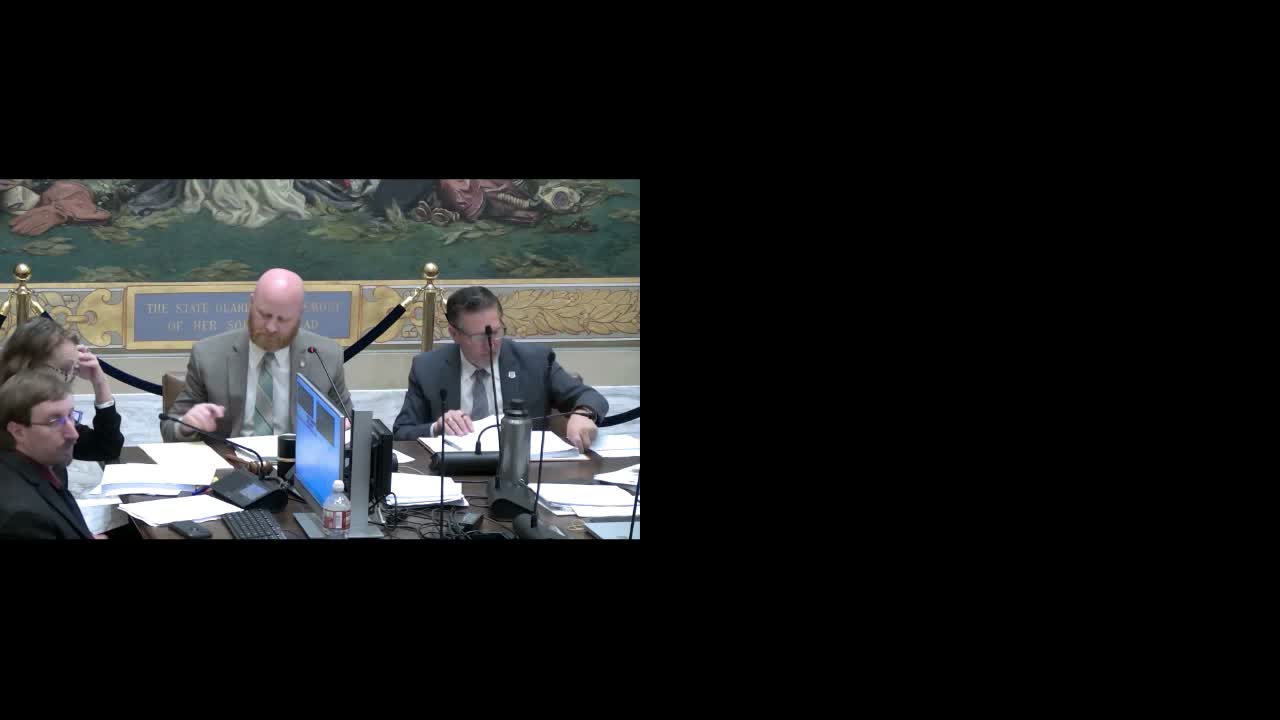
The Oklahoma Senate Judiciary Committee advanced House Bill 2,299 after a pointed discussion over a provision that would add criminal penalties for persons who "bribe[], threaten[], intimidate[], or obstruct[]" Article V convention commissioners within Oklahoma.
Senator Bergstrom, who carried the measure, said the bill implements a 2023 resolution by requiring an oath that commissioners not depart from a "one state, one vote" concept and by adding a criminal penalty for straying from the call. He told the committee that, "If he knowingly bribes, threatens, intimidates, or obstructs a commissioner, then he can be convicted of a felony," and argued that courts would look for conduct that actually interferes with a commissioner’s performance of duties.
Multiple senators pushed back on the word "intimidation," saying it is broad and risks chilling ordinary political persuasion. "I'm concerned that the intimidation might preclude someone from exercising their freedom of speech," one senator said, warning that a hyper‑broad standard could capture routine political pressure or criticism and have a "freezing effect" on speech. Another asked whether the committee should narrow the language to target only threats or bribery and leave political expression untouched.
Bergstrom defended the provision as part of a suite of protections—including bribery and obstruction—and said the intent is to capture conduct that rises to criminal interference with official duties. After debate the committee voted 5 ayes and 3 nays to advance the bill to the full Senate.
The bill’s debate centered on statutory language and constitutional questions about the breadth of criminal statutes touching political speech; sponsors repeatedly said courts would ultimately determine whether particular conduct rises to criminality.
The next procedural stop is the full Senate, where proponents will press for final passage and opponents may seek amendments or floor debate.
Senator Bergstrom, who carried the measure, said the bill implements a 2023 resolution by requiring an oath that commissioners not depart from a "one state, one vote" concept and by adding a criminal penalty for straying from the call. He told the committee that, "If he knowingly bribes, threatens, intimidates, or obstructs a commissioner, then he can be convicted of a felony," and argued that courts would look for conduct that actually interferes with a commissioner’s performance of duties.
Multiple senators pushed back on the word "intimidation," saying it is broad and risks chilling ordinary political persuasion. "I'm concerned that the intimidation might preclude someone from exercising their freedom of speech," one senator said, warning that a hyper‑broad standard could capture routine political pressure or criticism and have a "freezing effect" on speech. Another asked whether the committee should narrow the language to target only threats or bribery and leave political expression untouched.
Bergstrom defended the provision as part of a suite of protections—including bribery and obstruction—and said the intent is to capture conduct that rises to criminal interference with official duties. After debate the committee voted 5 ayes and 3 nays to advance the bill to the full Senate.
The bill’s debate centered on statutory language and constitutional questions about the breadth of criminal statutes touching political speech; sponsors repeatedly said courts would ultimately determine whether particular conduct rises to criminality.
The next procedural stop is the full Senate, where proponents will press for final passage and opponents may seek amendments or floor debate.
Don't Miss a Word: See the Full Meeting!
Go beyond summaries. Unlock every video, transcript, and key insight with a Founder Membership.
✓
Get instant access to full meeting videos
✓
Search and clip any phrase from complete transcripts
✓
Receive AI-powered summaries & custom alerts
✓
Enjoy lifetime, unrestricted access to government data
30-day money-back guarantee
