Senate approves expansion allowing deadly force to protect property in narrow circumstances; critics call it too broad
April 21, 2026 | 2026 Legislature TN, Tennessee
This article was created by AI summarizing key points discussed. AI makes mistakes, so for full details and context, please refer to the video of the full meeting. Please report any errors so we can fix them. Report an error »
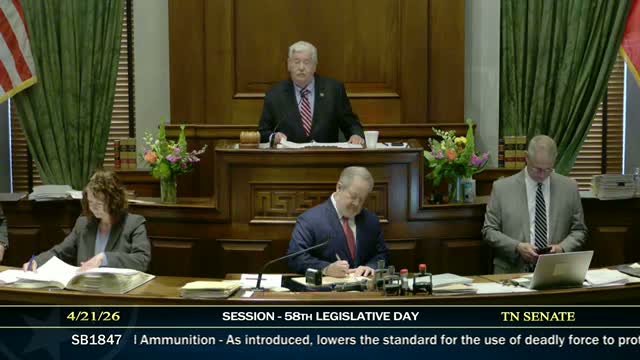
The Tennessee Senate on third reading approved Senate Bill 18-47, a measure that expands circumstances in which a person may use deadly force to protect property when they reasonably believe deadly force is immediately necessary to prevent specified offenses, including trespass, arson, burglary, theft, robbery and aggravated cruelty to animals.
Senator Hensley, the sponsor, told the chamber the bill would allow deadly force only in narrow circumstances when property “cannot be protected or the other's actions terminated by any other means” and when lesser force would expose the person or a third person to a risk of death or serious bodily injury.
The bill prompted extended and sometimes tense debate. Senator Yarbrough asked why the statute would extend deadly force to attempted trespass, giving hypothetical examples in which the scope could include a child climbing a fence or someone who mistakenly walks onto property. He said that risk of fatal outcomes from such a standard gave him serious pause.
Senator Lamar and others also criticized the breadth of the proposal, urging that the state should not prioritize property over life and cautioning about examples of tragic mistakes. Senator Lamar said he favored narrower language protecting vehicles but argued the bill as drafted was too broad.
Sponsor Hensley responded the statutory standard would still require a reasonable belief that deadly force was necessary and that a person using force would have to be prepared to defend that decision in court. He said the bill is intended for last‑resort situations and repeated that it does not authorize force against people who do not pose a serious risk of death or serious bodily injury.
After debate the Senate recorded a vote and the Chair declared the bill passed on third reading. Several senators said they would seek narrowing amendments in future sessions if unintended consequences emerge.
Senator Hensley, the sponsor, told the chamber the bill would allow deadly force only in narrow circumstances when property “cannot be protected or the other's actions terminated by any other means” and when lesser force would expose the person or a third person to a risk of death or serious bodily injury.
The bill prompted extended and sometimes tense debate. Senator Yarbrough asked why the statute would extend deadly force to attempted trespass, giving hypothetical examples in which the scope could include a child climbing a fence or someone who mistakenly walks onto property. He said that risk of fatal outcomes from such a standard gave him serious pause.
Senator Lamar and others also criticized the breadth of the proposal, urging that the state should not prioritize property over life and cautioning about examples of tragic mistakes. Senator Lamar said he favored narrower language protecting vehicles but argued the bill as drafted was too broad.
Sponsor Hensley responded the statutory standard would still require a reasonable belief that deadly force was necessary and that a person using force would have to be prepared to defend that decision in court. He said the bill is intended for last‑resort situations and repeated that it does not authorize force against people who do not pose a serious risk of death or serious bodily injury.
After debate the Senate recorded a vote and the Chair declared the bill passed on third reading. Several senators said they would seek narrowing amendments in future sessions if unintended consequences emerge.
View the Full Meeting & All Its Details
This article offers just a summary. Unlock complete video, transcripts, and insights as a Founder Member.
✓
Watch full, unedited meeting videos
✓
Search every word spoken in unlimited transcripts
✓
AI summaries & real-time alerts (all government levels)
✓
Permanent access to expanding government content
30-day money-back guarantee
