Committee advances bill to let charter and nonprofit private schools access low-interest state-linked loans
April 20, 2026 | 2026 Legislature OK, Oklahoma
This article was created by AI summarizing key points discussed. AI makes mistakes, so for full details and context, please refer to the video of the full meeting. Please report any errors so we can fix them. Report an error »
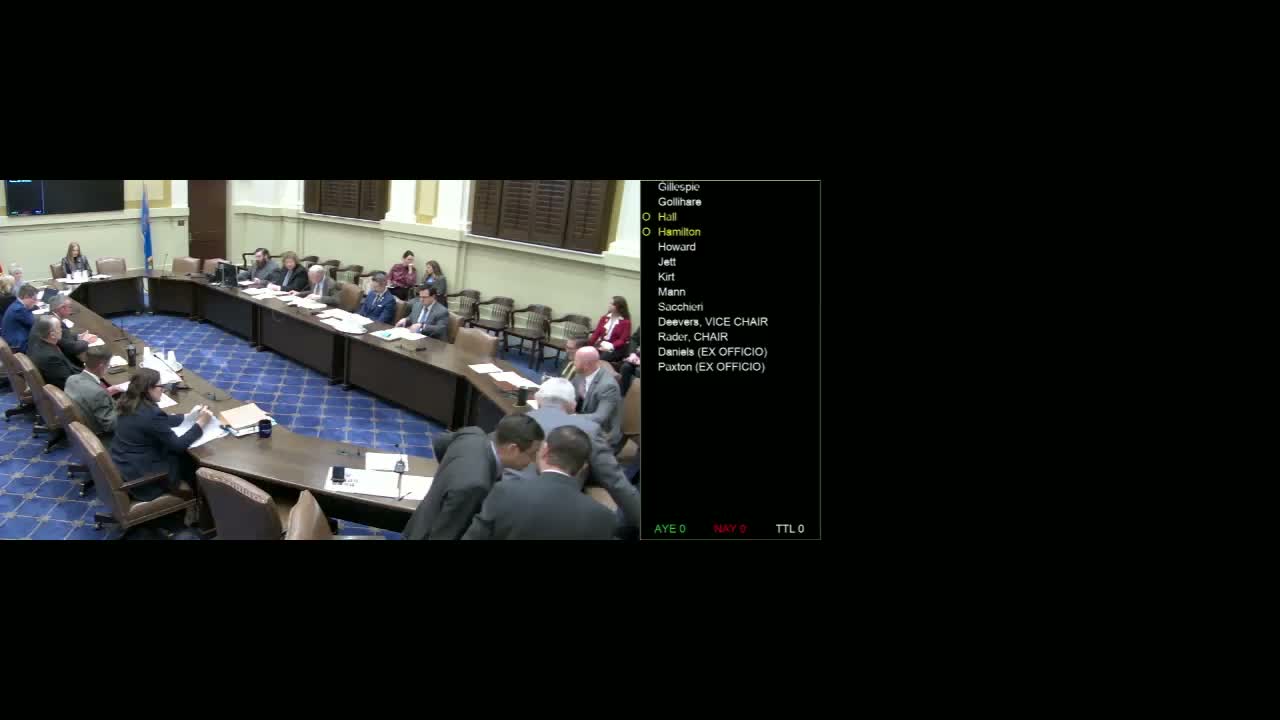
A legislative committee voted to advance House Bill 1590, which would establish an Oklahoma education infrastructure link-deposit program to enable charter schools and eligible nonprofit private education entities to access reduced-interest loans using funds already held by the state treasurer.
Senator Daniels introduced the bill, explaining the proposal mirrors existing linked deposit programs the state uses for agriculture and affordable housing. "These are dollars that are already in the treasurer's office that are made available at reduced interest rates to the institutions that will be lending the money," Daniels said. He described a process in which a borrower (a charter school or eligible nonprofit education entity) applies, a participating bank approves the loan, and the treasurer deposits funds with the bank so the borrower receives a reduced-rate loan.
Senator Mann and others pressed the author about whether private, including religious, schools would be eligible and whether the measure would move the state toward mandating oversight or testing of private schools. Mann argued the nonprofit portion could allow loans to religious organizations and said that could "be in violation of federal and state constitution." Daniels replied that eligibility would be based on whether an entity is an education-service entity and noted existing statutory protections and prior legislation (including the state's Religious Freedom Restoration Act measures), adding the bill targets infrastructure needs rather than curricular oversight.
The bill’s author also told the committee the proposal "doesn't have a fiscal impact," characterizing the funds as dollars already sitting unused in the treasurer’s office and generated through investments; a committee member said constituents wanted clarity on whether interest-earned funds still constitute taxpayer dollars. The author agreed to clarify statutory definitions to ensure the program applies only to education-purpose nonprofits and charter schools.
After debate, the committee called the roll on HB 1590. The clerk recorded 9 ayes and 2 nays; the chair declared the bill passed by the committee and advanced to the floor.
Senator Daniels introduced the bill, explaining the proposal mirrors existing linked deposit programs the state uses for agriculture and affordable housing. "These are dollars that are already in the treasurer's office that are made available at reduced interest rates to the institutions that will be lending the money," Daniels said. He described a process in which a borrower (a charter school or eligible nonprofit education entity) applies, a participating bank approves the loan, and the treasurer deposits funds with the bank so the borrower receives a reduced-rate loan.
Senator Mann and others pressed the author about whether private, including religious, schools would be eligible and whether the measure would move the state toward mandating oversight or testing of private schools. Mann argued the nonprofit portion could allow loans to religious organizations and said that could "be in violation of federal and state constitution." Daniels replied that eligibility would be based on whether an entity is an education-service entity and noted existing statutory protections and prior legislation (including the state's Religious Freedom Restoration Act measures), adding the bill targets infrastructure needs rather than curricular oversight.
The bill’s author also told the committee the proposal "doesn't have a fiscal impact," characterizing the funds as dollars already sitting unused in the treasurer’s office and generated through investments; a committee member said constituents wanted clarity on whether interest-earned funds still constitute taxpayer dollars. The author agreed to clarify statutory definitions to ensure the program applies only to education-purpose nonprofits and charter schools.
After debate, the committee called the roll on HB 1590. The clerk recorded 9 ayes and 2 nays; the chair declared the bill passed by the committee and advanced to the floor.
Don't Miss a Word: See the Full Meeting!
Go beyond summaries. Unlock every video, transcript, and key insight with a Founder Membership.
✓
Get instant access to full meeting videos
✓
Search and clip any phrase from complete transcripts
✓
Receive AI-powered summaries & custom alerts
✓
Enjoy lifetime, unrestricted access to government data
30-day money-back guarantee
