Oversight committee hears street‑repair plans; PCI rated 80, RSR26 slated for late summer
April 19, 2026 | Monterey, Monterey County, California
This article was created by AI summarizing key points discussed. AI makes mistakes, so for full details and context, please refer to the video of the full meeting. Please report any errors so we can fix them. Report an error »
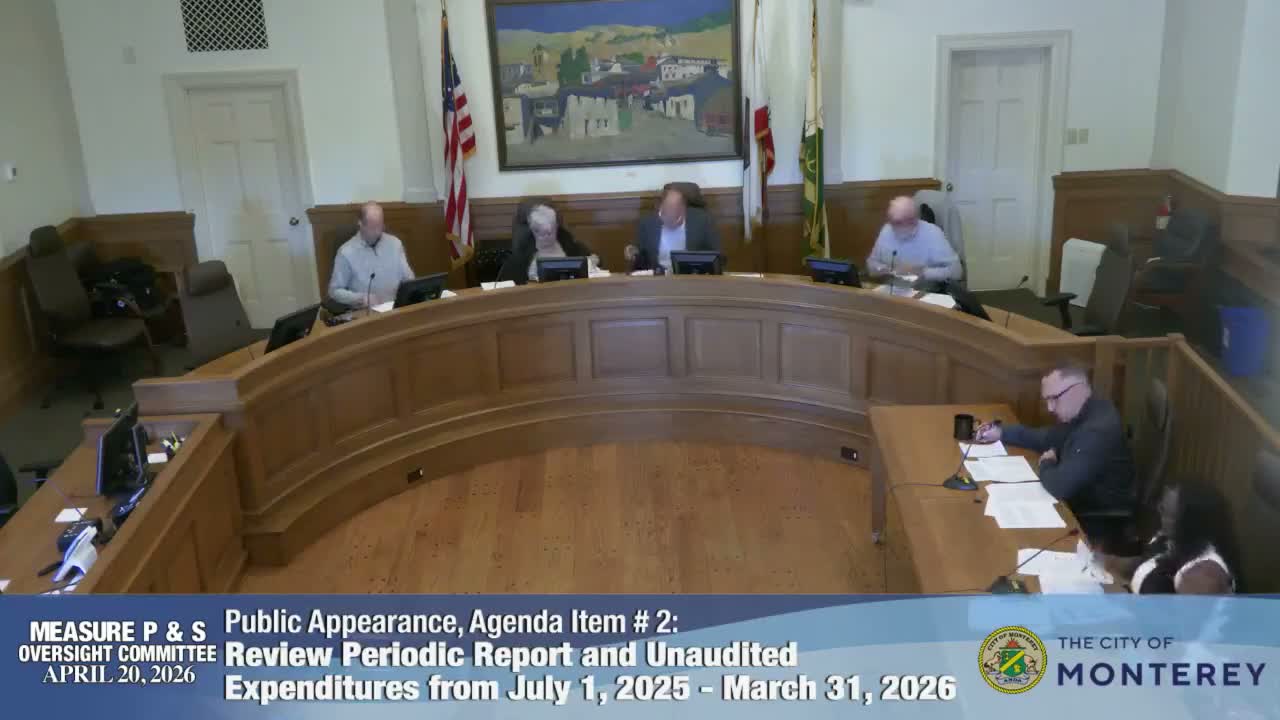
Staff presented the street rehabilitation and reconstruction packet, beginning with the pavement condition index (PCI) table and an explanation of the PCI methodology. The staff member said the city's network PCI is 80 (on a 0–100 scale), based on a full audit completed in late 2023, and explained that PCI is generated by site inspections, measured deterioration (crack lengths, rutting, potholes) and an automated deterioration curve in the database.
Staff reviewed high‑profile projects in design or procurement. Wave Street is under contract with McKim Corporation for ADA improvements and pavement rehabilitation; start has been delayed by weather and staffing and may be staged around large events. North Fremont is a full‑depth reclamation (night work) moving toward potholing and final mix design. RSR26, a large citywide road‑surface repair package covering many segments (Deer Flats, Del Monte Grove, Laguna Grande, Lower Ragsdale and others), is out to bid with bids due May 5; staff estimated the project at roughly $4,500,000 but noted that oil-price volatility could change final costs.
Committee members asked about especially problematic areas—Cannery Row, Foam Street, Via Gauba and Toyon segments. Staff said New Monterey Road Rehab will address ADA and sidewalk repairs in the Cannery Row vicinity and that Foam Street will likely receive concrete patching followed by a thin asphalt overlay (design work ongoing). Some segments previously repaired saw water‑main impacts during construction and will require follow‑up.
The committee moved, seconded and approved receipt of the street‑rehabilitation and reconstruction reports. Staff was directed to proceed with the bidding process for RSR26 and to provide the committee with more detailed, electronic mapping so members can connect payment lines to physical street segments and project phases.
Next steps: bids for RSR26 are due May 5; staff will return with bid results and planned schedules for construction and outreach to businesses in high‑impact areas.
Staff reviewed high‑profile projects in design or procurement. Wave Street is under contract with McKim Corporation for ADA improvements and pavement rehabilitation; start has been delayed by weather and staffing and may be staged around large events. North Fremont is a full‑depth reclamation (night work) moving toward potholing and final mix design. RSR26, a large citywide road‑surface repair package covering many segments (Deer Flats, Del Monte Grove, Laguna Grande, Lower Ragsdale and others), is out to bid with bids due May 5; staff estimated the project at roughly $4,500,000 but noted that oil-price volatility could change final costs.
Committee members asked about especially problematic areas—Cannery Row, Foam Street, Via Gauba and Toyon segments. Staff said New Monterey Road Rehab will address ADA and sidewalk repairs in the Cannery Row vicinity and that Foam Street will likely receive concrete patching followed by a thin asphalt overlay (design work ongoing). Some segments previously repaired saw water‑main impacts during construction and will require follow‑up.
The committee moved, seconded and approved receipt of the street‑rehabilitation and reconstruction reports. Staff was directed to proceed with the bidding process for RSR26 and to provide the committee with more detailed, electronic mapping so members can connect payment lines to physical street segments and project phases.
Next steps: bids for RSR26 are due May 5; staff will return with bid results and planned schedules for construction and outreach to businesses in high‑impact areas.
View the Full Meeting & All Its Details
This article offers just a summary. Unlock complete video, transcripts, and insights as a Founder Member.
✓
Watch full, unedited meeting videos
✓
Search every word spoken in unlimited transcripts
✓
AI summaries & real-time alerts (all government levels)
✓
Permanent access to expanding government content
30-day money-back guarantee
