STARS pediatric emergency plan presented to committee; program leaders outline costs and reach
April 16, 2026 | 2026 Legislature MO, Missouri
This article was created by AI summarizing key points discussed. AI makes mistakes, so for full details and context, please refer to the video of the full meeting. Please report any errors so we can fix them. Report an error »
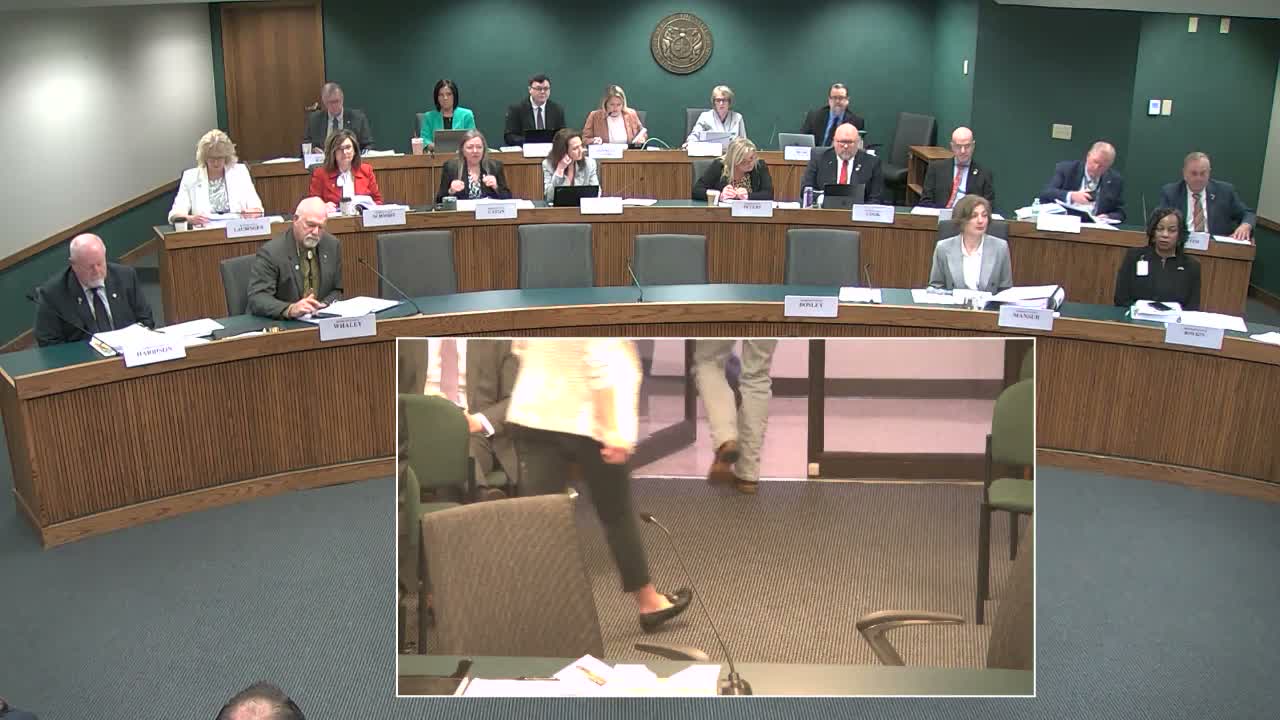
The committee received a presentation explaining the STARS program, an electronic emergency-care planning system created in Missouri to give emergency medical personnel concise, specialist-approved guidance for children with complex medical needs.
Justin Alfferman of SSM Health introduced STARS and turned the floor over to Nick Salzman, the program's coordinator. Salzman described STARS as "a homegrown Missouri program" begun in Jefferson County in 2014 and explained that STARS produces physician-approved, concise emergency plans to help EMS and emergency departments provide appropriate care. He said plans are reviewed by pediatric specialists and made available electronically to EMS and ED staff so that an on-call provider can read an approved plan and act on it.
Salzman said the program moved from paper to an electronic system to reduce stale or out-of-date instructions and allow specialists to update plans. He described referrals coming primarily from NICU/PICU discharge coordinators and specialty teams, and he said STARS also conducts education and quality-improvement work for EMS agencies. Regarding scale and cost, Salzman told the committee the program has about 1,900 active patients (roughly 1,000 in Missouri) and cited a $50,000 implementation fee plus a $25,000 annual subscription for organizations that want to write and maintain plans in the system; emergency access for local hospitals and EMS is free under a viewer-agreement model.
Committee members asked whether the program would be mandatory if related electronic-record flagging legislation passed; presenters clarified that a separate bill discussed by other members would require EMR flags if hospitals have the capability, but would not force hospitals lacking that capability to implement STARS. The presenters and members discussed participation by specific children's hospitals and the distinction between an EMS-focused program and hospital EMR requirements.
The presentation was offered as background for earlier and upcoming legislation and concluded with committee questions on implementation and participation.
Justin Alfferman of SSM Health introduced STARS and turned the floor over to Nick Salzman, the program's coordinator. Salzman described STARS as "a homegrown Missouri program" begun in Jefferson County in 2014 and explained that STARS produces physician-approved, concise emergency plans to help EMS and emergency departments provide appropriate care. He said plans are reviewed by pediatric specialists and made available electronically to EMS and ED staff so that an on-call provider can read an approved plan and act on it.
Salzman said the program moved from paper to an electronic system to reduce stale or out-of-date instructions and allow specialists to update plans. He described referrals coming primarily from NICU/PICU discharge coordinators and specialty teams, and he said STARS also conducts education and quality-improvement work for EMS agencies. Regarding scale and cost, Salzman told the committee the program has about 1,900 active patients (roughly 1,000 in Missouri) and cited a $50,000 implementation fee plus a $25,000 annual subscription for organizations that want to write and maintain plans in the system; emergency access for local hospitals and EMS is free under a viewer-agreement model.
Committee members asked whether the program would be mandatory if related electronic-record flagging legislation passed; presenters clarified that a separate bill discussed by other members would require EMR flags if hospitals have the capability, but would not force hospitals lacking that capability to implement STARS. The presenters and members discussed participation by specific children's hospitals and the distinction between an EMS-focused program and hospital EMR requirements.
The presentation was offered as background for earlier and upcoming legislation and concluded with committee questions on implementation and participation.
Don't Miss a Word: See the Full Meeting!
Go beyond summaries. Unlock every video, transcript, and key insight with a Founder Membership.
✓
Get instant access to full meeting videos
✓
Search and clip any phrase from complete transcripts
✓
Receive AI-powered summaries & custom alerts
✓
Enjoy lifetime, unrestricted access to government data
30-day money-back guarantee
