Committee advances bill to exempt federal low‑income housing tax credits from property assessments amid assessors’ objections
April 16, 2026 | 2026 Legislature TN, Tennessee
This article was created by AI summarizing key points discussed. AI makes mistakes, so for full details and context, please refer to the video of the full meeting. Please report any errors so we can fix them. Report an error »
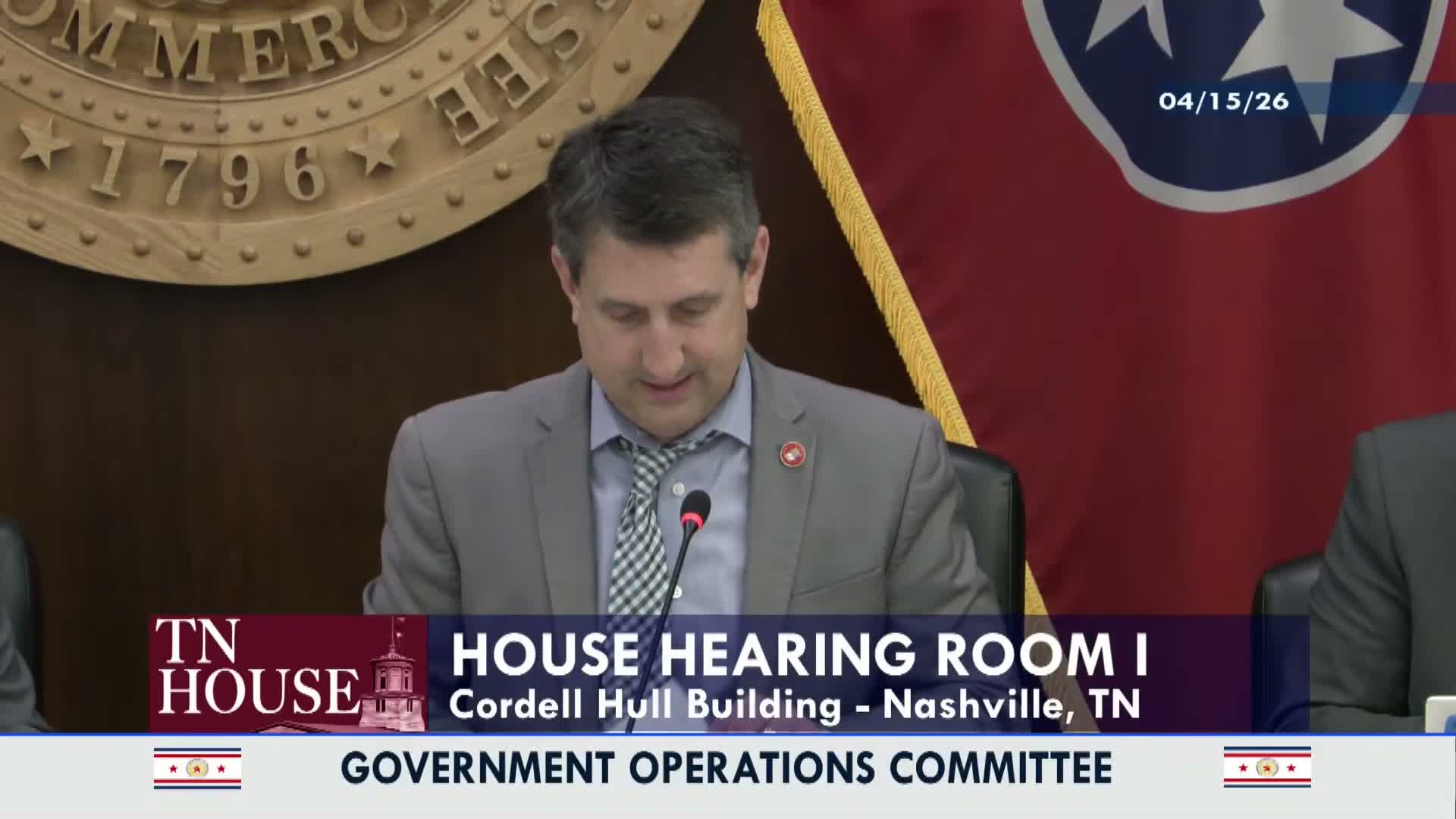
The House Government Operations Committee on April 15 gave a favorable recommendation to HB753, a bill that would prohibit local property assessors from including the value of federal low‑income housing tax credits in property assessments for qualifying multi‑unit developments.
Representative Faizon, the bill’s sponsor, told the committee the change is intended to preserve the value of the federal low‑income housing tax credit (LIHTC) incentive and spur development outside the state’s largest counties. Faizon said LIHTC projects typically must hold units for about 20 years and rent to households at roughly 60% of area median income, and argued that local assessors currently factor the tax credit into valuation, which undermines the incentive for developers.
During extended questioning members pressed the sponsor on fiscal and distributional effects. Faizon cited the committee fiscal note that estimated roughly $100,000 in foregone statewide revenue; witnesses and members noted that prior versions of similar measures had produced higher estimated losses in other analyses. Members asked whether the proposal could shift tax burdens to existing homeowners, strain local infrastructure, or create unequal treatment across tax years.
Will Denami, appearing for the assessors of property, opposed the bill. Denami said a prior negotiated compromise allowed pilot programs under which local governments enter payment‑in‑lieu‑of‑tax (PILOT) agreements with developers, and argued HB753 would "direct the assessor of property to pretend that the restricted rents are not in exchange for the tax credits." He cited a 2002 Court of Appeals decision as precedent for treating the credits as part of market value and warned of equal‑protection concerns from unequal treatment of properties across tax years.
Committee members asked technical questions about how credits attach to property on sale, how the LIHTC phasing (typically a 20‑year compliance term) affects valuation, and whether THDA‑certified developers would be vetted to prevent opportunistic investors. Supporters answered that credits often run with the land as covenants but that the bill aims to keep incentives intact so developers will build in underserved counties; they also said THDA vetting limits opportunistic actors.
After debate the committee called the previous question and the clerk recorded 13 ayes, 0 nays and 3 present non‑voting. HB753 was reported favorably to Finance, Ways and Means. The committee record contains requests for more information from members and notes the assessors’ legal objections; no immediate amendments to address valuation or equal‑protection questions were recorded in committee.
Next steps for HB753 include consideration by the Finance, Ways and Means Committee where members may weigh fiscal distribution, legal risk and any offsets such as PILOT arrangements. The committee transcript indicates members want additional data on local revenue impacts and pilot outcomes before floor consideration.
Representative Faizon, the bill’s sponsor, told the committee the change is intended to preserve the value of the federal low‑income housing tax credit (LIHTC) incentive and spur development outside the state’s largest counties. Faizon said LIHTC projects typically must hold units for about 20 years and rent to households at roughly 60% of area median income, and argued that local assessors currently factor the tax credit into valuation, which undermines the incentive for developers.
During extended questioning members pressed the sponsor on fiscal and distributional effects. Faizon cited the committee fiscal note that estimated roughly $100,000 in foregone statewide revenue; witnesses and members noted that prior versions of similar measures had produced higher estimated losses in other analyses. Members asked whether the proposal could shift tax burdens to existing homeowners, strain local infrastructure, or create unequal treatment across tax years.
Will Denami, appearing for the assessors of property, opposed the bill. Denami said a prior negotiated compromise allowed pilot programs under which local governments enter payment‑in‑lieu‑of‑tax (PILOT) agreements with developers, and argued HB753 would "direct the assessor of property to pretend that the restricted rents are not in exchange for the tax credits." He cited a 2002 Court of Appeals decision as precedent for treating the credits as part of market value and warned of equal‑protection concerns from unequal treatment of properties across tax years.
Committee members asked technical questions about how credits attach to property on sale, how the LIHTC phasing (typically a 20‑year compliance term) affects valuation, and whether THDA‑certified developers would be vetted to prevent opportunistic investors. Supporters answered that credits often run with the land as covenants but that the bill aims to keep incentives intact so developers will build in underserved counties; they also said THDA vetting limits opportunistic actors.
After debate the committee called the previous question and the clerk recorded 13 ayes, 0 nays and 3 present non‑voting. HB753 was reported favorably to Finance, Ways and Means. The committee record contains requests for more information from members and notes the assessors’ legal objections; no immediate amendments to address valuation or equal‑protection questions were recorded in committee.
Next steps for HB753 include consideration by the Finance, Ways and Means Committee where members may weigh fiscal distribution, legal risk and any offsets such as PILOT arrangements. The committee transcript indicates members want additional data on local revenue impacts and pilot outcomes before floor consideration.
Don't Miss a Word: See the Full Meeting!
Go beyond summaries. Unlock every video, transcript, and key insight with a Founder Membership.
✓
Get instant access to full meeting videos
✓
Search and clip any phrase from complete transcripts
✓
Receive AI-powered summaries & custom alerts
✓
Enjoy lifetime, unrestricted access to government data
30-day money-back guarantee
