General Petraeus tells WSIB: Ukraine shows unmanned systems are the future of war; Gulf blockade raises stakes
April 16, 2026 | Board Council Commission Agencies , Executive, Washington
This article was created by AI summarizing key points discussed. AI makes mistakes, so for full details and context, please refer to the video of the full meeting. Please report any errors so we can fix them. Report an error »
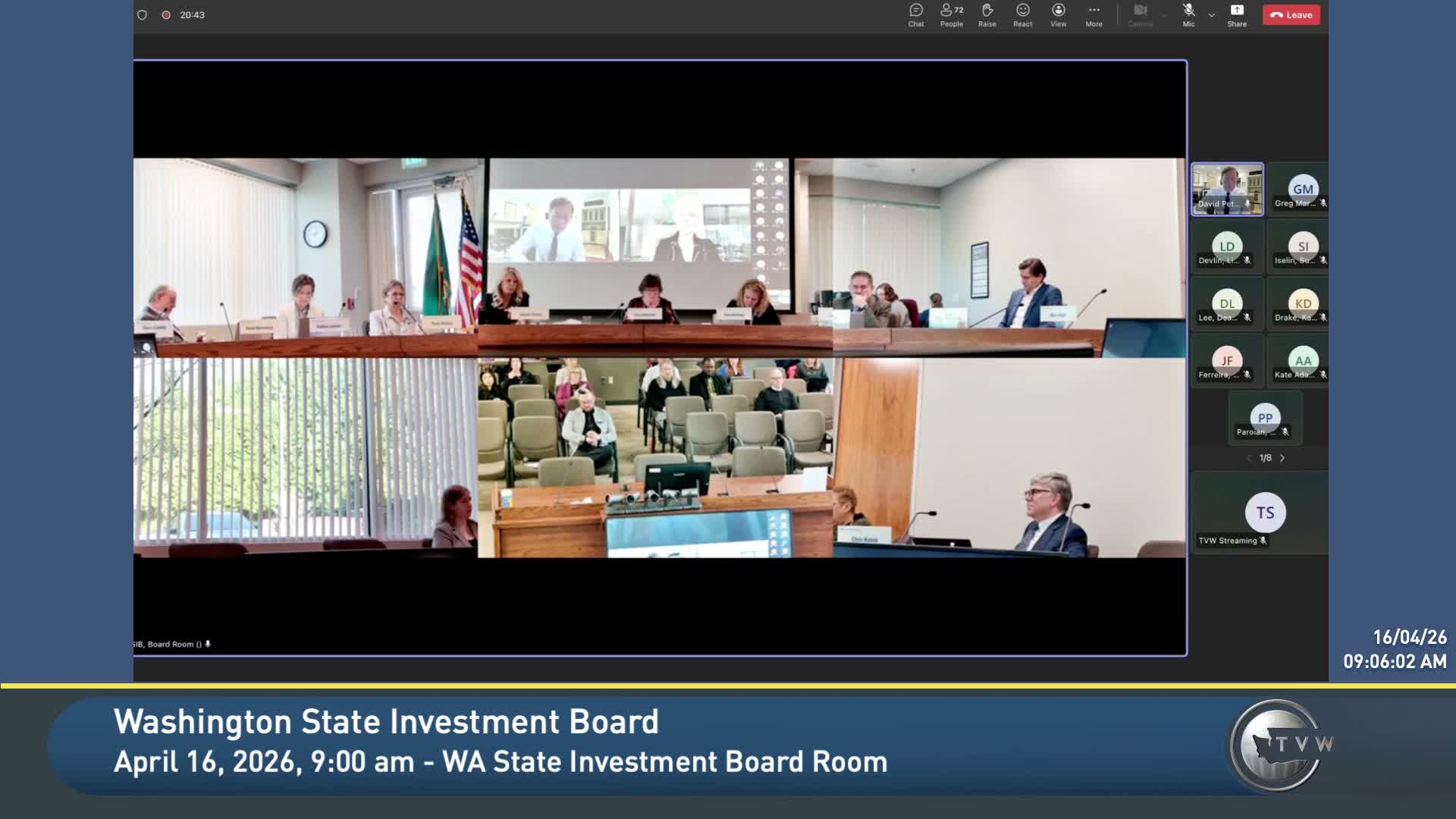
General Petraeus, introduced to the board by Allison Lisonbee, told trustees that the battlefield lessons from Ukraine are transforming how militaries operate.
"It is almost an unmanned systems war now," General Petraeus said, describing how surveillance and remotely piloted systems now dominate the front line and inflict the majority of casualties. He said tanks and exposed maneuver forces are highly vulnerable within roughly a 35-kilometer “death zone” and that units on the front line must shelter underground because of ubiquitous strike and surveillance systems.
Petraeus traced a chain of operational, technological and organizational consequences. He said defenders and attackers alike have had to adapt tactics, logistics and training around unmanned systems, and that the software and supporting ecosystems — including sustainment, analysts and logistics — are increasingly decisive.
On the Gulf, Petraeus said a U.S.-led blockade and maritime operations have shifted leverage. "This deprives Iran of the revenue from the 1,500,000 barrels of oil and distillates that they normally export," he said, adding that re-routing and tolls on alternate routes have economic and geopolitical implications. He warned that demining and escorting shipping will be complicated and will depend on coalition partners and specialized unmanned underwater capabilities.
Board members asked about the prospects for a durable ceasefire and the wider implications for global markets. Petraeus said an extension of the current ceasefire was likely but fragile, and he stressed allied demining, logistics and counter-drone capabilities as key enablers for restoring commercial shipping.
Petraeus also touched on how lessons learned in Ukraine — including rapid fielding, iterative software updates, and organizational changes to manage unmanned systems — should influence U.S. force structure and procurement choices. He recommended investing in the broader ecosystem that supports unmanned operations rather than only buying hardware.
The board thanked Petraeus for the briefing and moved on to the next presenter.
"It is almost an unmanned systems war now," General Petraeus said, describing how surveillance and remotely piloted systems now dominate the front line and inflict the majority of casualties. He said tanks and exposed maneuver forces are highly vulnerable within roughly a 35-kilometer “death zone” and that units on the front line must shelter underground because of ubiquitous strike and surveillance systems.
Petraeus traced a chain of operational, technological and organizational consequences. He said defenders and attackers alike have had to adapt tactics, logistics and training around unmanned systems, and that the software and supporting ecosystems — including sustainment, analysts and logistics — are increasingly decisive.
On the Gulf, Petraeus said a U.S.-led blockade and maritime operations have shifted leverage. "This deprives Iran of the revenue from the 1,500,000 barrels of oil and distillates that they normally export," he said, adding that re-routing and tolls on alternate routes have economic and geopolitical implications. He warned that demining and escorting shipping will be complicated and will depend on coalition partners and specialized unmanned underwater capabilities.
Board members asked about the prospects for a durable ceasefire and the wider implications for global markets. Petraeus said an extension of the current ceasefire was likely but fragile, and he stressed allied demining, logistics and counter-drone capabilities as key enablers for restoring commercial shipping.
Petraeus also touched on how lessons learned in Ukraine — including rapid fielding, iterative software updates, and organizational changes to manage unmanned systems — should influence U.S. force structure and procurement choices. He recommended investing in the broader ecosystem that supports unmanned operations rather than only buying hardware.
The board thanked Petraeus for the briefing and moved on to the next presenter.
Don't Miss a Word: See the Full Meeting!
Go beyond summaries. Unlock every video, transcript, and key insight with a Founder Membership.
✓
Get instant access to full meeting videos
✓
Search and clip any phrase from complete transcripts
✓
Receive AI-powered summaries & custom alerts
✓
Enjoy lifetime, unrestricted access to government data
30-day money-back guarantee
