Encinitas council adopts native‑plant landscaping ordinance after hours of testimony
April 16, 2026 | Encinitas, San Diego County, California
This article was created by AI summarizing key points discussed. AI makes mistakes, so for full details and context, please refer to the video of the full meeting. Please report any errors so we can fix them. Report an error »
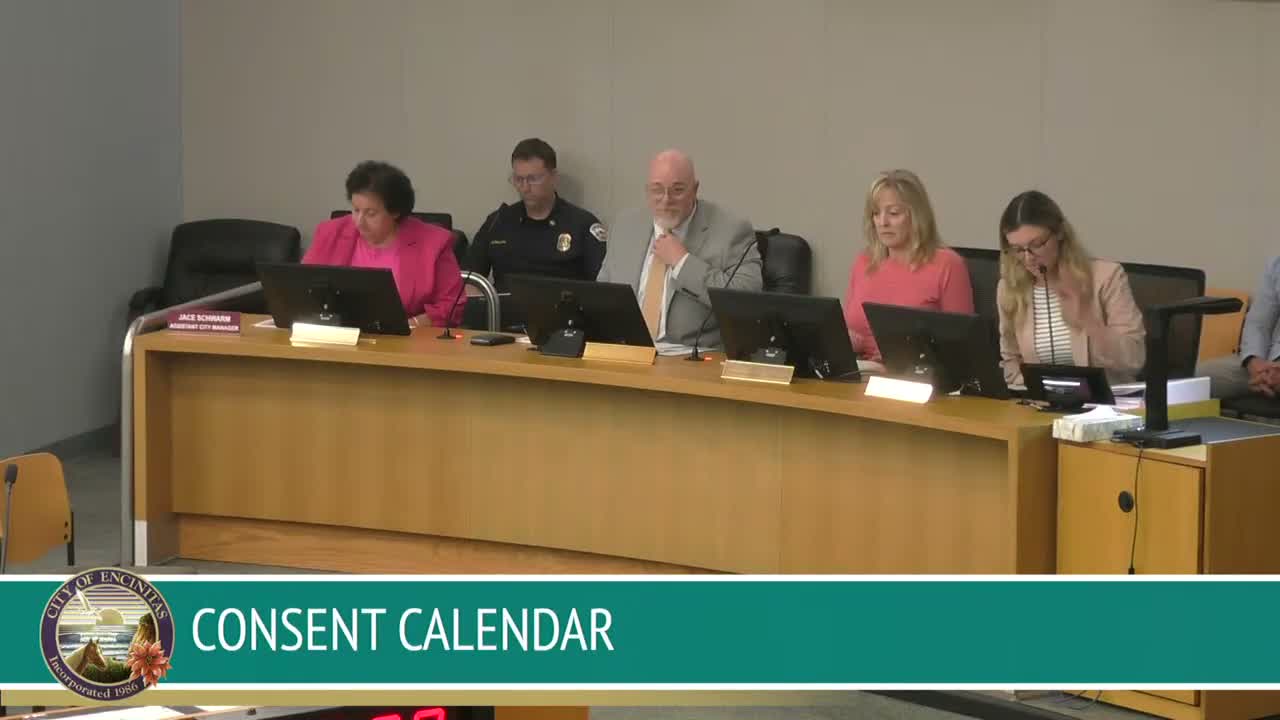
The Encinitas City Council voted unanimously to adopt ordinance number 2026‑07, establishing minimum native‑plant landscaping requirements for qualifying discretionary projects. The ordinance codifies an existing planning‑commission practice that requires 50% Southern California native plants for eligible projects and requires 100% native plantings for new city projects and landscapes within 50 feet of environmentally sensitive areas. The measure includes exemptions for single‑family detached residences, accessory dwelling units and certain city‑owned athletic fields.
Sarah Cadona, senior planner and project manager, told the council the draft ordinance does not change when landscape plans are required; it clarifies how to calculate the 50% requirement, requires landscaping plans to be prepared and stamped by a licensed landscape architect, and requires a signed certificate of completion before final occupancy for projects with landscape obligations.
Public comment was divided. Some residents urged the council to exempt homes created by subdivisions, raised wildfire and insurance‑risk concerns and criticized potential costs and perceived conflicts of interest. Camille Perkins called the proposal “a massive governmental overreach” and warned of increased fire risk in rural residential areas if native plant requirements applied broadly. Supporters including the Urban Forest Advisory Committee and members of the Native Plants for Encinitas group said the measure will help pollinators, conserve water and protect habitat; Brad Lefkowitz, a landscape designer, disputed claims that native plants are more expensive and said maintenance requirements were simplified during drafting.
Council discussion focused on scope and where the requirement would attach to subdivision approvals. Councilmember Lyons, a licensed landscape architect, moved adoption and sought clarification that single‑family detached homes are exempt unless included in a subdivision landscape plan; staff and council confirmed that nuance and the council directed the development services director to prepare an internal memorandum to guide administrative interpretation.
Why it matters: The ordinance formalizes a practice the planning staff said was already applied in many discretionary reviews and clarifies compliance requirements. Supporters argue it will improve habitat and drought resilience; opponents worry about fire safety, homeowner costs and unintended effects where subdivision plans include lot landscaping.
Implementation and next steps: Council approved the ordinance with a direction to staff to finalize an internal interpretation memo and to return in 12–15 months for review of how the ordinance is functioning.
Sarah Cadona, senior planner and project manager, told the council the draft ordinance does not change when landscape plans are required; it clarifies how to calculate the 50% requirement, requires landscaping plans to be prepared and stamped by a licensed landscape architect, and requires a signed certificate of completion before final occupancy for projects with landscape obligations.
Public comment was divided. Some residents urged the council to exempt homes created by subdivisions, raised wildfire and insurance‑risk concerns and criticized potential costs and perceived conflicts of interest. Camille Perkins called the proposal “a massive governmental overreach” and warned of increased fire risk in rural residential areas if native plant requirements applied broadly. Supporters including the Urban Forest Advisory Committee and members of the Native Plants for Encinitas group said the measure will help pollinators, conserve water and protect habitat; Brad Lefkowitz, a landscape designer, disputed claims that native plants are more expensive and said maintenance requirements were simplified during drafting.
Council discussion focused on scope and where the requirement would attach to subdivision approvals. Councilmember Lyons, a licensed landscape architect, moved adoption and sought clarification that single‑family detached homes are exempt unless included in a subdivision landscape plan; staff and council confirmed that nuance and the council directed the development services director to prepare an internal memorandum to guide administrative interpretation.
Why it matters: The ordinance formalizes a practice the planning staff said was already applied in many discretionary reviews and clarifies compliance requirements. Supporters argue it will improve habitat and drought resilience; opponents worry about fire safety, homeowner costs and unintended effects where subdivision plans include lot landscaping.
Implementation and next steps: Council approved the ordinance with a direction to staff to finalize an internal interpretation memo and to return in 12–15 months for review of how the ordinance is functioning.
View the Full Meeting & All Its Details
This article offers just a summary. Unlock complete video, transcripts, and insights as a Founder Member.
✓
Watch full, unedited meeting videos
✓
Search every word spoken in unlimited transcripts
✓
AI summaries & real-time alerts (all government levels)
✓
Permanent access to expanding government content
30-day money-back guarantee
