Emergency management, local leaders press for robust stakeholder work in proposed dam‑safety pilot
April 16, 2026 | Natural Resources & Energy, SENATE, Committees, Legislative , Vermont
This article was created by AI summarizing key points discussed. AI makes mistakes, so for full details and context, please refer to the video of the full meeting. Please report any errors so we can fix them. Report an error »
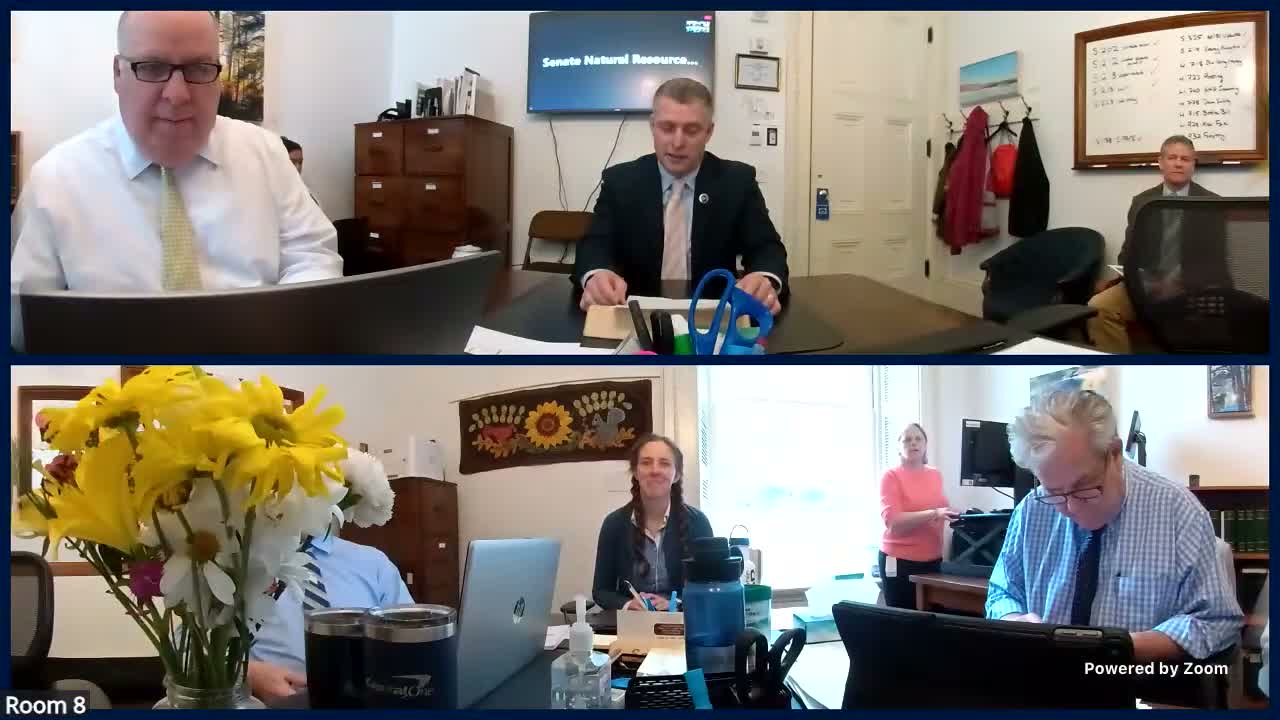
The Natural Resources & Energy Committee heard detailed testimony in favor of H778, a pilot project to develop emergency operation plans (EOPs) and regional templates for high‑hazard dams.
Eric Warren, director of Vermont Emergency Management, told the panel that VEM supports the pilot but stressed its scope: one pilot dam could involve outreach and coordination with "50 or more entities" (schools, hospitals, towns, dispatchers and emergency services). He said the pilot should evaluate costs, staffing and contractor use, and recommended regional coordinators and contractor support to craft usable templates and replicate them for other dams.
"To be successful, the funding needs to remain with the proposed bill because it would be impractical . . . to take us off giving our current," Warren said, emphasizing that creating and implementing EOPs and building municipal relationships requires time and resources.
John Copeland, director of the Foundation for Resilient Montpelier, described Montpelier’s 2023 downtown inundation and a problematic emergency message about Wrightsville that led residents to evacuate at night. He argued the pilot should focus heavily on stakeholder engagement, municipal participation and communication protocols in addition to producing templates.
Responders also testified. Drew Hazleton, an EMS provider and chair of Vermont’s EMS advisory committee, urged the committee to explicitly include EMS coordination for evacuation and sheltering of medically vulnerable residents, noting ambulance reliance and shelter limitations during major flood responses.
Committee members and witnesses discussed alerting: VEM can call landlines or push area alerts and has tools to draw a geocoded circle and notify phones in an area, but the agency lacks a full 24/7 watch desk for instant statewide push alerts; towns and trained local administrators would be part of a rapid notification strategy.
Committee staff asked witnesses to provide suggested language to refine the bill’s treatment of templates, operational implementation and coordination with local EMS and dispatch so the pilot produces usable, replicable procedures rather than standalone documents. The committee took no final vote on the bill during this session.
Eric Warren, director of Vermont Emergency Management, told the panel that VEM supports the pilot but stressed its scope: one pilot dam could involve outreach and coordination with "50 or more entities" (schools, hospitals, towns, dispatchers and emergency services). He said the pilot should evaluate costs, staffing and contractor use, and recommended regional coordinators and contractor support to craft usable templates and replicate them for other dams.
"To be successful, the funding needs to remain with the proposed bill because it would be impractical . . . to take us off giving our current," Warren said, emphasizing that creating and implementing EOPs and building municipal relationships requires time and resources.
John Copeland, director of the Foundation for Resilient Montpelier, described Montpelier’s 2023 downtown inundation and a problematic emergency message about Wrightsville that led residents to evacuate at night. He argued the pilot should focus heavily on stakeholder engagement, municipal participation and communication protocols in addition to producing templates.
Responders also testified. Drew Hazleton, an EMS provider and chair of Vermont’s EMS advisory committee, urged the committee to explicitly include EMS coordination for evacuation and sheltering of medically vulnerable residents, noting ambulance reliance and shelter limitations during major flood responses.
Committee members and witnesses discussed alerting: VEM can call landlines or push area alerts and has tools to draw a geocoded circle and notify phones in an area, but the agency lacks a full 24/7 watch desk for instant statewide push alerts; towns and trained local administrators would be part of a rapid notification strategy.
Committee staff asked witnesses to provide suggested language to refine the bill’s treatment of templates, operational implementation and coordination with local EMS and dispatch so the pilot produces usable, replicable procedures rather than standalone documents. The committee took no final vote on the bill during this session.
View the Full Meeting & All Its Details
This article offers just a summary. Unlock complete video, transcripts, and insights as a Founder Member.
✓
Watch full, unedited meeting videos
✓
Search every word spoken in unlimited transcripts
✓
AI summaries & real-time alerts (all government levels)
✓
Permanent access to expanding government content
30-day money-back guarantee
