Cranston council grills Parks & Recreation director over steep proposed budget increases
April 18, 2026 | Cranston City, Providence County, Rhode Island
This article was created by AI summarizing key points discussed. AI makes mistakes, so for full details and context, please refer to the video of the full meeting. Please report any errors so we can fix them. Report an error »
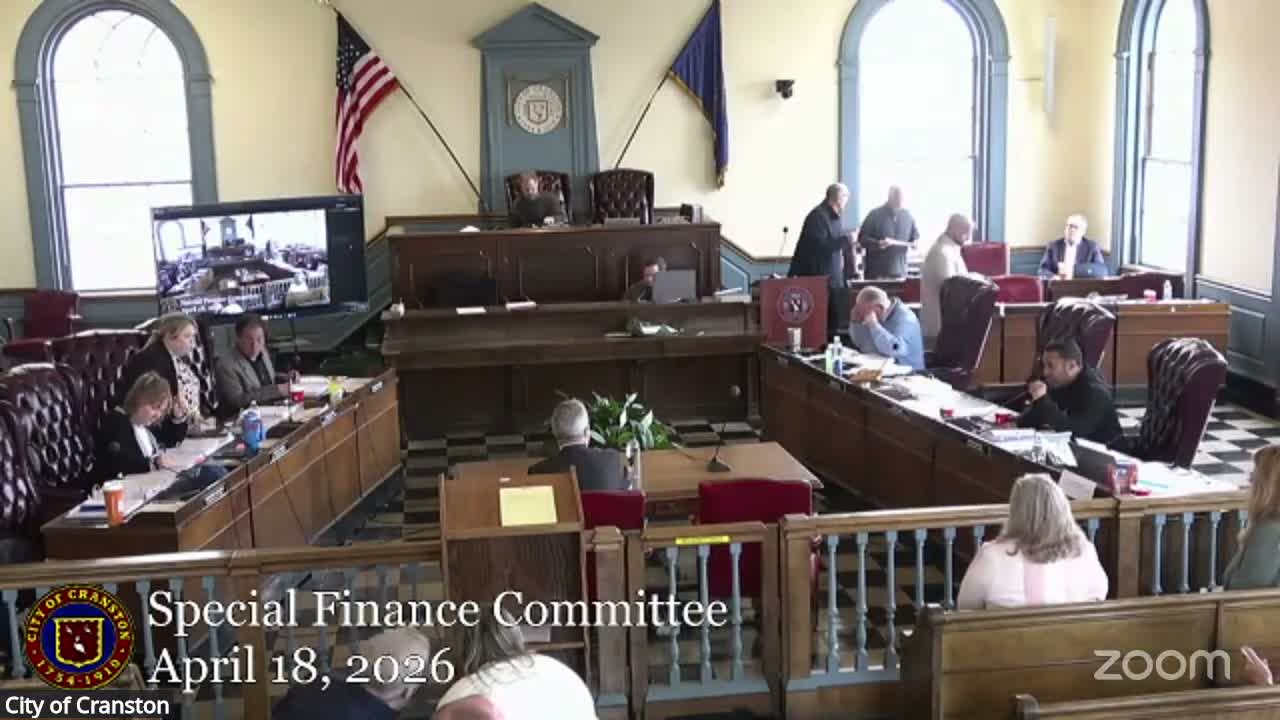
Cranston — Councilors at a special finance committee hearing on Saturday pressed the city’s Parks & Recreation director over a budget that officials say is a more realistic accounting of recent spending but that would raise costs in several lines if approved.
“I think this budget represents a more realistic, numbers compared to last year,” Parks & Recreation Director (as referred to in the hearing) said, defending higher figures for contracted fertilization and aeration, new pool supplies, preventive maintenance, and electricity for numerous sites around the city. The director told councilors that some increases reflect previously underbudgeted, recurring costs — for example, a three‑year fertilization contract that cost about $40,000–$45,000, while the earlier budget had shown $20,000.
The hour‑long exchange turned to personnel and tradeoffs. Council President (as identified in the hearing) said the city is “looking at … perhaps the largest tax increase the city of Cranston’s ever seen,” and warned the council may need a supermajority vote at the state and local level to exceed the tax cap the mayor has requested. That, he said, puts pressure on councilors to find savings now. Auditor DeMaio cautioned the committee that the figures presented are provisional: “The budget that’s presented to us right now … has not been adopted for the percentage of the increase,” he said, adding that the document could change pending state and municipal approvals.
Councilors focused on specific line items: a jump in fertilization because prior budgets undercounted the contracted rate; the growth in playground attendant wages tied to minimum‑wage increases and staffing ratios; and higher electricity and water costs connected to additional facilities and irrigation systems. The director said overtime has increased because staff must cover athletic events at multiple venues and to provide personnel for turf‑field rentals. Rentals also generate revenue, the director said, but require staffing that raises overtime costs.
Council members also asked about a notable director‑level salary increase that is not contractual. The director said some increases reflect prior agreements and prior misstatements in earlier budgets; the administration and mayor’s office have recommended an adjustment for that single department head. Multiple councilors asked for full written detail on which positions are contractual versus discretionary.
Other policy questions included:
- Trees and emergency storm work: director said much of the tree work this year was emergency response to storm damage and is not routine removal.
- Splash pad and pool costs: the director said splash pads are designed to be water‑efficient and that the pool will be staffed and charged with fees, but councilors pressed for precise first‑year operating cost estimates. The director said early estimates are conservative and that the program should be reassessed after its initial season.
- Overtime and vacancies: councilors asked whether vacancies and reassignments (including bumping from other departments) would reduce overtime; the director said some steps already taken have reduced certain overtime obligations but that contractual obligations limit other changes.
The hearing stretched into a full day covering many departments. The Parks & Recreation exchange was one of the most detailed, with several councilors warning that if the mayor’s requested change to the tax cap is not approved, the city may need across‑the‑board cuts. The director said service reductions would be painful and would likely include reduced playground programming, lower summer‑camp ratios, and curtailed facility maintenance.
What happens next: The finance committee will compile follow‑up questions and requested documentation from the director and the finance office, including precise breakdowns of contractual vs. non‑contractual pay changes, a water‑usage cost sheet for pools and splash pads, and a list of potential savings. The committee signaled it may meet again during the week of April 27 to continue departmental reviews and to resolve outstanding documentation requests.
Reporting notes: This article is drawn directly from the April 18, 2026 special finance committee hearing transcript and includes verbatim quotes from participants where indicated. Attributions use only names or role labels that appear in the hearing transcript.
The committee did not take final votes at the session; formal budget decisions will follow later in the public process.
“I think this budget represents a more realistic, numbers compared to last year,” Parks & Recreation Director (as referred to in the hearing) said, defending higher figures for contracted fertilization and aeration, new pool supplies, preventive maintenance, and electricity for numerous sites around the city. The director told councilors that some increases reflect previously underbudgeted, recurring costs — for example, a three‑year fertilization contract that cost about $40,000–$45,000, while the earlier budget had shown $20,000.
The hour‑long exchange turned to personnel and tradeoffs. Council President (as identified in the hearing) said the city is “looking at … perhaps the largest tax increase the city of Cranston’s ever seen,” and warned the council may need a supermajority vote at the state and local level to exceed the tax cap the mayor has requested. That, he said, puts pressure on councilors to find savings now. Auditor DeMaio cautioned the committee that the figures presented are provisional: “The budget that’s presented to us right now … has not been adopted for the percentage of the increase,” he said, adding that the document could change pending state and municipal approvals.
Councilors focused on specific line items: a jump in fertilization because prior budgets undercounted the contracted rate; the growth in playground attendant wages tied to minimum‑wage increases and staffing ratios; and higher electricity and water costs connected to additional facilities and irrigation systems. The director said overtime has increased because staff must cover athletic events at multiple venues and to provide personnel for turf‑field rentals. Rentals also generate revenue, the director said, but require staffing that raises overtime costs.
Council members also asked about a notable director‑level salary increase that is not contractual. The director said some increases reflect prior agreements and prior misstatements in earlier budgets; the administration and mayor’s office have recommended an adjustment for that single department head. Multiple councilors asked for full written detail on which positions are contractual versus discretionary.
Other policy questions included:
- Trees and emergency storm work: director said much of the tree work this year was emergency response to storm damage and is not routine removal.
- Splash pad and pool costs: the director said splash pads are designed to be water‑efficient and that the pool will be staffed and charged with fees, but councilors pressed for precise first‑year operating cost estimates. The director said early estimates are conservative and that the program should be reassessed after its initial season.
- Overtime and vacancies: councilors asked whether vacancies and reassignments (including bumping from other departments) would reduce overtime; the director said some steps already taken have reduced certain overtime obligations but that contractual obligations limit other changes.
The hearing stretched into a full day covering many departments. The Parks & Recreation exchange was one of the most detailed, with several councilors warning that if the mayor’s requested change to the tax cap is not approved, the city may need across‑the‑board cuts. The director said service reductions would be painful and would likely include reduced playground programming, lower summer‑camp ratios, and curtailed facility maintenance.
What happens next: The finance committee will compile follow‑up questions and requested documentation from the director and the finance office, including precise breakdowns of contractual vs. non‑contractual pay changes, a water‑usage cost sheet for pools and splash pads, and a list of potential savings. The committee signaled it may meet again during the week of April 27 to continue departmental reviews and to resolve outstanding documentation requests.
Reporting notes: This article is drawn directly from the April 18, 2026 special finance committee hearing transcript and includes verbatim quotes from participants where indicated. Attributions use only names or role labels that appear in the hearing transcript.
The committee did not take final votes at the session; formal budget decisions will follow later in the public process.
View the Full Meeting & All Its Details
This article offers just a summary. Unlock complete video, transcripts, and insights as a Founder Member.
✓
Watch full, unedited meeting videos
✓
Search every word spoken in unlimited transcripts
✓
AI summaries & real-time alerts (all government levels)
✓
Permanent access to expanding government content
30-day money-back guarantee
