Committee advances bill letting State Treasurer hire in‑house attorneys
April 15, 2026 | 2026 Legislature OK, Oklahoma
This article was created by AI summarizing key points discussed. AI makes mistakes, so for full details and context, please refer to the video of the full meeting. Please report any errors so we can fix them. Report an error »
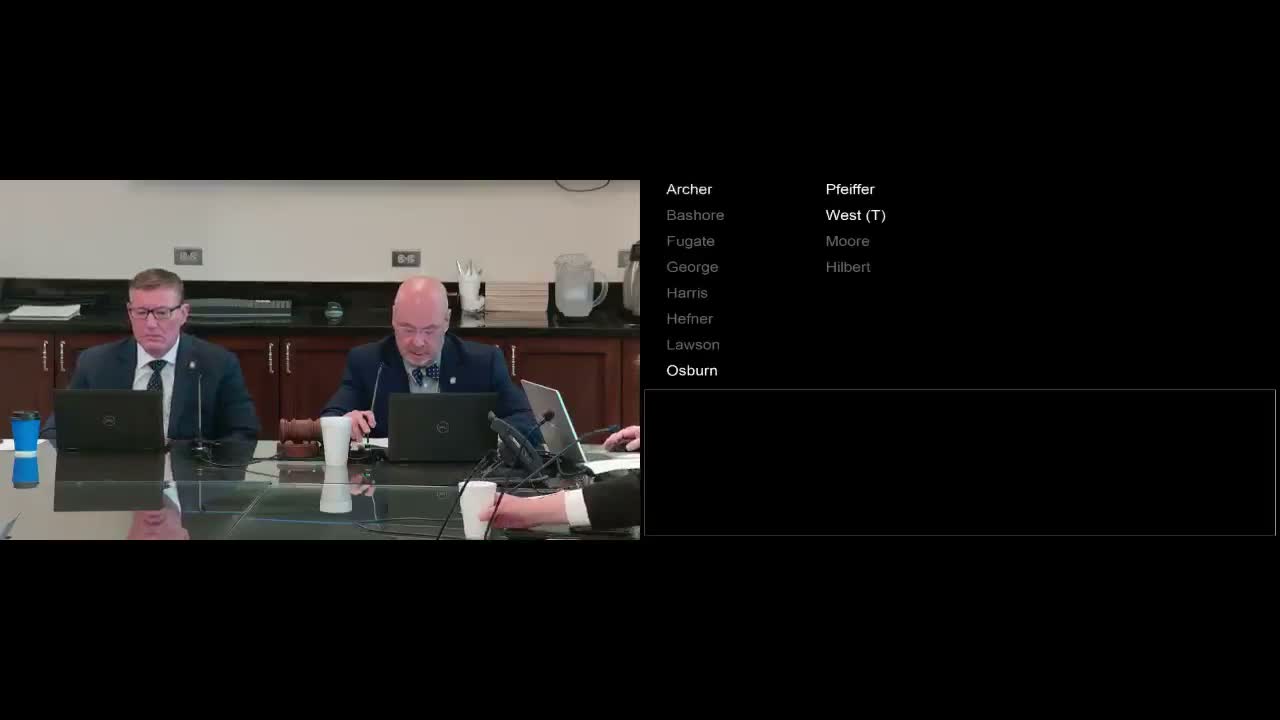
Chairman Osborne recognized Representative LePak, who presented an amended version of Senate Bill 419 and said the amendment updates the bill’s effective date to 2026. "419 authorizes the state treasurer ... to employ or appoint attorneys," LePak said, explaining the change would put the treasurer on a statutory list of entities allowed to have in‑house counsel.
The bill prompted questions about the Attorney General’s role and the risk of conflicting legal advice. Representative Fugate asked whether allowing separate counsel for the treasurer could lead to inconsistent positions with the Attorney General. LePak replied that the change responds to practical needs: specialized securities and investment advice and workload delays in the AG’s office. LePak cited an example he described as a missed opportunity tied to investment timing, saying there was a case involving "investments of $777,000,000" that missed an advantageous window and cost "about 3 months of earnings to the tune of 5 and a half million dollars annually." He said the treasurer’s office manages roughly "$17,000,000,000 of our assets," arguing that specialization can justify a separate general counsel.
Other members probed fiscal impacts and whether non‑appropriated agencies such as the Oklahoma Department of Wildlife Conservation (ODWC) can absorb the cost of an on‑staff attorney. LePak said his information suggested ODWC could absorb the cost and estimated it would be "somewhere between, I think I saw 50 to $80,000" from their budget. Representative Archer questioned whether inclusion of ODWC might be motivated by a desire to pursue litigation between state agencies; LePak said he was not aware of such a lawsuit and could not answer definitively.
Representative Heffner asked whether faster response times from the Attorney General’s office would make the bill unnecessary. LePak acknowledged delays may have multiple causes but reiterated his primary argument that the treasurer’s unique portfolio and technical needs justify in‑house counsel. Representative Fugate stressed that courts and the AG remain mechanisms for resolving legal disputes but said the treasurer’s investment responsibilities merited consideration.
After brief additional remarks and no extended debate, the committee voted to report the bill out of committee as "do pass." The clerks recorded a tally of 7 ayes and 2 nays; the bill was reported as due pass and will proceed to the next legislative step.
The bill prompted questions about the Attorney General’s role and the risk of conflicting legal advice. Representative Fugate asked whether allowing separate counsel for the treasurer could lead to inconsistent positions with the Attorney General. LePak replied that the change responds to practical needs: specialized securities and investment advice and workload delays in the AG’s office. LePak cited an example he described as a missed opportunity tied to investment timing, saying there was a case involving "investments of $777,000,000" that missed an advantageous window and cost "about 3 months of earnings to the tune of 5 and a half million dollars annually." He said the treasurer’s office manages roughly "$17,000,000,000 of our assets," arguing that specialization can justify a separate general counsel.
Other members probed fiscal impacts and whether non‑appropriated agencies such as the Oklahoma Department of Wildlife Conservation (ODWC) can absorb the cost of an on‑staff attorney. LePak said his information suggested ODWC could absorb the cost and estimated it would be "somewhere between, I think I saw 50 to $80,000" from their budget. Representative Archer questioned whether inclusion of ODWC might be motivated by a desire to pursue litigation between state agencies; LePak said he was not aware of such a lawsuit and could not answer definitively.
Representative Heffner asked whether faster response times from the Attorney General’s office would make the bill unnecessary. LePak acknowledged delays may have multiple causes but reiterated his primary argument that the treasurer’s unique portfolio and technical needs justify in‑house counsel. Representative Fugate stressed that courts and the AG remain mechanisms for resolving legal disputes but said the treasurer’s investment responsibilities merited consideration.
After brief additional remarks and no extended debate, the committee voted to report the bill out of committee as "do pass." The clerks recorded a tally of 7 ayes and 2 nays; the bill was reported as due pass and will proceed to the next legislative step.
Don't Miss a Word: See the Full Meeting!
Go beyond summaries. Unlock every video, transcript, and key insight with a Founder Membership.
✓
Get instant access to full meeting videos
✓
Search and clip any phrase from complete transcripts
✓
Receive AI-powered summaries & custom alerts
✓
Enjoy lifetime, unrestricted access to government data
30-day money-back guarantee
