Board debates validity of Panorama survey as staff report gains on Goal 4.1
April 16, 2026 | ALBUQUERQUE PUBLIC SCHOOLS, School Districts, New Mexico
This article was created by AI summarizing key points discussed. AI makes mistakes, so for full details and context, please refer to the video of the full meeting. Please report any errors so we can fix them. Report an error »
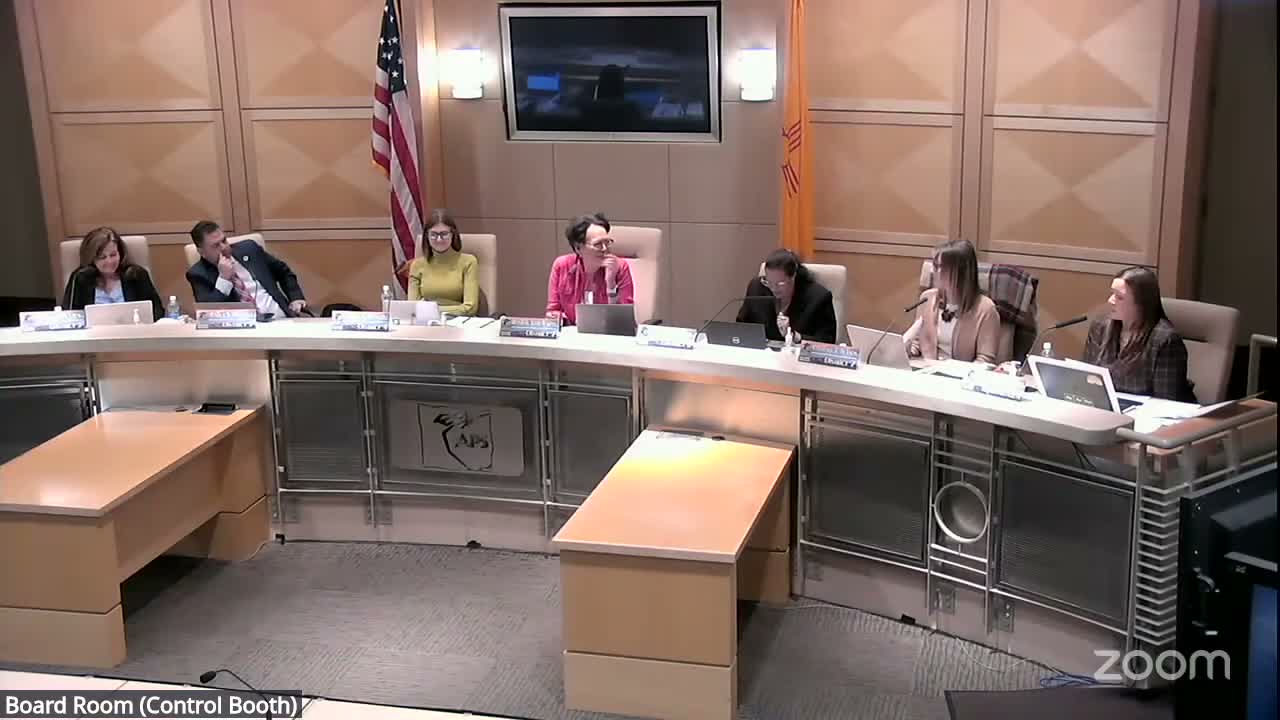
District staff presented progress monitoring on interim Goal 4.1—skills, habits and mindsets for students in grades 3–5—and described a package of strategies the district calls “culture of care.” The presentation and a follow‑up discussion occupied a large portion of the April 15 board meeting.
“We did meet our spring targets across all four areas,” district presenters said, reporting steady growth in student self‑reported perseverance, self‑regulation, self‑efficacy and social awareness. The district said it pairs Panorama survey results with qualitative listening tours and a longitudinal research partnership with the University of New Mexico to evaluate implementation.
Several trustees questioned how much weight to give self‑report survey data. “I’m uncomfortable with our insistence that this computer program is actually showing that we are meeting the goal,” Board Member Maurecia Bowman said, adding that parents and teachers have raised concerns about relying too heavily on the instrument and urging more in‑person or external measures.
District assessment staff responded that Panorama is one measure among several, that Panorama’s developers supply validity studies, and that staff perform local triangulation. “We also look at attendance, behavior and course passing,” the district’s assessment lead said, adding that open‑ended student responses and listening tours are used to interpret survey changes.
Board members pressed for disaggregated results and school‑level discipline and attendance comparisons for the recognized schools so trustees can judge whether survey increases align with other indicators. Staff said those data exist at student level and can be provided in follow up.
On implementation, district staff described a multiyear rollout of “culture of care” trainings (cohorts, peer mediation, and school teams trained to sustain practice) and said 26 of 84 elementary schools had taken the first cohort at the time of the meeting. Staff said full implementation can take one to three years and emphasized that a culture‑of‑care approach does not remove consequences for serious behavior.
Next steps: staff agreed to provide trustees with school‑specific and disaggregated data to support interpretation of the survey results and to continue listening tours and implementation monitoring. Trustees and staff discussed creating or improving task forces and other collaborative structures to ensure teacher voice in implementation.
“We did meet our spring targets across all four areas,” district presenters said, reporting steady growth in student self‑reported perseverance, self‑regulation, self‑efficacy and social awareness. The district said it pairs Panorama survey results with qualitative listening tours and a longitudinal research partnership with the University of New Mexico to evaluate implementation.
Several trustees questioned how much weight to give self‑report survey data. “I’m uncomfortable with our insistence that this computer program is actually showing that we are meeting the goal,” Board Member Maurecia Bowman said, adding that parents and teachers have raised concerns about relying too heavily on the instrument and urging more in‑person or external measures.
District assessment staff responded that Panorama is one measure among several, that Panorama’s developers supply validity studies, and that staff perform local triangulation. “We also look at attendance, behavior and course passing,” the district’s assessment lead said, adding that open‑ended student responses and listening tours are used to interpret survey changes.
Board members pressed for disaggregated results and school‑level discipline and attendance comparisons for the recognized schools so trustees can judge whether survey increases align with other indicators. Staff said those data exist at student level and can be provided in follow up.
On implementation, district staff described a multiyear rollout of “culture of care” trainings (cohorts, peer mediation, and school teams trained to sustain practice) and said 26 of 84 elementary schools had taken the first cohort at the time of the meeting. Staff said full implementation can take one to three years and emphasized that a culture‑of‑care approach does not remove consequences for serious behavior.
Next steps: staff agreed to provide trustees with school‑specific and disaggregated data to support interpretation of the survey results and to continue listening tours and implementation monitoring. Trustees and staff discussed creating or improving task forces and other collaborative structures to ensure teacher voice in implementation.
View the Full Meeting & All Its Details
This article offers just a summary. Unlock complete video, transcripts, and insights as a Founder Member.
✓
Watch full, unedited meeting videos
✓
Search every word spoken in unlimited transcripts
✓
AI summaries & real-time alerts (all government levels)
✓
Permanent access to expanding government content
30-day money-back guarantee
