Commission hears Pacific Salmon Treaty briefing as renegotiation timeline begins
April 17, 2026 | Board Council Commission Agencies , Executive, Washington
This article was created by AI summarizing key points discussed. AI makes mistakes, so for full details and context, please refer to the video of the full meeting. Please report any errors so we can fix them. Report an error »
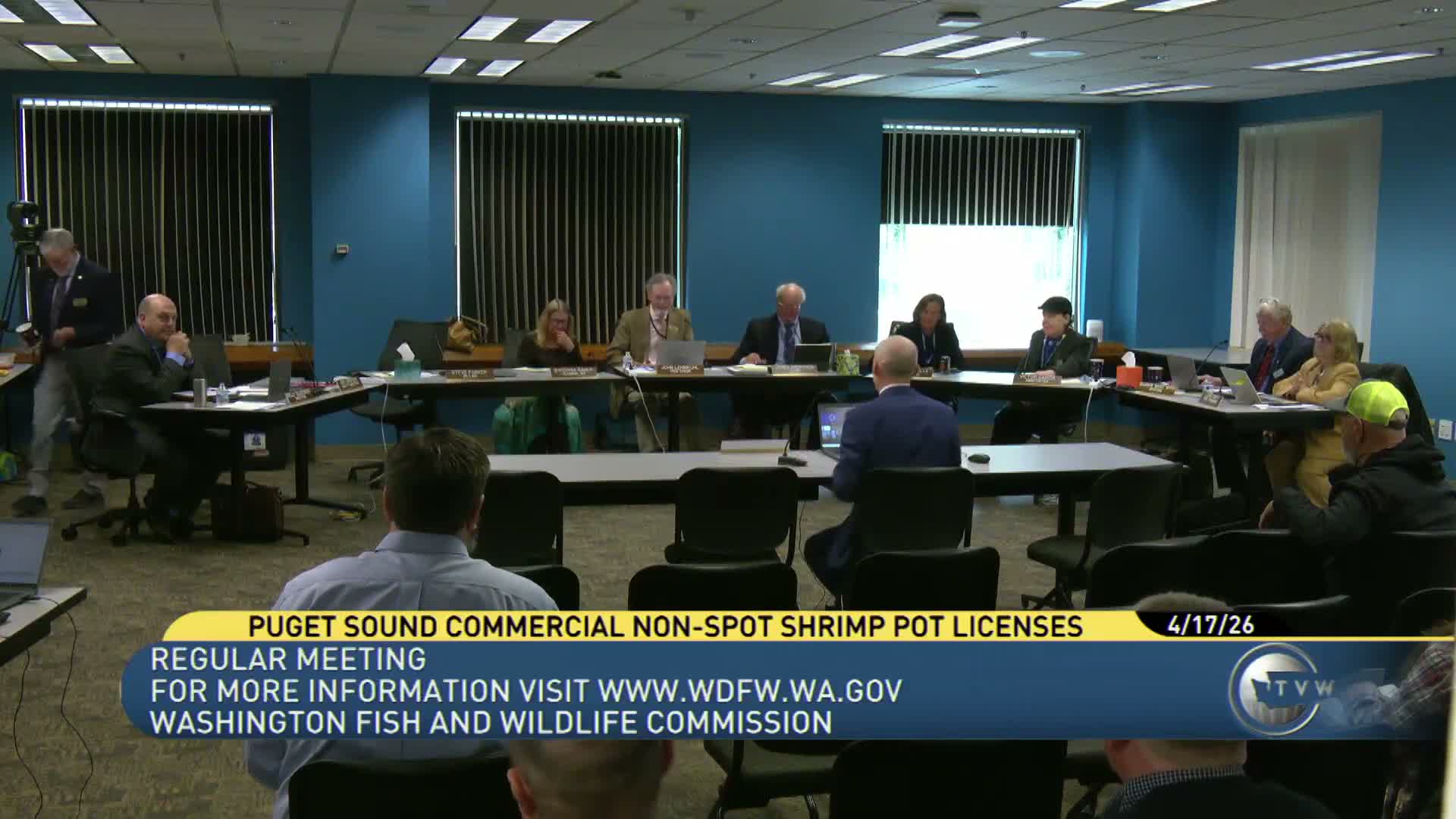
The commission received an overview March 17 of the Pacific Salmon Treaty and the upcoming renegotiation process from Phil Anderson, the U.S. commissioner to the Pacific Salmon Commission representing Washington and Oregon.
Anderson reviewed the treaty’s history (ratified in 1985) and the institutions it created for cross‑boundary salmon management. He said the current 10-year arrangements in place since 2019 expire Dec. 31, 2028, and that the United States will need to develop a U.S. position (Southern US, Alaska, federal coordination and tribal concurrence) before entering bilateral negotiations with Canada, which are expected to begin in early September 2026.
Anderson emphasized the treaty’s role in limiting interceptions of Washington-origin stocks in northern fisheries and noted that failure to renew chapters could remove agreed limits on interception in parts of Canada and southeast Alaska. He outlined the multi-step negotiating sequence (Southern US consensus, agreement with Alaska, then bilateral sessions) and stressed that U.S. positions require agreement among U.S. commissioners before being taken to Canada.
He also described the Pacific Salmon Commission’s endowment funds and grant history (federal seed funding followed by grants awarded from invested funds) and summarized recent investments that support conservation projects in Washington. Anderson said an economic analysis is underway to better quantify fisheries economics and that conservation remains his top priority in negotiations.
Commissioners asked about the economic work, interstate and tribal coordination, and how advocacy groups might feed into the process; Anderson said he has engaged with stakeholders, including Wild Fish Conservancy, and is open to further meetings. He offered to provide updates to the commission as negotiations progress.
Ending: Anderson said the U.S. section must finalize a U.S. position before bilateral talks and that the process is expected to take roughly 15 months of internal work before bilateral sessions in September 2026; implementation would be timed for 2029 if agreements are reached and ratified.
Key quote: "We do this by agreement... those three commissioners have to agree to take a US position forward to Canada," Anderson said.
Anderson reviewed the treaty’s history (ratified in 1985) and the institutions it created for cross‑boundary salmon management. He said the current 10-year arrangements in place since 2019 expire Dec. 31, 2028, and that the United States will need to develop a U.S. position (Southern US, Alaska, federal coordination and tribal concurrence) before entering bilateral negotiations with Canada, which are expected to begin in early September 2026.
Anderson emphasized the treaty’s role in limiting interceptions of Washington-origin stocks in northern fisheries and noted that failure to renew chapters could remove agreed limits on interception in parts of Canada and southeast Alaska. He outlined the multi-step negotiating sequence (Southern US consensus, agreement with Alaska, then bilateral sessions) and stressed that U.S. positions require agreement among U.S. commissioners before being taken to Canada.
He also described the Pacific Salmon Commission’s endowment funds and grant history (federal seed funding followed by grants awarded from invested funds) and summarized recent investments that support conservation projects in Washington. Anderson said an economic analysis is underway to better quantify fisheries economics and that conservation remains his top priority in negotiations.
Commissioners asked about the economic work, interstate and tribal coordination, and how advocacy groups might feed into the process; Anderson said he has engaged with stakeholders, including Wild Fish Conservancy, and is open to further meetings. He offered to provide updates to the commission as negotiations progress.
Ending: Anderson said the U.S. section must finalize a U.S. position before bilateral talks and that the process is expected to take roughly 15 months of internal work before bilateral sessions in September 2026; implementation would be timed for 2029 if agreements are reached and ratified.
Key quote: "We do this by agreement... those three commissioners have to agree to take a US position forward to Canada," Anderson said.
View the Full Meeting & All Its Details
This article offers just a summary. Unlock complete video, transcripts, and insights as a Founder Member.
✓
Watch full, unedited meeting videos
✓
Search every word spoken in unlimited transcripts
✓
AI summaries & real-time alerts (all government levels)
✓
Permanent access to expanding government content
30-day money-back guarantee
