South Country Central lays out three paths to close $5.9 million gap as special-act aid remains uncertain
April 16, 2026 | SOUTH COUNTRY CENTRAL SCHOOL DISTRICT, School Districts, New York
This article was created by AI summarizing key points discussed. AI makes mistakes, so for full details and context, please refer to the video of the full meeting. Please report any errors so we can fix them. Report an error »
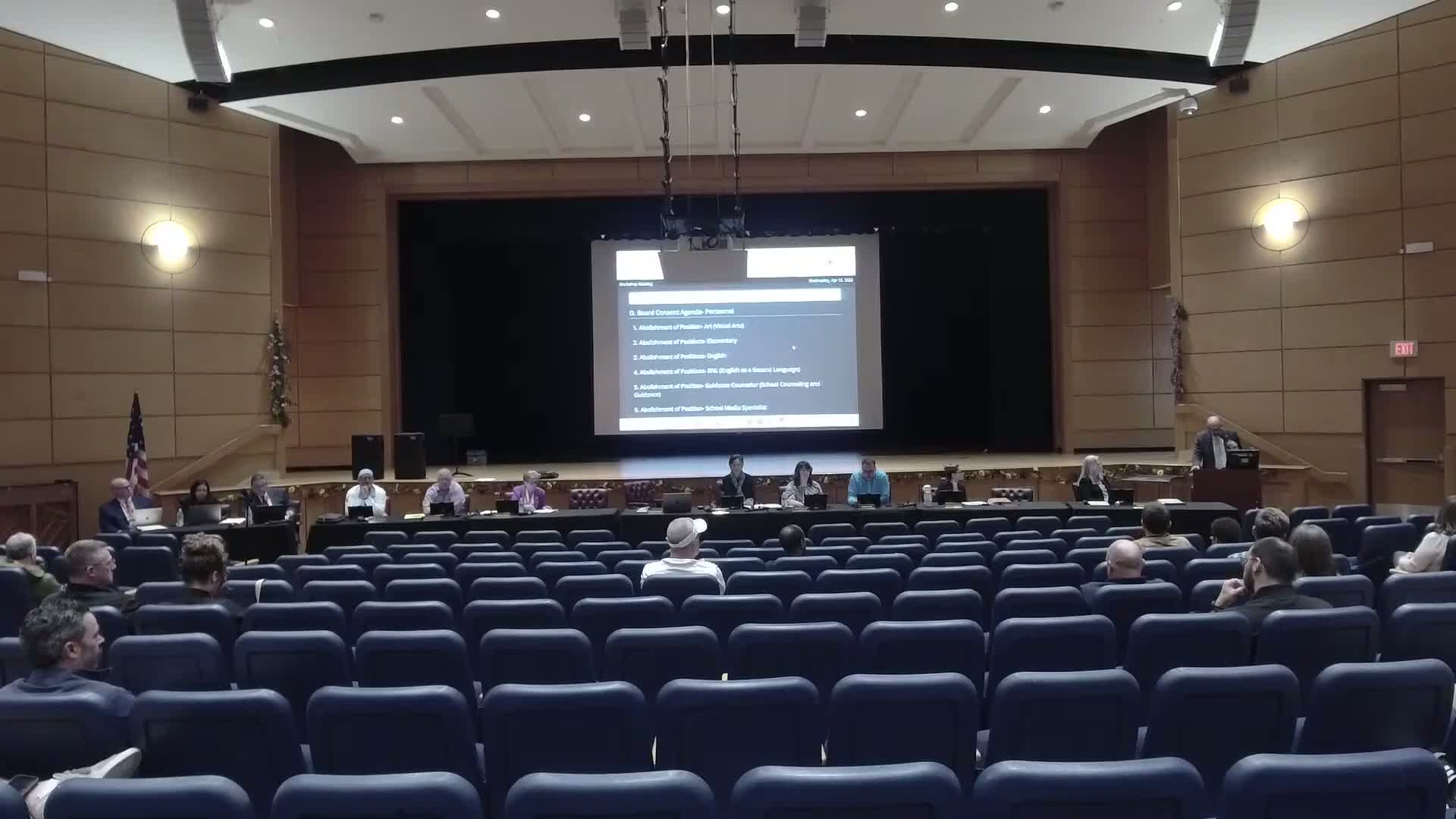
John Belmonte, the district’s business official, told the School Board and the public that the South Country Central School District faces a structural budget problem that developed over several years and was made visible by the Office of the State Controller review. Belmonte presented draft 4 of the 2026–27 budget — a $150,738,000 plan — and said the district currently shows an $8.7 million shortfall for 2025–26 and about $5.8–$5.9 million for 2026–27.
Belmonte described three concrete options for closing next year’s gap: cut roughly $5.9 million to present a budget at a 5.52% tax-cap level (which he estimated would reduce the district’s spending and translate to about $341 per taxpayer per year in his example); pursue a higher levy that would fully fund programs (an example he gave was a 13.76% levy with an estimated roughly $1,200 annual impact for the cited taxpayer example); or choose a compromise that reduces the budget by about $3 million and increases the levy to a lower percentage (Belmonte’s example put that near 9.57%, about $755/year in his scenario). He said short-term borrowing is legally possible (up to 5% of the budget) but only pushes the obligation into a later year and does not solve the underlying structural deficit.
Belmonte and administration repeatedly said their preferred long-term tool was a special-act legislative remedy that would allow multi-year deficit financing; they said earlier discussions with state legislators and Albany were not promising and that the district must plan for the possibility that that relief will not arrive in time. The presentation noted prior steps already taken — spending controls, staff reductions (including substantial proposed teaching cuts), and administrative reductions — and stressed that many recommendations from the controls report are already being implemented.
Board members pressed for clarity about how specific options affect programs and personnel. Trustee Cheryl Voorhees said the board has not received a full staff list and repeated earlier requests for personnel and treasurer reports. Administration responded that they will provide the requested materials and that the 2026–27 draft already includes reductions they believe limit program damage where possible, while acknowledging that more severe cuts or a high tax option would change that calculus. Belmonte emphasized that some savings (for example, reductions tied to transportation or capital projects) require voter approval or are constrained by state timing.
What happens next: the board must adopt a budget to appear on the May ballot; if a proposed budget fails at the vote the district would face a contingency budget with additional reductions. The administration said it will continue to present scenario detail to the board and to provide the documents trustees requested.
Quote: “This moment has also required us to look inward as an organization,” Belmonte said, summarizing the multi-year recovery approach and urging public input on which mix of cuts and revenue the community will accept.
The board did not adopt a final decision at the meeting; trustees said they will consider the three options and additional documentation before the scheduled budget action.
Belmonte described three concrete options for closing next year’s gap: cut roughly $5.9 million to present a budget at a 5.52% tax-cap level (which he estimated would reduce the district’s spending and translate to about $341 per taxpayer per year in his example); pursue a higher levy that would fully fund programs (an example he gave was a 13.76% levy with an estimated roughly $1,200 annual impact for the cited taxpayer example); or choose a compromise that reduces the budget by about $3 million and increases the levy to a lower percentage (Belmonte’s example put that near 9.57%, about $755/year in his scenario). He said short-term borrowing is legally possible (up to 5% of the budget) but only pushes the obligation into a later year and does not solve the underlying structural deficit.
Belmonte and administration repeatedly said their preferred long-term tool was a special-act legislative remedy that would allow multi-year deficit financing; they said earlier discussions with state legislators and Albany were not promising and that the district must plan for the possibility that that relief will not arrive in time. The presentation noted prior steps already taken — spending controls, staff reductions (including substantial proposed teaching cuts), and administrative reductions — and stressed that many recommendations from the controls report are already being implemented.
Board members pressed for clarity about how specific options affect programs and personnel. Trustee Cheryl Voorhees said the board has not received a full staff list and repeated earlier requests for personnel and treasurer reports. Administration responded that they will provide the requested materials and that the 2026–27 draft already includes reductions they believe limit program damage where possible, while acknowledging that more severe cuts or a high tax option would change that calculus. Belmonte emphasized that some savings (for example, reductions tied to transportation or capital projects) require voter approval or are constrained by state timing.
What happens next: the board must adopt a budget to appear on the May ballot; if a proposed budget fails at the vote the district would face a contingency budget with additional reductions. The administration said it will continue to present scenario detail to the board and to provide the documents trustees requested.
Quote: “This moment has also required us to look inward as an organization,” Belmonte said, summarizing the multi-year recovery approach and urging public input on which mix of cuts and revenue the community will accept.
The board did not adopt a final decision at the meeting; trustees said they will consider the three options and additional documentation before the scheduled budget action.
Don't Miss a Word: See the Full Meeting!
Go beyond summaries. Unlock every video, transcript, and key insight with a Founder Membership.
✓
Get instant access to full meeting videos
✓
Search and clip any phrase from complete transcripts
✓
Receive AI-powered summaries & custom alerts
✓
Enjoy lifetime, unrestricted access to government data
30-day money-back guarantee
