APO outlines delays and fixes for annual reporting and public complaint database
April 17, 2026 | Austin, Travis County, Texas
This article was created by AI summarizing key points discussed. AI makes mistakes, so for full details and context, please refer to the video of the full meeting. Please report any errors so we can fix them. Report an error »
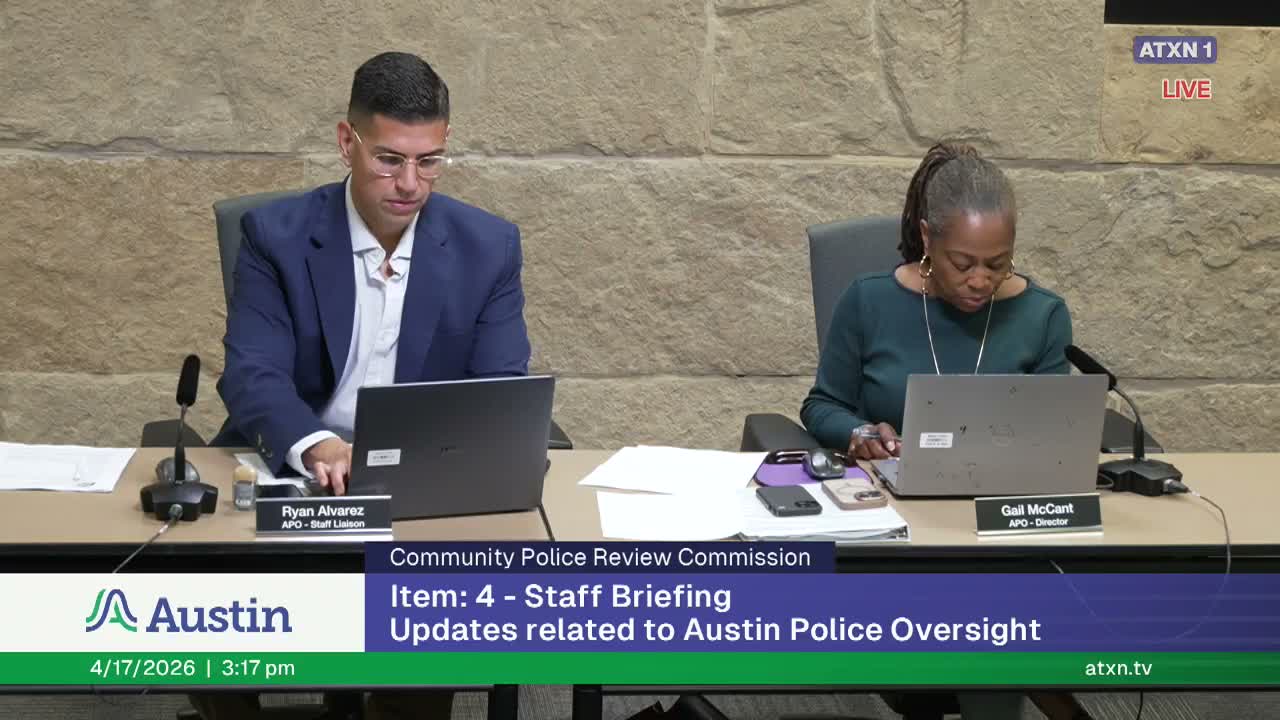
Gail McCant, director of Austin Police Oversight, updated the Community Police Review Commission on April 17 about steps APO is taking to improve transparency and reporting while explaining why annual reports lag behind the calendar year.
McCant said APO recently regained access to APD use‑of‑force data after APD brought in an external consultant, and that staff will resume analysis and post results on APO’s website. She said APO plans to launch an officer‑involved‑shooting dashboard and a "know your rights" resource later this summer and will schedule a demo for the commission.
Explaining the timing of annual reports, McCant noted that APD internal affairs has 180 days to complete an investigation; complaints filed late in a calendar year may not be closed until mid‑year the following year, which creates a lag in APO’s validated, published annual report. "So we're not releasing the 2025 report until 2026," she said, describing a roughly one‑year delay from calendar year end to public reporting.
McCant also addressed a backlog in publishing complaint documents caused by past staffing vacancies and by the need to redact documents under the meeting/confer agreement and federal privacy law. She said the city's March website relaunch improved search and navigation and that APO is working with APD on a case‑management system to close remaining data gaps.
On accessibility, McCant said April 2026 Department of Justice web‑accessibility requirements now require an additional review step that may add roughly 45 days before documents are posted.
Why it matters: Commissioners and the public have pressed for more timely and complete complaint information. APO's explanation frames the reporting lag as structural—driven by statutory investigation timelines and redaction/privacy obligations—while committing to system and staffing changes to reduce friction.
McCant asked commissioners to expect a public presentation of the new dashboard and promised a timeline and sample outputs once internal validation is complete. She also confirmed APO will publish the remaining 2025 quarterly complaint documents and continue regular posting as final reviews and redactions are completed.
McCant said APO recently regained access to APD use‑of‑force data after APD brought in an external consultant, and that staff will resume analysis and post results on APO’s website. She said APO plans to launch an officer‑involved‑shooting dashboard and a "know your rights" resource later this summer and will schedule a demo for the commission.
Explaining the timing of annual reports, McCant noted that APD internal affairs has 180 days to complete an investigation; complaints filed late in a calendar year may not be closed until mid‑year the following year, which creates a lag in APO’s validated, published annual report. "So we're not releasing the 2025 report until 2026," she said, describing a roughly one‑year delay from calendar year end to public reporting.
McCant also addressed a backlog in publishing complaint documents caused by past staffing vacancies and by the need to redact documents under the meeting/confer agreement and federal privacy law. She said the city's March website relaunch improved search and navigation and that APO is working with APD on a case‑management system to close remaining data gaps.
On accessibility, McCant said April 2026 Department of Justice web‑accessibility requirements now require an additional review step that may add roughly 45 days before documents are posted.
Why it matters: Commissioners and the public have pressed for more timely and complete complaint information. APO's explanation frames the reporting lag as structural—driven by statutory investigation timelines and redaction/privacy obligations—while committing to system and staffing changes to reduce friction.
McCant asked commissioners to expect a public presentation of the new dashboard and promised a timeline and sample outputs once internal validation is complete. She also confirmed APO will publish the remaining 2025 quarterly complaint documents and continue regular posting as final reviews and redactions are completed.
View the Full Meeting & All Its Details
This article offers just a summary. Unlock complete video, transcripts, and insights as a Founder Member.
✓
Watch full, unedited meeting videos
✓
Search every word spoken in unlimited transcripts
✓
AI summaries & real-time alerts (all government levels)
✓
Permanent access to expanding government content
30-day money-back guarantee
