Commissioners split on case‑review method as CPRC struggles with backlog
April 17, 2026 | Austin, Travis County, Texas
This article was created by AI summarizing key points discussed. AI makes mistakes, so for full details and context, please refer to the video of the full meeting. Please report any errors so we can fix them. Report an error »
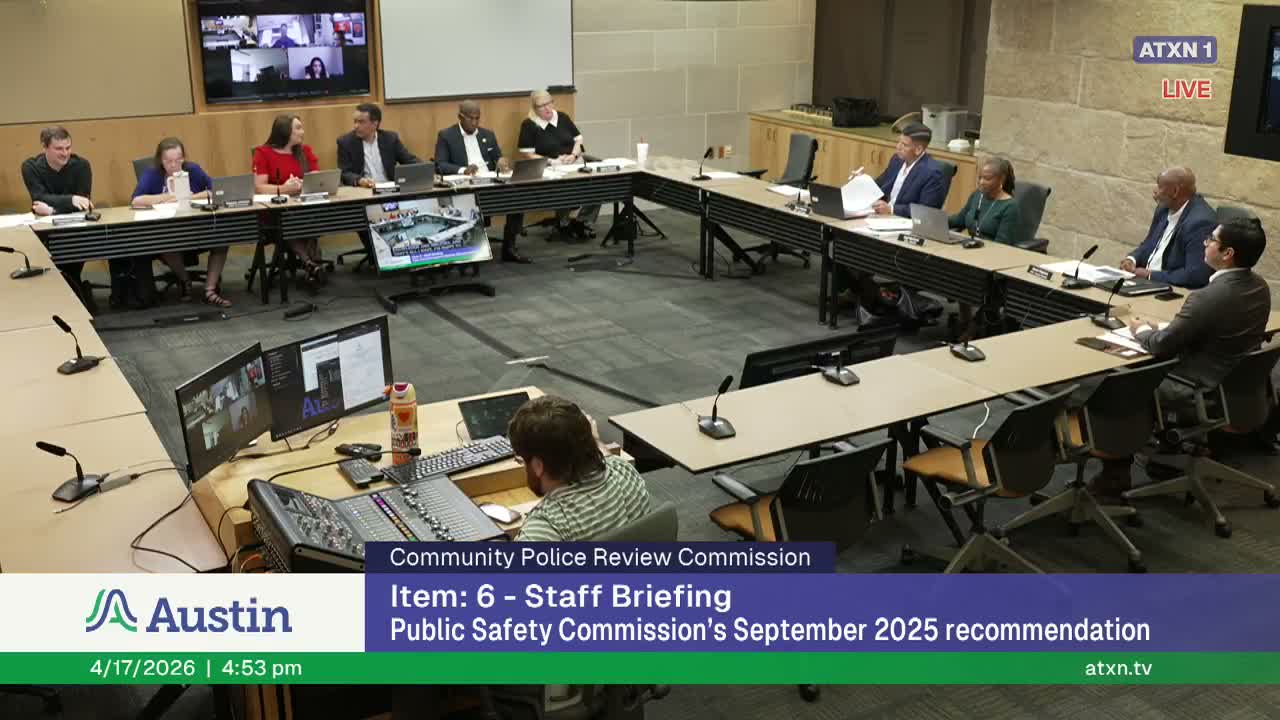
A sustained debate at the April 17 meeting exposed disagreement among Community Police Review Commission members about how the body should review completed investigations.
Some commissioners said the current three‑person work‑group model has created a backlog and suggested shifting to a model that allows commissioners to review active or newly completed cases prospectively rather than primarily retrospective reviews. "Why not start this commission off fresh, start doing as you said when there's a use of force incident ... we could take that same thing here," one commissioner said, urging a more forward‑looking approach.
Others urged caution, noting the commission needs experience and training to conduct reviews properly. APO staff explained CPRC cannot access complaint files until investigations are complete and redacted for release; APO and internal affairs have more immediate access during investigations because they operate daily as staff, while commissioners only receive files after case closure.
APO staff and some commissioners said a previously proposed flowchart for downloads and briefings — where IAD downloads completed investigations to a folder and briefs the full commission promptly — might balance speed and rigor. Kevin Masters and Gail McCant offered to re‑circulate that proposal and a flowchart for the commission to consider.
Why it matters: The commission’s ability to review investigations in a timely way affects whether its recommendations can influence discipline decisions before a chief’s final ruling. Commissioners raised practical constraints — access timing, redaction delays, volunteer time commitments — and proposed process revisions to address institutional lag.
Next steps: Commissioners were invited to draft formal proposals to amend the review process; APO and IAD will share the earlier proposed flowchart for the commission’s consideration at a future meeting.
Some commissioners said the current three‑person work‑group model has created a backlog and suggested shifting to a model that allows commissioners to review active or newly completed cases prospectively rather than primarily retrospective reviews. "Why not start this commission off fresh, start doing as you said when there's a use of force incident ... we could take that same thing here," one commissioner said, urging a more forward‑looking approach.
Others urged caution, noting the commission needs experience and training to conduct reviews properly. APO staff explained CPRC cannot access complaint files until investigations are complete and redacted for release; APO and internal affairs have more immediate access during investigations because they operate daily as staff, while commissioners only receive files after case closure.
APO staff and some commissioners said a previously proposed flowchart for downloads and briefings — where IAD downloads completed investigations to a folder and briefs the full commission promptly — might balance speed and rigor. Kevin Masters and Gail McCant offered to re‑circulate that proposal and a flowchart for the commission to consider.
Why it matters: The commission’s ability to review investigations in a timely way affects whether its recommendations can influence discipline decisions before a chief’s final ruling. Commissioners raised practical constraints — access timing, redaction delays, volunteer time commitments — and proposed process revisions to address institutional lag.
Next steps: Commissioners were invited to draft formal proposals to amend the review process; APO and IAD will share the earlier proposed flowchart for the commission’s consideration at a future meeting.
View the Full Meeting & All Its Details
This article offers just a summary. Unlock complete video, transcripts, and insights as a Founder Member.
✓
Watch full, unedited meeting videos
✓
Search every word spoken in unlimited transcripts
✓
AI summaries & real-time alerts (all government levels)
✓
Permanent access to expanding government content
30-day money-back guarantee
