Students showcase coding projects as district reports strong YouthTruth and literacy gains
April 17, 2026 | Mill Valley Elementary, School Districts, California
This article was created by AI summarizing key points discussed. AI makes mistakes, so for full details and context, please refer to the video of the full meeting. Please report any errors so we can fix them. Report an error »
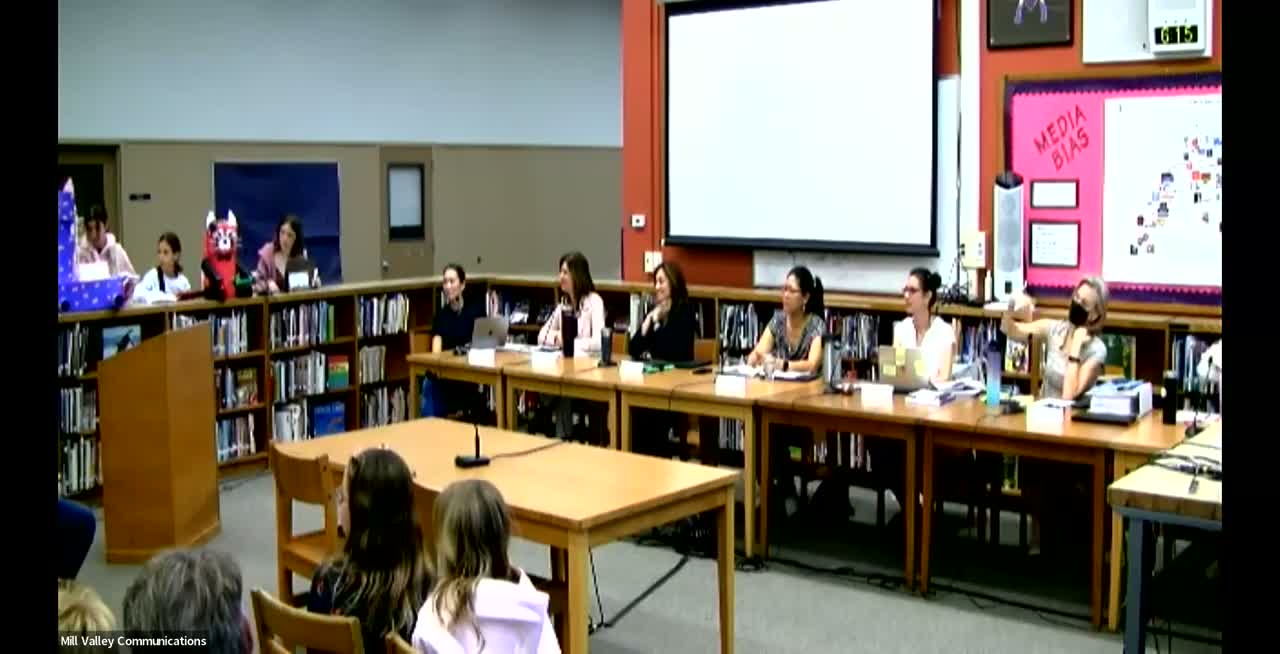
Students in the district presented culminating coding and makerspace projects at the April 16 board meeting while staff reported improved school-climate and literacy assessment results.
During the superintendent's report, teacher Miss Petrini brought multiple student teams to demonstrate robots and coded creatures built in class. Students named their projects (Pandy the red panda, Ziggy the ‘giraffricorn,’ Joy the jellyfish, Hog Rider and others) and explained sensors, motors and lights in short demonstrations. Parents and trustees praised the program and thanked teachers for hands-on learning opportunities.
Later, Kate Sprague of educational services reviewed YouthTruth climate-survey results for 2024–25. Sprague said the district’s student responses on belonging ranked in the high nineties compared with other schools that take the survey; she highlighted percentage-point gains in student engagement and belonging from the prior year and noted areas to investigate further, such as family communication and academic challenge. Sprague also described response rates (for example, roughly 769 third–fifth graders and 681 sixth–eighth graders participated) and said the district can provide subgroup breakdowns by request.
District staff then presented CAASPP results and DIBELS early-literacy screening data. Presenters described an increase in the “standard exceeded” category across the district between 2021–22 and 2024–25 for overall and several small subgroups (economically disadvantaged, Hispanic/Latino, parent education bands). On DIBELS mid-year screens staff noted growth in proficiency bands and said the screener helps target interventions for students at risk of reading difficulties; presenters estimated roughly 20 percent of students historically fall into the red/yellow risk bands and described targeted learning labs and intervention work.
MBTA co-presidents and teachers also spoke in support of Measure E, thanked school staff and announced upcoming canvassing dates. Erin Frazier, who identified herself as a fifth-grade teacher and MBTA co-president, urged the board to consider the impact of changes of assignment and appeals on teaching teams during an earlier public comment.
Trustees asked for more disaggregated data for middle-school family responses (noting a skew toward sixth-grade respondents) and for teacher perspectives about how DIBELS and assessment data inform daily instruction. Presenters committed to follow-up with more detailed subgroup reports and with teacher-led explanations of how screening data guide classroom practice.
The board did not vote on curricular adoption at the meeting; presenters suggested the YouthTruth results and DIBELS/CAASPP trends will feed into Local Control and Accountability Plan (LCAP) work and professional-development planning in upcoming months.
During the superintendent's report, teacher Miss Petrini brought multiple student teams to demonstrate robots and coded creatures built in class. Students named their projects (Pandy the red panda, Ziggy the ‘giraffricorn,’ Joy the jellyfish, Hog Rider and others) and explained sensors, motors and lights in short demonstrations. Parents and trustees praised the program and thanked teachers for hands-on learning opportunities.
Later, Kate Sprague of educational services reviewed YouthTruth climate-survey results for 2024–25. Sprague said the district’s student responses on belonging ranked in the high nineties compared with other schools that take the survey; she highlighted percentage-point gains in student engagement and belonging from the prior year and noted areas to investigate further, such as family communication and academic challenge. Sprague also described response rates (for example, roughly 769 third–fifth graders and 681 sixth–eighth graders participated) and said the district can provide subgroup breakdowns by request.
District staff then presented CAASPP results and DIBELS early-literacy screening data. Presenters described an increase in the “standard exceeded” category across the district between 2021–22 and 2024–25 for overall and several small subgroups (economically disadvantaged, Hispanic/Latino, parent education bands). On DIBELS mid-year screens staff noted growth in proficiency bands and said the screener helps target interventions for students at risk of reading difficulties; presenters estimated roughly 20 percent of students historically fall into the red/yellow risk bands and described targeted learning labs and intervention work.
MBTA co-presidents and teachers also spoke in support of Measure E, thanked school staff and announced upcoming canvassing dates. Erin Frazier, who identified herself as a fifth-grade teacher and MBTA co-president, urged the board to consider the impact of changes of assignment and appeals on teaching teams during an earlier public comment.
Trustees asked for more disaggregated data for middle-school family responses (noting a skew toward sixth-grade respondents) and for teacher perspectives about how DIBELS and assessment data inform daily instruction. Presenters committed to follow-up with more detailed subgroup reports and with teacher-led explanations of how screening data guide classroom practice.
The board did not vote on curricular adoption at the meeting; presenters suggested the YouthTruth results and DIBELS/CAASPP trends will feed into Local Control and Accountability Plan (LCAP) work and professional-development planning in upcoming months.
Don't Miss a Word: See the Full Meeting!
Go beyond summaries. Unlock every video, transcript, and key insight with a Founder Membership.
✓
Get instant access to full meeting videos
✓
Search and clip any phrase from complete transcripts
✓
Receive AI-powered summaries & custom alerts
✓
Enjoy lifetime, unrestricted access to government data
30-day money-back guarantee
