Committee hears bill letting Delaware Electric Cooperative decline default service to very large new loads
April 15, 2026 | 2026 Legislature DE, Legislative, Delaware
This article was created by AI summarizing key points discussed. AI makes mistakes, so for full details and context, please refer to the video of the full meeting. Please report any errors so we can fix them. Report an error »
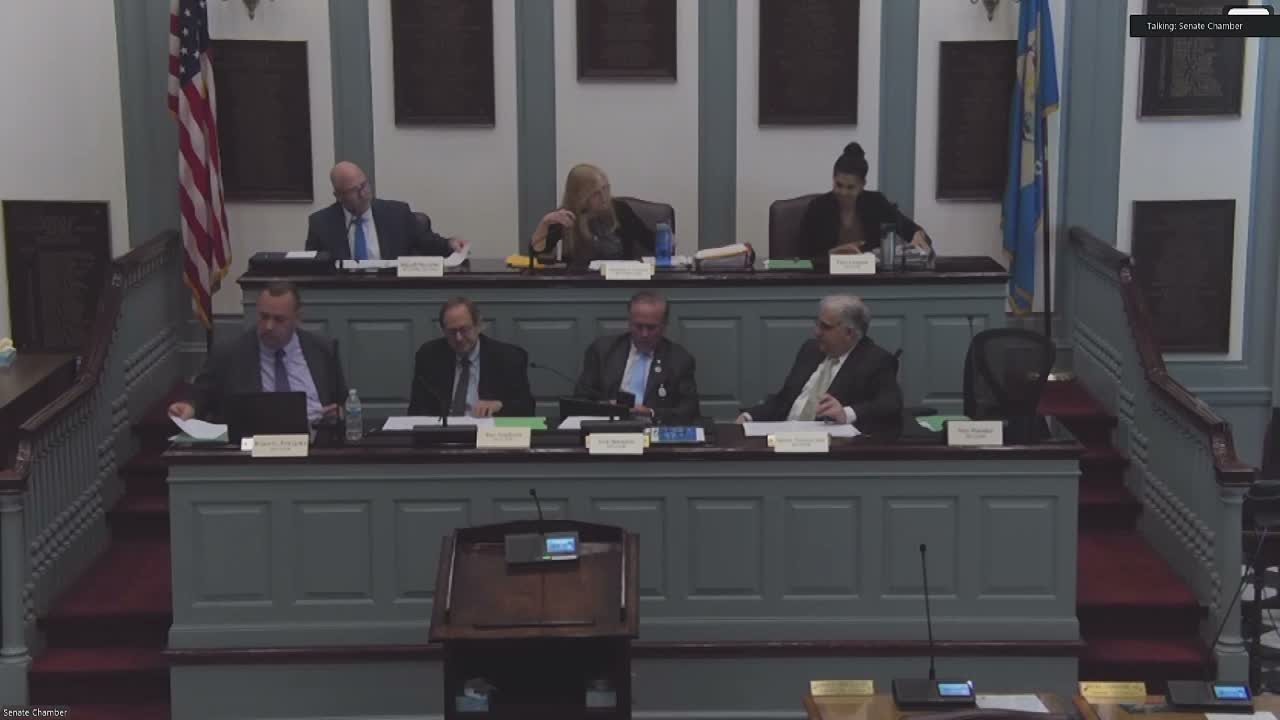
Senator Stephanie Hanson introduced Senate Bill 276 at the April 15 committee meeting, saying the 1999 Electric Utility Restructuring Act created a standard offer service (SOS) framework that does not fit extremely large loads such as data centers. Hanson said SB 276 would change DEC's default SOS obligation so the cooperative would have the right, but not the obligation, to provide electric supply to prospective customers projected to exceed 50 megawatts of monthly demand.
"This change will protect DEC and its members because it will no longer have the legal obligation to serve large loads if DEC cannot reliably provide the service, or providing the service would raise the cost on its existing members," Hanson said.
Jamie Nutter, attorney with Parkowski Swayze representing Delaware Electric Cooperative, told the committee the bill helps DEC manage load growth and procurement exposure. "If under the standard offer service obligation as the default provider we would then have to go out and procure that power," Nutter said, noting DEC
nd its supplier group self-supply a significant share of members' power and that a sudden very large load could expose members to volatile market prices.
Kevin Gingley, vice president of member services at Delaware Electric Cooperative, said the cooperative serves roughly 125,000 members in Kent and Sussex counties and that the bill helps protect service reliability and cost competitiveness for those members.
Senator Patty John noted she is a cosponsor and said cooperative generation arrangements differ from investor-owned utilities, underscoring why the change is important for co-op members. Several committee members asked to be added as cosponsors during the hearing.
Public commenters from the cooperative and sustainability groups voiced support for the measure as a necessary step to manage SOS costs and to shield residential members from the financial risks of supplying extremely large new loads. Committee members did not take a formal vote on SB 276 during this session.
"This change will protect DEC and its members because it will no longer have the legal obligation to serve large loads if DEC cannot reliably provide the service, or providing the service would raise the cost on its existing members," Hanson said.
Jamie Nutter, attorney with Parkowski Swayze representing Delaware Electric Cooperative, told the committee the bill helps DEC manage load growth and procurement exposure. "If under the standard offer service obligation as the default provider we would then have to go out and procure that power," Nutter said, noting DEC
nd its supplier group self-supply a significant share of members' power and that a sudden very large load could expose members to volatile market prices.
Kevin Gingley, vice president of member services at Delaware Electric Cooperative, said the cooperative serves roughly 125,000 members in Kent and Sussex counties and that the bill helps protect service reliability and cost competitiveness for those members.
Senator Patty John noted she is a cosponsor and said cooperative generation arrangements differ from investor-owned utilities, underscoring why the change is important for co-op members. Several committee members asked to be added as cosponsors during the hearing.
Public commenters from the cooperative and sustainability groups voiced support for the measure as a necessary step to manage SOS costs and to shield residential members from the financial risks of supplying extremely large new loads. Committee members did not take a formal vote on SB 276 during this session.
View the Full Meeting & All Its Details
This article offers just a summary. Unlock complete video, transcripts, and insights as a Founder Member.
✓
Watch full, unedited meeting videos
✓
Search every word spoken in unlimited transcripts
✓
AI summaries & real-time alerts (all government levels)
✓
Permanent access to expanding government content
30-day money-back guarantee
