Parlier council asks city attorney to study tow-rotation ordinance amid debate over local preference and revenue
April 17, 2026 | Parlier City, Fresno County, California
This article was created by AI summarizing key points discussed. AI makes mistakes, so for full details and context, please refer to the video of the full meeting. Please report any errors so we can fix them. Report an error »
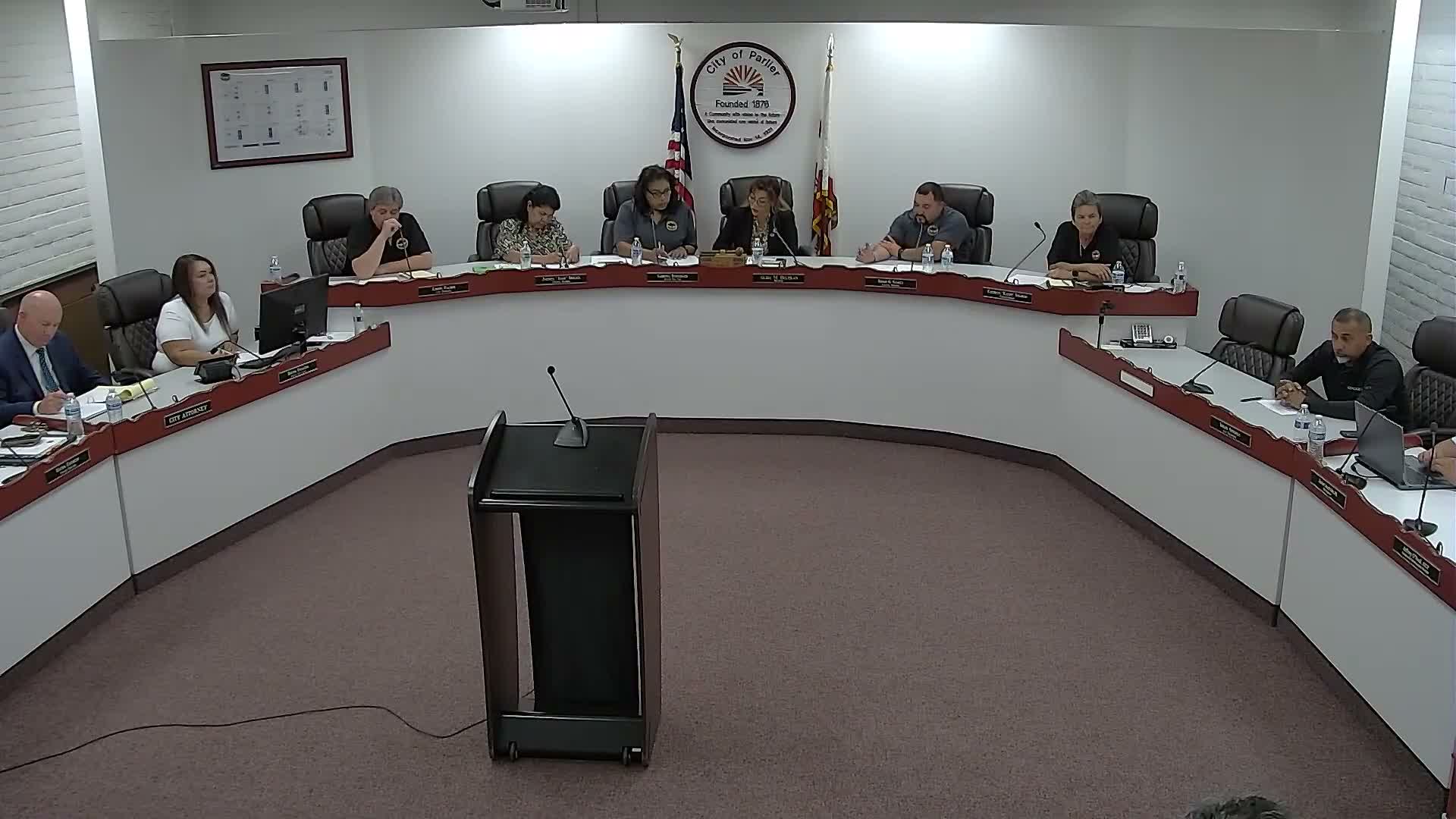
The Parlier City Council debated whether to amend the municipal code to prefer Parlier-based tow operators on the police rotation list and directed the city attorney to research legally defensible findings for a draft ordinance.
Council members said retaining more tow calls locally could boost city revenue and support local tow operators. “We need revenue,” one council member said, arguing that many rotation operators are based out of town and that a local preference would keep fees and business in Parlier.
Police Chief Michael (identified in the meeting as the chief) told the council that operational limits are tied to how dispatch is contracted and programmed. He summarized tow-related revenue figures: over roughly four fiscal years, tow-related revenue to the city totaled about $89,075 and the department averages roughly 150 tows per year. The chief cautioned that several ordinance models used by nearby jurisdictions rely on locally owned dispatch centers; without such control, restricting the rotation could hamper operations or require terminating existing professional-service agreements.
City Attorney counsel advised that local-preference ordinances exist in other cities but would require strong, written findings to reduce legal risk and would likely include specific exemptions for preference tows, emergency tows, vehicle-abatement and auto-club calls. The attorney said his office can draft a legally permissible ordinance if council provides direction and confirmed the next step would be to bring findings and a draft back to council for discussion.
Council members asked the chief to pursue the practical steps he can take with existing contracts and asked the city attorney to return with findings, exceptions, and a draft ordinance for further review. The discussion did not result in an immediate ordinance vote; instead, the council’s direction was a referral to staff and legal for drafting and analysis.
Council members said retaining more tow calls locally could boost city revenue and support local tow operators. “We need revenue,” one council member said, arguing that many rotation operators are based out of town and that a local preference would keep fees and business in Parlier.
Police Chief Michael (identified in the meeting as the chief) told the council that operational limits are tied to how dispatch is contracted and programmed. He summarized tow-related revenue figures: over roughly four fiscal years, tow-related revenue to the city totaled about $89,075 and the department averages roughly 150 tows per year. The chief cautioned that several ordinance models used by nearby jurisdictions rely on locally owned dispatch centers; without such control, restricting the rotation could hamper operations or require terminating existing professional-service agreements.
City Attorney counsel advised that local-preference ordinances exist in other cities but would require strong, written findings to reduce legal risk and would likely include specific exemptions for preference tows, emergency tows, vehicle-abatement and auto-club calls. The attorney said his office can draft a legally permissible ordinance if council provides direction and confirmed the next step would be to bring findings and a draft back to council for discussion.
Council members asked the chief to pursue the practical steps he can take with existing contracts and asked the city attorney to return with findings, exceptions, and a draft ordinance for further review. The discussion did not result in an immediate ordinance vote; instead, the council’s direction was a referral to staff and legal for drafting and analysis.
View the Full Meeting & All Its Details
This article offers just a summary. Unlock complete video, transcripts, and insights as a Founder Member.
✓
Watch full, unedited meeting videos
✓
Search every word spoken in unlimited transcripts
✓
AI summaries & real-time alerts (all government levels)
✓
Permanent access to expanding government content
30-day money-back guarantee
