House Finance Committee reports bill letting revenue department require real-time tax software for delinquent sellers
April 16, 2026 | Finance, House of Representatives, Legislative, Pennsylvania
This article was created by AI summarizing key points discussed. AI makes mistakes, so for full details and context, please refer to the video of the full meeting. Please report any errors so we can fix them. Report an error »
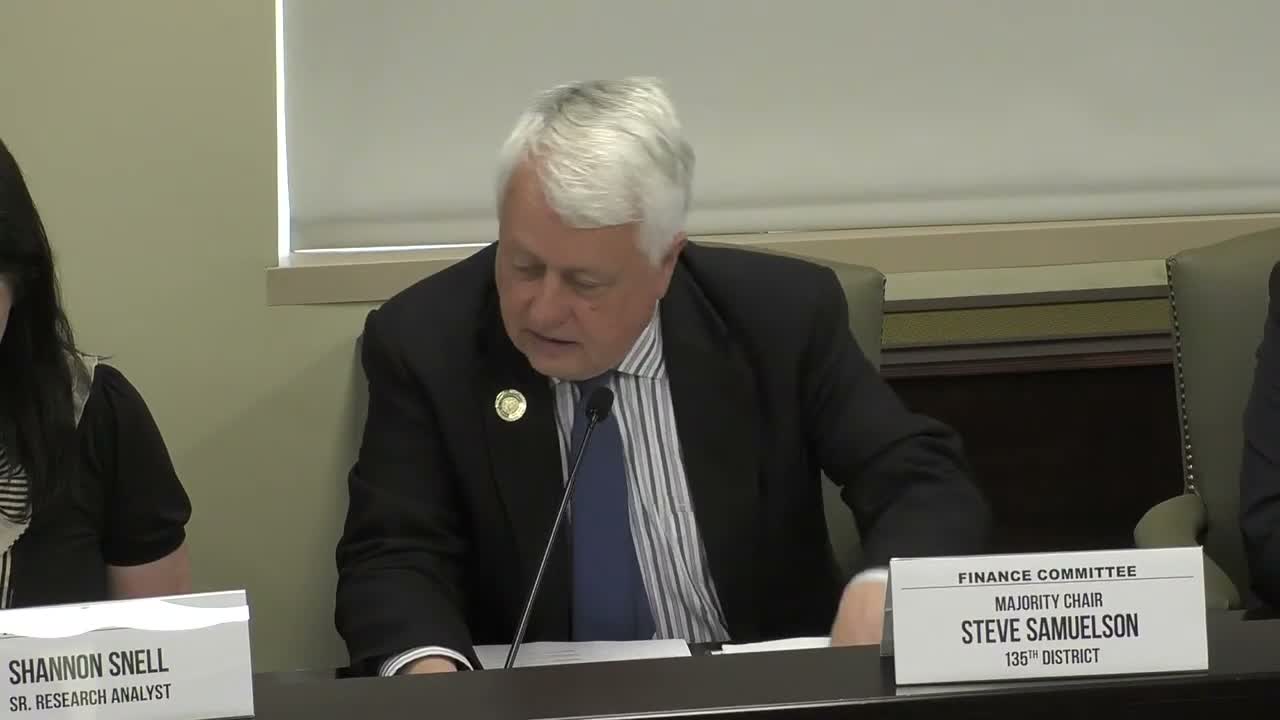
The House Finance Committee voted to report House Bill 2300, sending the measure to the full House after a 23-3 roll-call vote. The bill would authorize the Department of Revenue to require certain businesses with significant delinquent sales tax liabilities to use an authorized real-time sales-and-use tax remittance service.
Shannon Snell, the committee's senior research analyst, told members the requirement would apply to taxpayers meeting one of two criteria: a delinquent sales-tax balance greater than $5,000 with a lien in place, or three consecutive unfiled returns. Snell said the department would cover software costs for the first year; after that, the taxpayer would be responsible but could continue using the software voluntarily.
Chair Greiner said he supported moving the bill forward but asked the department and sponsor to place guardrails around implementation. "I just wanna be sure there's guardrails placed in the legislation for the playing community and for maybe some others," the chair said, noting concerns raised by the NFIB and by small, elderly and Amish proprietors who may lack computers.
Representative Gaydos urged a no vote, calling the proposal "sort of like a business ankle bracelet" and objecting to shifting software costs onto businesses after the initial year. "At this time, I would be a no because I think that there's just too many things that are wrong with it," Gaydos said.
Sponsor Representative Cepeda Freitas described discovering the software as a small business owner and said the tool helped her avoid mounting interest and penalties. "By the time I added up all the interest and penalty that I was charged by the Department of Revenue, I mean, I was owing I think I paid, like, over 40% of what I originally owed," Cepeda Freitas said, arguing the requirement would help delinquent businesses get back on track.
Committee members pressed for clarity that the bill grants the Department of Revenue authority to require the software but does not create a blanket statewide mandate that the department must apply in every delinquent case. The clerk clarified that the bill includes the statutory criteria and allows the department to consider circumstances—such as an elderly woodworker without a computer—when deciding whether to require software.
The committee called the bill up (printer's no. 3035) and, following the roll call, the clerk announced the results: yeas 23, nays 3. The bill was reported from the House Finance Committee.
What happens next: HB 2300 will be scheduled for consideration by the full House according to the chamber's calendar procedures; the committee record indicates members expect continued discussions with the Department of Revenue and stakeholders about implementation details and protections for small or nontraditional businesses.
Shannon Snell, the committee's senior research analyst, told members the requirement would apply to taxpayers meeting one of two criteria: a delinquent sales-tax balance greater than $5,000 with a lien in place, or three consecutive unfiled returns. Snell said the department would cover software costs for the first year; after that, the taxpayer would be responsible but could continue using the software voluntarily.
Chair Greiner said he supported moving the bill forward but asked the department and sponsor to place guardrails around implementation. "I just wanna be sure there's guardrails placed in the legislation for the playing community and for maybe some others," the chair said, noting concerns raised by the NFIB and by small, elderly and Amish proprietors who may lack computers.
Representative Gaydos urged a no vote, calling the proposal "sort of like a business ankle bracelet" and objecting to shifting software costs onto businesses after the initial year. "At this time, I would be a no because I think that there's just too many things that are wrong with it," Gaydos said.
Sponsor Representative Cepeda Freitas described discovering the software as a small business owner and said the tool helped her avoid mounting interest and penalties. "By the time I added up all the interest and penalty that I was charged by the Department of Revenue, I mean, I was owing I think I paid, like, over 40% of what I originally owed," Cepeda Freitas said, arguing the requirement would help delinquent businesses get back on track.
Committee members pressed for clarity that the bill grants the Department of Revenue authority to require the software but does not create a blanket statewide mandate that the department must apply in every delinquent case. The clerk clarified that the bill includes the statutory criteria and allows the department to consider circumstances—such as an elderly woodworker without a computer—when deciding whether to require software.
The committee called the bill up (printer's no. 3035) and, following the roll call, the clerk announced the results: yeas 23, nays 3. The bill was reported from the House Finance Committee.
What happens next: HB 2300 will be scheduled for consideration by the full House according to the chamber's calendar procedures; the committee record indicates members expect continued discussions with the Department of Revenue and stakeholders about implementation details and protections for small or nontraditional businesses.
Don't Miss a Word: See the Full Meeting!
Go beyond summaries. Unlock every video, transcript, and key insight with a Founder Membership.
✓
Get instant access to full meeting videos
✓
Search and clip any phrase from complete transcripts
✓
Receive AI-powered summaries & custom alerts
✓
Enjoy lifetime, unrestricted access to government data
30-day money-back guarantee
