House approves 'Streets to Success' homelessness court bill after hours-long debate
April 15, 2026 | 2026 Legislature LA, Louisiana
This article was created by AI summarizing key points discussed. AI makes mistakes, so for full details and context, please refer to the video of the full meeting. Please report any errors so we can fix them. Report an error »
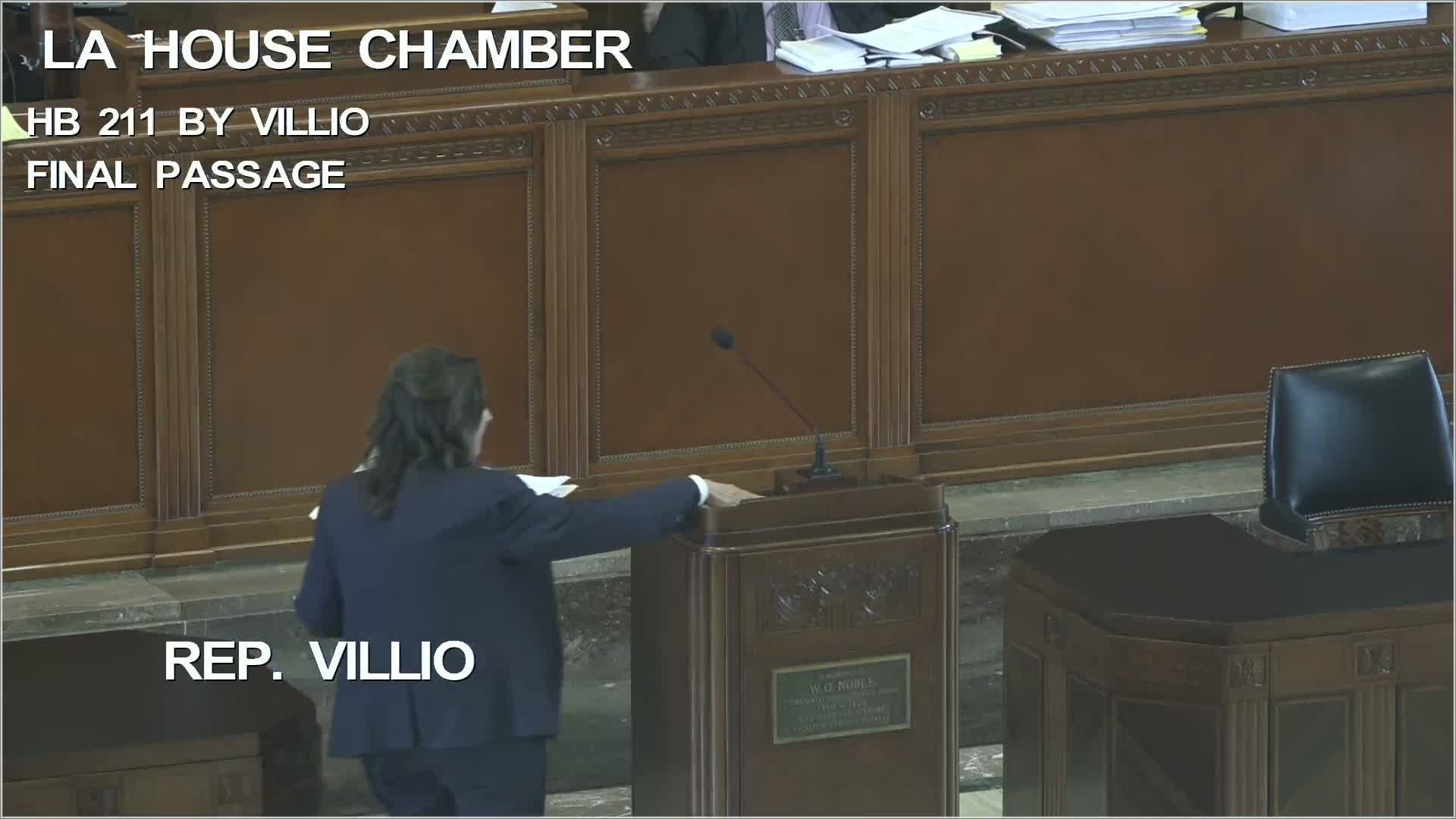
The House approved House Bill 2-11, dubbed "Streets to Success," by a 60–28 vote after an extended debate over whether the proposal would criminalize homelessness or create a coordinated diversion and treatment pathway.
Rep. Debbie Villio, the sponsor, said the bill establishes a homelessness court model that integrates criminal-justice touch points with service providers to direct people to housing, treatment and case management. "This is about redirecting these individuals to services," Villio said. The text creates an unauthorized-camping misdemeanor, authorizes political subdivisions to establish designated encampments where shelter beds are insufficient, and builds a framework for diversion, expungement and waiver of fines when appropriate.
Opponents — including members with direct experience in social services and county-level courts — said the bill risks arresting people who are poor through no fault of their own and questioned how summonses or court appearances would work for people without addresses or phones. Rep. John Marcel and others pressed Villio on shelter capacity, the possibility of expungement delays, and the real-world cost and logistical burdens on local jails and courts. Villio said the measure is intended to open federal funding streams and to give municipalities legal tools to set up encampments and coordinate services.
Supporters including social workers and some members argued the model gives communities a path to link criminal-justice processes with treatment programs. Critics said the program hinges on law-enforcement discretion and urged more funding and services rather than criminal sanctions. The House adopted the bill and placed it on passage; the roll call was 60 yays and 28 nays.
Vote tally: 60 ayes, 28 nays.
Rep. Debbie Villio, the sponsor, said the bill establishes a homelessness court model that integrates criminal-justice touch points with service providers to direct people to housing, treatment and case management. "This is about redirecting these individuals to services," Villio said. The text creates an unauthorized-camping misdemeanor, authorizes political subdivisions to establish designated encampments where shelter beds are insufficient, and builds a framework for diversion, expungement and waiver of fines when appropriate.
Opponents — including members with direct experience in social services and county-level courts — said the bill risks arresting people who are poor through no fault of their own and questioned how summonses or court appearances would work for people without addresses or phones. Rep. John Marcel and others pressed Villio on shelter capacity, the possibility of expungement delays, and the real-world cost and logistical burdens on local jails and courts. Villio said the measure is intended to open federal funding streams and to give municipalities legal tools to set up encampments and coordinate services.
Supporters including social workers and some members argued the model gives communities a path to link criminal-justice processes with treatment programs. Critics said the program hinges on law-enforcement discretion and urged more funding and services rather than criminal sanctions. The House adopted the bill and placed it on passage; the roll call was 60 yays and 28 nays.
Vote tally: 60 ayes, 28 nays.
Don't Miss a Word: See the Full Meeting!
Go beyond summaries. Unlock every video, transcript, and key insight with a Founder Membership.
✓
Get instant access to full meeting videos
✓
Search and clip any phrase from complete transcripts
✓
Receive AI-powered summaries & custom alerts
✓
Enjoy lifetime, unrestricted access to government data
30-day money-back guarantee
