Bill would raise long‑term disability pay for Alaska peace officers and firefighters
April 16, 2026 | 2026 Legislature Alaska, Alaska
This article was created by AI summarizing key points discussed. AI makes mistakes, so for full details and context, please refer to the video of the full meeting. Please report any errors so we can fix them. Report an error »
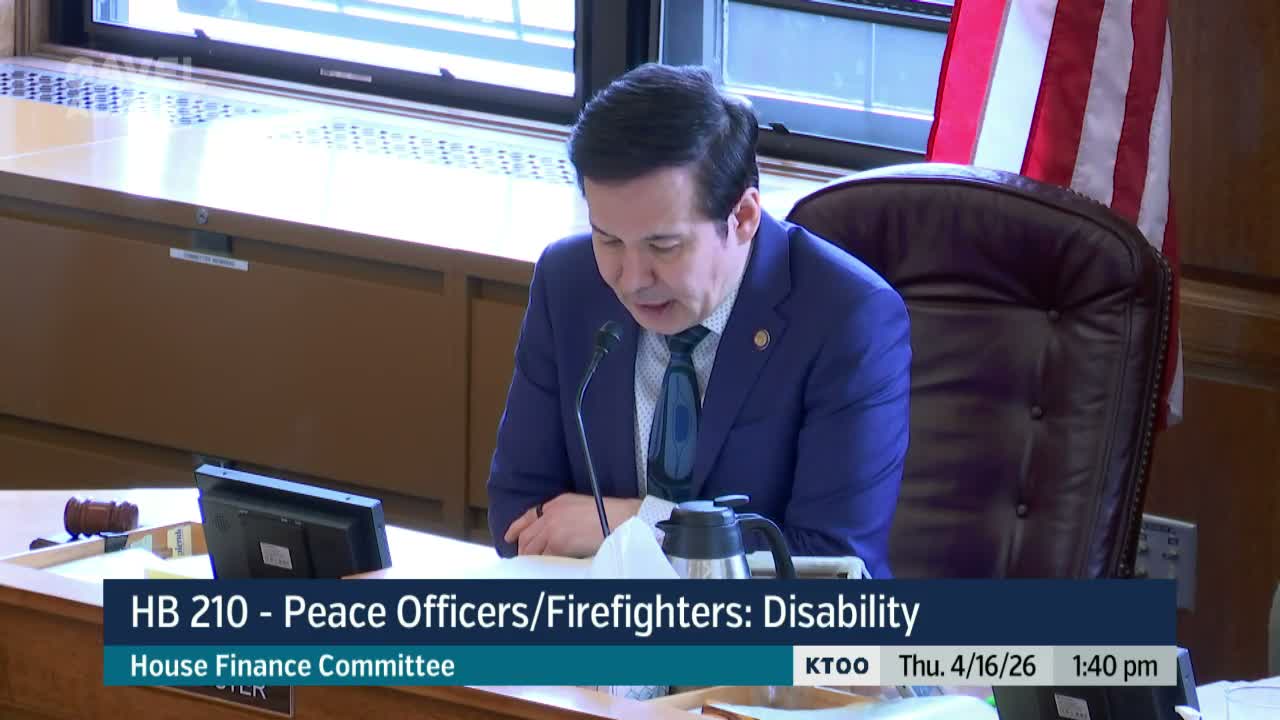
Representative Kopp introduced House Bill 210 as a narrow change aimed at public safety employees who suffer permanent, career‑ending injuries. "House Bill 210 makes a targeted, responsible adjustment ... by increasing the disability benefit only to 75% of salary after the first year of disability," Kopp said, adding the bill does not expand eligibility or restructure the retirement system.
Brandon Rumsford, retirement manager for the Division of Retirement and Benefits, told the committee the division issued a $0 fiscal note but flagged anticipated computer programming costs tied to the department's modernization project. "We did put out a $0 fiscal note," he said. "However ... we do anticipate this to incur some programming costs to implement this legislation ... That cost is not currently known at this time."
Committee members asked how many people the change would affect. Kopp said 16 public safety employees in the defined contribution tier are currently on occupational disability; he added that across all tiers about 50 people are on long‑term disability but that the sponsor limited the bill to peace officers and firefighters because those groups raised the concern.
Members probed differences between defined benefit and defined contribution plans. Staff and DRB witnesses said the vocational rehabilitation (DVR) requirements are the same between DB and DC systems, but health‑care carryover differs: DB historically bundled health and disability as part of retirement, while DC treats disability more like an insurance product, often leaving some disabled workers without guaranteed employer‑provided health coverage.
Several members asked about tax consequences if a benefit were raised from 40% to 75%; Rumsford said DRB would research whether a higher benefit would change a recipient's tax treatment. The committee set an amendment deadline of April 23 at 5:00 p.m. and planned a follow‑up session to resolve outstanding technical questions.
What happens next: The committee set an amendment deadline of April 23 at 5:00 p.m.; sponsors and DRB will follow up on programming cost estimates and tax‑treatment questions before further committee action.
Brandon Rumsford, retirement manager for the Division of Retirement and Benefits, told the committee the division issued a $0 fiscal note but flagged anticipated computer programming costs tied to the department's modernization project. "We did put out a $0 fiscal note," he said. "However ... we do anticipate this to incur some programming costs to implement this legislation ... That cost is not currently known at this time."
Committee members asked how many people the change would affect. Kopp said 16 public safety employees in the defined contribution tier are currently on occupational disability; he added that across all tiers about 50 people are on long‑term disability but that the sponsor limited the bill to peace officers and firefighters because those groups raised the concern.
Members probed differences between defined benefit and defined contribution plans. Staff and DRB witnesses said the vocational rehabilitation (DVR) requirements are the same between DB and DC systems, but health‑care carryover differs: DB historically bundled health and disability as part of retirement, while DC treats disability more like an insurance product, often leaving some disabled workers without guaranteed employer‑provided health coverage.
Several members asked about tax consequences if a benefit were raised from 40% to 75%; Rumsford said DRB would research whether a higher benefit would change a recipient's tax treatment. The committee set an amendment deadline of April 23 at 5:00 p.m. and planned a follow‑up session to resolve outstanding technical questions.
What happens next: The committee set an amendment deadline of April 23 at 5:00 p.m.; sponsors and DRB will follow up on programming cost estimates and tax‑treatment questions before further committee action.
Don't Miss a Word: See the Full Meeting!
Go beyond summaries. Unlock every video, transcript, and key insight with a Founder Membership.
✓
Get instant access to full meeting videos
✓
Search and clip any phrase from complete transcripts
✓
Receive AI-powered summaries & custom alerts
✓
Enjoy lifetime, unrestricted access to government data
30-day money-back guarantee
