Restorative programs urge funding, early intervention as Senate reviews H.930 on chronic absenteeism
April 17, 2026 | Education, SENATE, Committees, Legislative , Vermont
This article was created by AI summarizing key points discussed. AI makes mistakes, so for full details and context, please refer to the video of the full meeting. Please report any errors so we can fix them. Report an error »
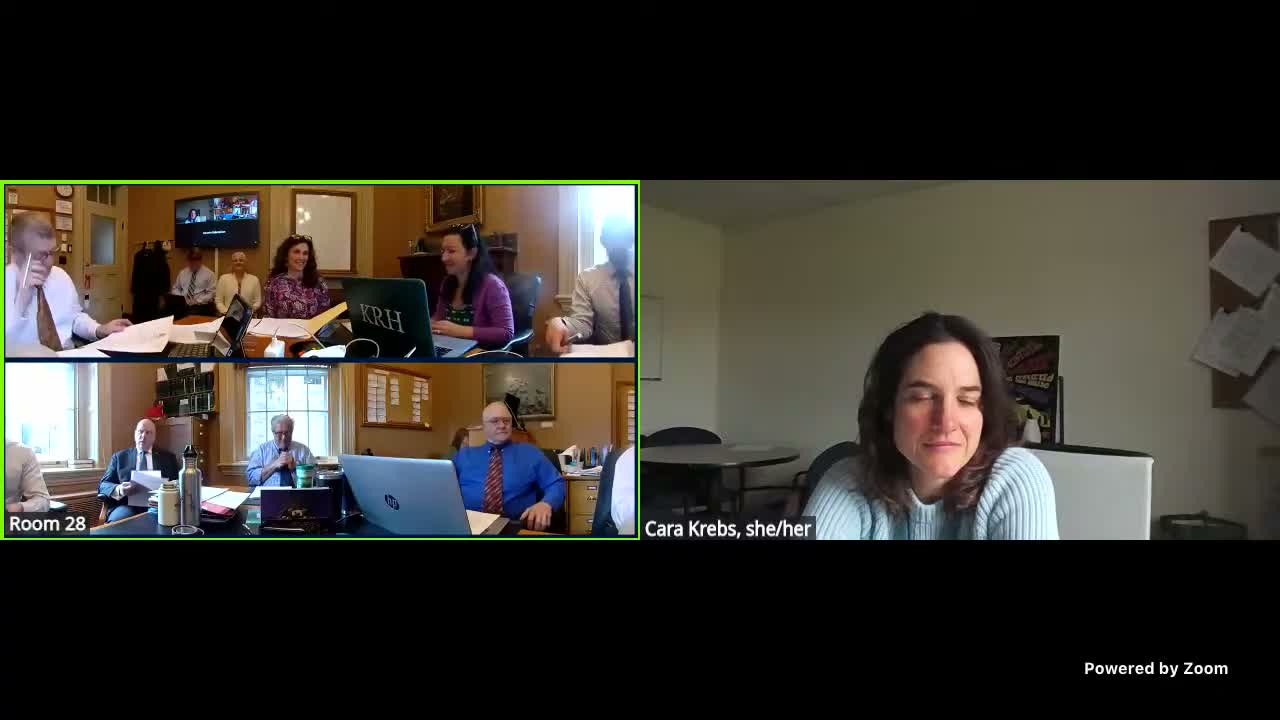
Witnesses before the Senate Education Committee recommended state support for community-based school engagement services as lawmakers consider H.930, the bill addressing chronic absenteeism.
Heather Hobart, executive director of the Memorial Restorative Center, told the committee the center’s school-engagement program served 130 students last year and reported a 75% reduction in chronic absenteeism among participants. Hobart said the program partners with schools, the state’s attorney, Department for Children and Families and other providers and currently relies on a mix of local and grant funding.
Katie Black, the Lamoille Restorative Center’s school engagement director, described a three-tier model: tier 1 (universal prevention at the school level), tier 2 (early intervention and boots-on-the-ground case management), and tier 3 (truancy processes and court involvement). Black said most of the program’s work occurs in tier 2 and that only about 5% of referred students last year proceeded to truancy filings. "Truancy is a symptom of something else happening often in my experience," Black told senators, describing a rural family the program supported with shelter referrals, fuel assistance, and coordination with Easterseals and DCF so children could return to school.
Heather Freeman, director of student support services for Orleans Southwest, said the restorative center operates as a neutral partner that can bridge schools and families, adding the program’s clinical expertise complements school staff who are not social workers. Freeman warned that many programs rely on temporary grants and asked the committee to consider sustainable funding models; she noted local districts must currently fund truancy officer functions and other supports.
Kara Gleeson Krebs, director of school services at the Howard Center, emphasized data collection and early K–3 intervention, saying districts need systems to detect attendance patterns early and the state should avoid overly prescriptive statute language that undercuts local adaptation.
Committee members questioned whether the statute should allow look-back across school years to accumulate absences, whether suspensions should be coded as excused, and the continued role of truancy court. Witnesses generally said court can be an effective last-resort accountability tool when paired with community supports but that the bill’s definitions and data-collection mechanics will be critical for implementation.
Lawmakers said they appreciated concrete operational detail and asked witnesses for feedback on statutory language and implementation concerns as the committee moves forward.
Heather Hobart, executive director of the Memorial Restorative Center, told the committee the center’s school-engagement program served 130 students last year and reported a 75% reduction in chronic absenteeism among participants. Hobart said the program partners with schools, the state’s attorney, Department for Children and Families and other providers and currently relies on a mix of local and grant funding.
Katie Black, the Lamoille Restorative Center’s school engagement director, described a three-tier model: tier 1 (universal prevention at the school level), tier 2 (early intervention and boots-on-the-ground case management), and tier 3 (truancy processes and court involvement). Black said most of the program’s work occurs in tier 2 and that only about 5% of referred students last year proceeded to truancy filings. "Truancy is a symptom of something else happening often in my experience," Black told senators, describing a rural family the program supported with shelter referrals, fuel assistance, and coordination with Easterseals and DCF so children could return to school.
Heather Freeman, director of student support services for Orleans Southwest, said the restorative center operates as a neutral partner that can bridge schools and families, adding the program’s clinical expertise complements school staff who are not social workers. Freeman warned that many programs rely on temporary grants and asked the committee to consider sustainable funding models; she noted local districts must currently fund truancy officer functions and other supports.
Kara Gleeson Krebs, director of school services at the Howard Center, emphasized data collection and early K–3 intervention, saying districts need systems to detect attendance patterns early and the state should avoid overly prescriptive statute language that undercuts local adaptation.
Committee members questioned whether the statute should allow look-back across school years to accumulate absences, whether suspensions should be coded as excused, and the continued role of truancy court. Witnesses generally said court can be an effective last-resort accountability tool when paired with community supports but that the bill’s definitions and data-collection mechanics will be critical for implementation.
Lawmakers said they appreciated concrete operational detail and asked witnesses for feedback on statutory language and implementation concerns as the committee moves forward.
View the Full Meeting & All Its Details
This article offers just a summary. Unlock complete video, transcripts, and insights as a Founder Member.
✓
Watch full, unedited meeting videos
✓
Search every word spoken in unlimited transcripts
✓
AI summaries & real-time alerts (all government levels)
✓
Permanent access to expanding government content
30-day money-back guarantee
