Mayor, sponsor say shifting oversight of New Orleans Sewage and Water Board will boost accountability; civil-rights group warns of risks
April 15, 2026 | 2026 Legislature LA, Louisiana
This article was created by AI summarizing key points discussed. AI makes mistakes, so for full details and context, please refer to the video of the full meeting. Please report any errors so we can fix them. Report an error »
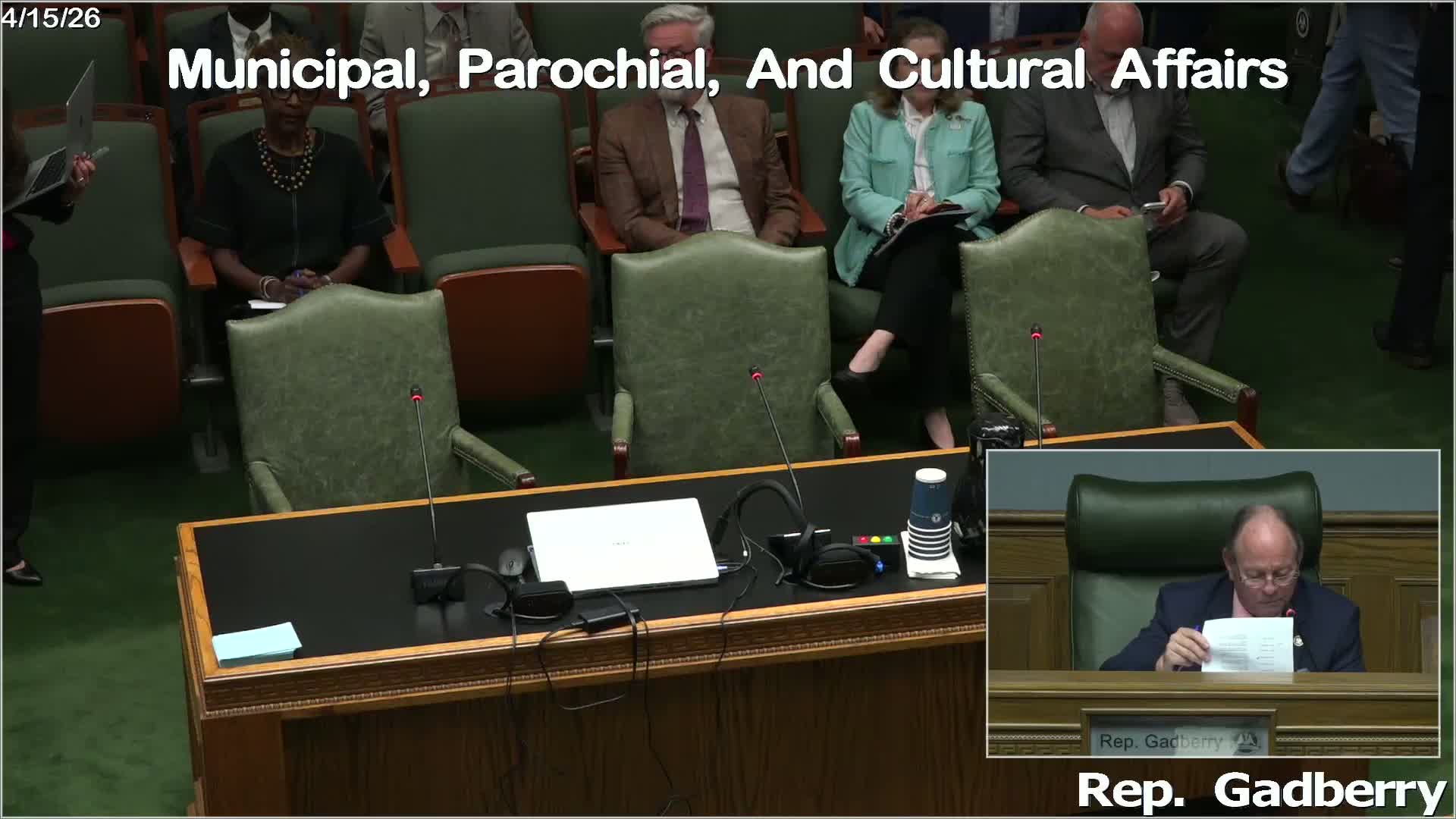
Representative Hilferty offered a substitute amendment to HB 573 that would shift several oversight powers to the New Orleans City Council and the mayor to increase transparency and accountability at the Sewerage & Water Board of New Orleans. Hilferty said the board’s current structure creates a “buck-stops-nowhere” problem and that the amendment would align New Orleans more closely with governance in other parishes and cities.
Mayor Helena Moreno told the committee she and city council members back the proposal and that the current structure has hindered responsiveness to frequent sewer and water failures. "This agency has been broken for way too long," Moreno said, urging new tools for contract review, regular council oversight and better deliverables for residents.
Dr. Tracy Washington, president of the Louisiana Justice Institute, testified in opposition. She said the bill represents a transfer of power over a critical public utility that raises concerns about accountability, racial and political equity, and financial stewardship. "This bill does not fix operational problems," Washington said. "Changing who controls the system does not fix the system."
Supporters said the substitute preserves state involvement while providing the city council more ability to compel the board to appear before council committees, review major contracts, and address billing and service issues more quickly than a state-only structure allows. Witnesses pointed to prior legislation that gave the council limited authority over billing disputes as a model of successful local oversight.
Representative Marcel moved the substituted measure favorably and the committee adopted the amendment and voted to report HB 573 to the House floor. Committee members encouraged further coordination with the New Orleans delegation and city council to refine implementation details.
If enacted, sponsors said, the change would increase the council’s authority to require regular reporting by the board, require greater transparency for major contracts, and give residents clearer points of accountability; opponents said operational investments, not governance overhaul alone, should be the priority.
Mayor Helena Moreno told the committee she and city council members back the proposal and that the current structure has hindered responsiveness to frequent sewer and water failures. "This agency has been broken for way too long," Moreno said, urging new tools for contract review, regular council oversight and better deliverables for residents.
Dr. Tracy Washington, president of the Louisiana Justice Institute, testified in opposition. She said the bill represents a transfer of power over a critical public utility that raises concerns about accountability, racial and political equity, and financial stewardship. "This bill does not fix operational problems," Washington said. "Changing who controls the system does not fix the system."
Supporters said the substitute preserves state involvement while providing the city council more ability to compel the board to appear before council committees, review major contracts, and address billing and service issues more quickly than a state-only structure allows. Witnesses pointed to prior legislation that gave the council limited authority over billing disputes as a model of successful local oversight.
Representative Marcel moved the substituted measure favorably and the committee adopted the amendment and voted to report HB 573 to the House floor. Committee members encouraged further coordination with the New Orleans delegation and city council to refine implementation details.
If enacted, sponsors said, the change would increase the council’s authority to require regular reporting by the board, require greater transparency for major contracts, and give residents clearer points of accountability; opponents said operational investments, not governance overhaul alone, should be the priority.
Don't Miss a Word: See the Full Meeting!
Go beyond summaries. Unlock every video, transcript, and key insight with a Founder Membership.
✓
Get instant access to full meeting videos
✓
Search and clip any phrase from complete transcripts
✓
Receive AI-powered summaries & custom alerts
✓
Enjoy lifetime, unrestricted access to government data
30-day money-back guarantee
