Lawmakers Hear Case to Lower Alaska�s Fiscal-Veto Override from 3/4 to 2/3
April 15, 2026 | 2026 Legislature Alaska, Alaska
This article was created by AI summarizing key points discussed. AI makes mistakes, so for full details and context, please refer to the video of the full meeting. Please report any errors so we can fix them. Report an error »
Anchorage
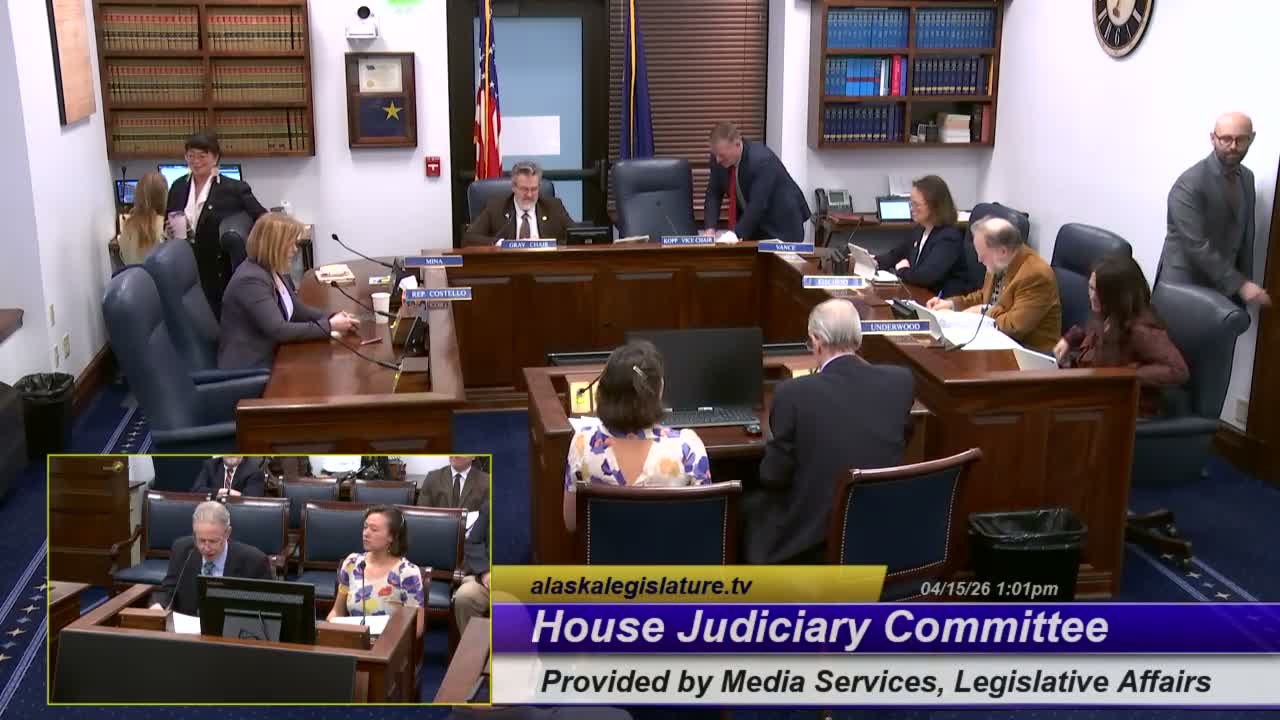
Sen. Matt Clayman urged the House Judiciary Committee on April 15 to approve Senate Joint Resolution 2, a proposed constitutional amendment that would lower the required vote to override a governors veto on revenue and appropriations measures from three quarters of the legislature (45 votes) to two thirds (40 votes).
"Alaska has the highest requirement for overriding a revenue or appropriations veto of any state," Clayman told committee members, arguing the change would eliminate a double standard that now treats fiscal bills more strictly than other legislation.
Clayman outlined the practical effect: under the current rules the legislature may override a policy bill with a 2/3 vote, only to have a governor remove funding by line-item veto that then requires a 3/4 vote to restore. He cited last years override of House Bill 57 as an example of how the two-step process can leave appropriations vulnerable even when a 2/3 majority initially prevails.
Former Alaska Attorney General Bruce Botello, invited to testify, traced the 3/4 override provision to debates at the 1956 constitutional convention and said the high threshold has made fiscal veto overrides extremely rare. Botello listed four rationales for reducing the requirement: consistency with other vetoes and other states, restoring legislative checks on the executive, protecting the legislatures constitutional duty to pass a budget, and improving democratic accountability when widely supported services are cut.
Committee members pressed Clayman and Botello on particulars. Representative Vance asked whether the resolutions timing language (no later than the fifth day of the special session) is clear; Clayman said Legislative Legal Services advised the constitutional language already requires a joint session while the legislature is reconvened and that prior committees chose not to add extra timing clarifications. Representative Costello asked why similar proposals previously did not proceed; Clayman said he had found supportive former sponsors but had not explored the procedural history in depth and suggested political dynamics likely played a role.
No action was taken today: Chair Andrew Gray set SJR2 aside for later consideration and thanked the sponsor and staff for presenting the measure.
What happens next
The committee paused further action on SJR2; if both chambers later approve the resolution by the required margin, the proposed amendment would appear on the general-election ballot for voters to decide. The committee did not set an amendment deadline or a date for a final vote today.
Sen. Matt Clayman urged the House Judiciary Committee on April 15 to approve Senate Joint Resolution 2, a proposed constitutional amendment that would lower the required vote to override a governors veto on revenue and appropriations measures from three quarters of the legislature (45 votes) to two thirds (40 votes).
"Alaska has the highest requirement for overriding a revenue or appropriations veto of any state," Clayman told committee members, arguing the change would eliminate a double standard that now treats fiscal bills more strictly than other legislation.
Clayman outlined the practical effect: under the current rules the legislature may override a policy bill with a 2/3 vote, only to have a governor remove funding by line-item veto that then requires a 3/4 vote to restore. He cited last years override of House Bill 57 as an example of how the two-step process can leave appropriations vulnerable even when a 2/3 majority initially prevails.
Former Alaska Attorney General Bruce Botello, invited to testify, traced the 3/4 override provision to debates at the 1956 constitutional convention and said the high threshold has made fiscal veto overrides extremely rare. Botello listed four rationales for reducing the requirement: consistency with other vetoes and other states, restoring legislative checks on the executive, protecting the legislatures constitutional duty to pass a budget, and improving democratic accountability when widely supported services are cut.
Committee members pressed Clayman and Botello on particulars. Representative Vance asked whether the resolutions timing language (no later than the fifth day of the special session) is clear; Clayman said Legislative Legal Services advised the constitutional language already requires a joint session while the legislature is reconvened and that prior committees chose not to add extra timing clarifications. Representative Costello asked why similar proposals previously did not proceed; Clayman said he had found supportive former sponsors but had not explored the procedural history in depth and suggested political dynamics likely played a role.
No action was taken today: Chair Andrew Gray set SJR2 aside for later consideration and thanked the sponsor and staff for presenting the measure.
What happens next
The committee paused further action on SJR2; if both chambers later approve the resolution by the required margin, the proposed amendment would appear on the general-election ballot for voters to decide. The committee did not set an amendment deadline or a date for a final vote today.
View the Full Meeting & All Its Details
This article offers just a summary. Unlock complete video, transcripts, and insights as a Founder Member.
✓
Watch full, unedited meeting videos
✓
Search every word spoken in unlimited transcripts
✓
AI summaries & real-time alerts (all government levels)
✓
Permanent access to expanding government content
30-day money-back guarantee
