Committee refines domestic-violence fee and continuance rules after contested testimony
April 13, 2026 | 2026 Legislature LA, Louisiana
This article was created by AI summarizing key points discussed. AI makes mistakes, so for full details and context, please refer to the video of the full meeting. Please report any errors so we can fix them. Report an error »
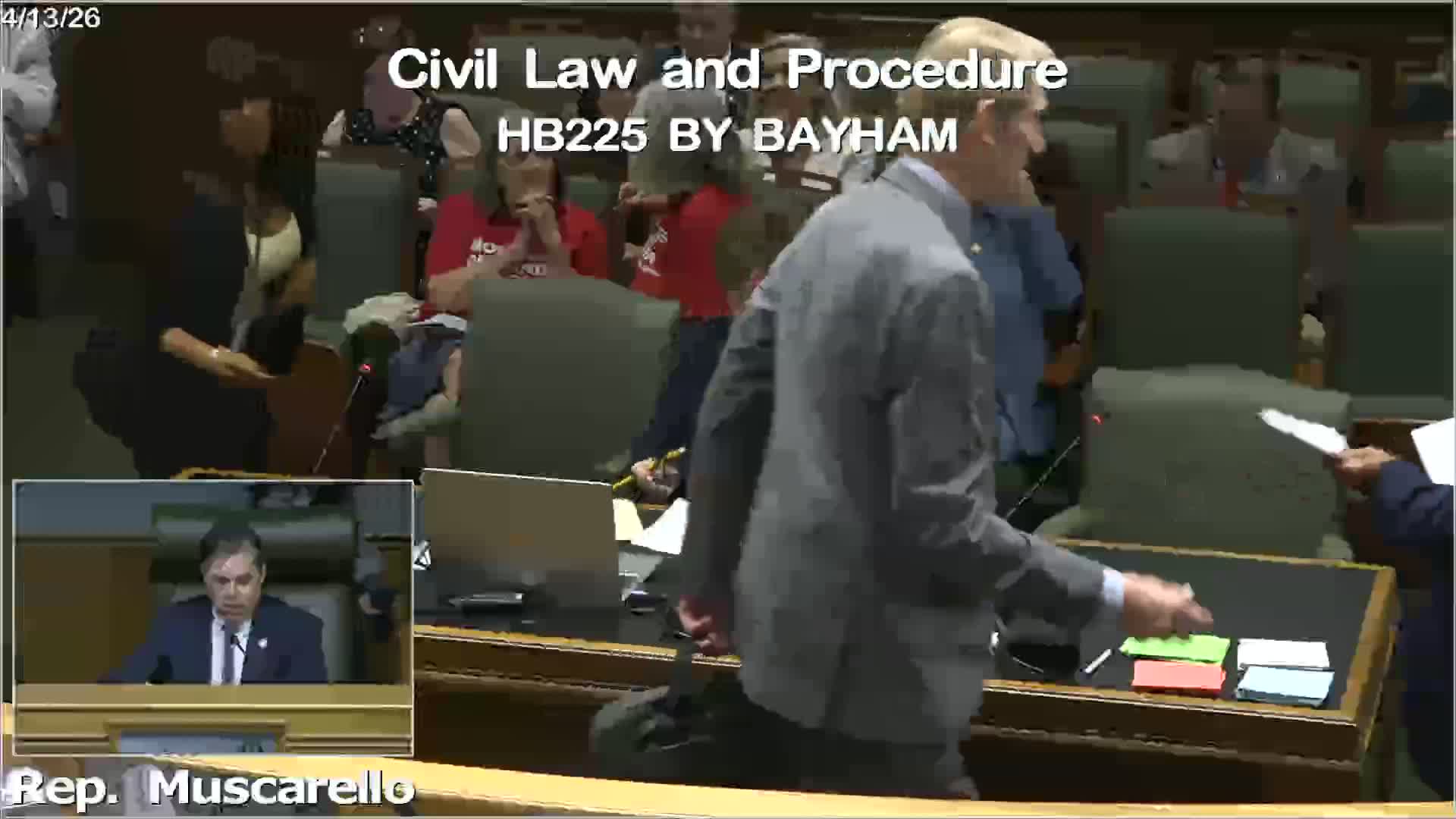
Representative Edmonson and Justice Hughes led work on two related bills addressing fees and continuances in domestic-abuse protective-order proceedings.
On HB306 the committee agreed to a committee-originated amendment restoring fee-shifting language to require a perpetrator to pay a "reasonable attorney's fee" and to add "court-approved evaluation fees and expert witness fees" incurred in maintaining or defending domestic-abuse cases. Justice Hughes and family-court practitioners said the amendment is intended to allow judges to scale fees when litigation is abusive; advocates from STAR and the Louisiana Coalition Against Domestic Violence cautioned the committee to ensure changes do not jeopardize federal STOP-program funding or create barriers to protection-order access. Morgan Lamondre of STAR noted concern about language that could require prior approval for expert fees in fast-moving summary proceedings, saying such fees are often necessary and subpoenaed on short notice.
HB366 limits continuances of the initial protective-order hearing: the amendment adopted in committee permits a single continuance of up to 15 days after the initial 21‑day window, but preserves temporary orders and extends them when a defendant has not been served so there is no lapse in protection until service and a new hearing date are set. Supporters said the change addresses cases that drag on for months and can harm children and victims; opponents including former judges and service providers warned the changes could create practical notice problems and unintended protection gaps if phrasing is not implemented carefully.
Committee action: the committee withdrew the earlier amendment set 2097, adopted the committee-originating amendment to HB306 (adding "reasonable" attorney's fees and court-approved evaluation/expert fees), and adopted clarifying amendments to HB366; both bills were reported with amendments.
Next steps: both bills were reported out of committee as amended and will proceed toward floor consideration. Advocates requested technical clean-up and careful legislative drafting to avoid conflict with federal grant conditions.
On HB306 the committee agreed to a committee-originated amendment restoring fee-shifting language to require a perpetrator to pay a "reasonable attorney's fee" and to add "court-approved evaluation fees and expert witness fees" incurred in maintaining or defending domestic-abuse cases. Justice Hughes and family-court practitioners said the amendment is intended to allow judges to scale fees when litigation is abusive; advocates from STAR and the Louisiana Coalition Against Domestic Violence cautioned the committee to ensure changes do not jeopardize federal STOP-program funding or create barriers to protection-order access. Morgan Lamondre of STAR noted concern about language that could require prior approval for expert fees in fast-moving summary proceedings, saying such fees are often necessary and subpoenaed on short notice.
HB366 limits continuances of the initial protective-order hearing: the amendment adopted in committee permits a single continuance of up to 15 days after the initial 21‑day window, but preserves temporary orders and extends them when a defendant has not been served so there is no lapse in protection until service and a new hearing date are set. Supporters said the change addresses cases that drag on for months and can harm children and victims; opponents including former judges and service providers warned the changes could create practical notice problems and unintended protection gaps if phrasing is not implemented carefully.
Committee action: the committee withdrew the earlier amendment set 2097, adopted the committee-originating amendment to HB306 (adding "reasonable" attorney's fees and court-approved evaluation/expert fees), and adopted clarifying amendments to HB366; both bills were reported with amendments.
Next steps: both bills were reported out of committee as amended and will proceed toward floor consideration. Advocates requested technical clean-up and careful legislative drafting to avoid conflict with federal grant conditions.
View the Full Meeting & All Its Details
This article offers just a summary. Unlock complete video, transcripts, and insights as a Founder Member.
✓
Watch full, unedited meeting videos
✓
Search every word spoken in unlimited transcripts
✓
AI summaries & real-time alerts (all government levels)
✓
Permanent access to expanding government content
30-day money-back guarantee
