Staff propose DDB‑400 and DDB‑850 zones, streamlined review, and housing‑focused community benefits
April 15, 2026 | Austin, Travis County, Texas
This article was created by AI summarizing key points discussed. AI makes mistakes, so for full details and context, please refer to the video of the full meeting. Please report any errors so we can fix them. Report an error »
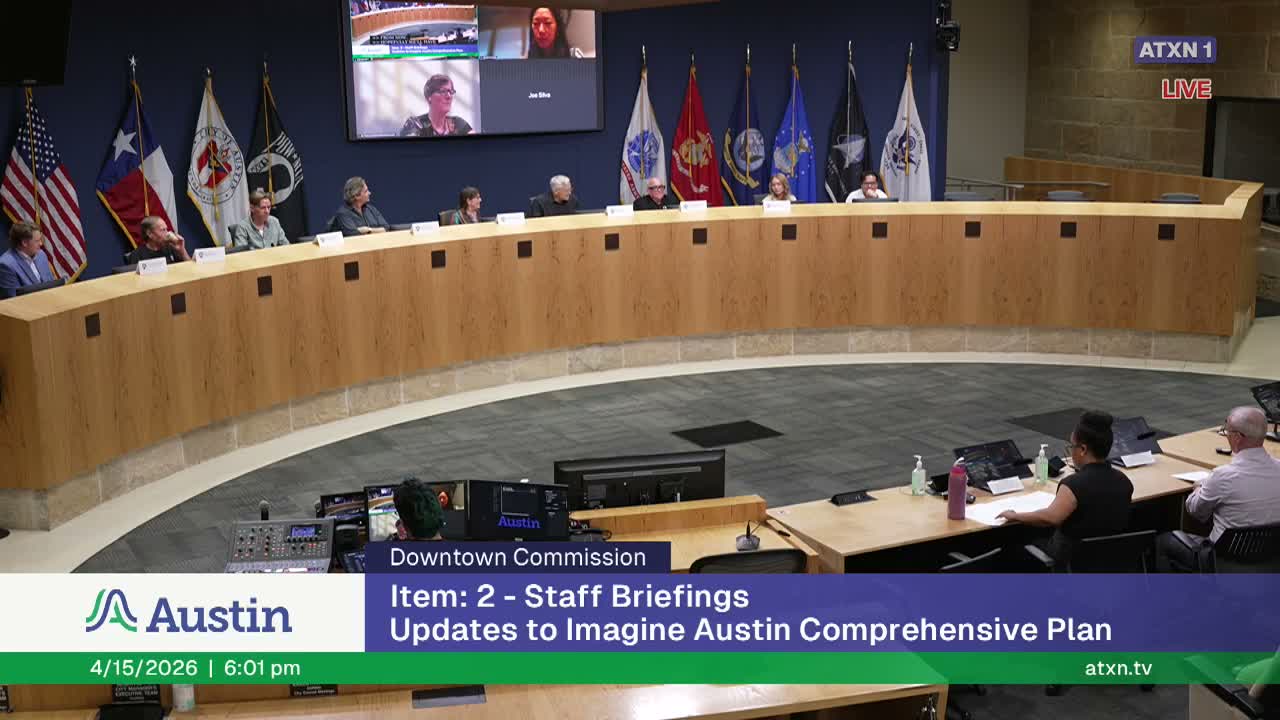
Stevie Greathouse and Nick Smith of Austin Planning briefed the Downtown Commission on Phase 1 of a downtown density‑bonus (DDB) program update and outlined proposed combining districts, design standards, community benefits, and a process timetable.
Greathouse said Phase 1 focuses on the core, Rainey, and Convention Center subdistricts and that recent code amendments set a 350‑foot baseline in several subdistricts. Smith described the proposed new combining districts: DDB‑400 would permit up to 750 feet (base 350 + 400), while DDB‑850 would allow up to 1,200 feet where rezoned; administrative approvals would be available up to the DDB‑400 limit, but DDB‑850 would require a standard rezoning process.
The proposal would move from Design Commission guideline review to a system of mandatory "gatekeeper" requirements and a menu of objective urban design standards to be enforced at site plan review. "Design Commission review will no longer be part of the review process," Smith said; instead, projects must meet required standards and a set number of menu items (for example, 7 of 14 menu standards for DDB‑400).
Community benefits would be simplified and focused primarily on housing. Staff proposed an on‑site affordable requirement of 5% of units at specified AMI levels (50% MFI for rental and 80% MFI for ownership) or a fee‑in‑lieu: $10 per gross bonus square foot in DDB‑400 and $12 per square foot in DDB‑850. Greathouse said the recommendation draws on a market analysis and is calibrated to current development conditions; staff noted fees could be adjusted in the future as market conditions change.
Commissioners questioned several elements: whether fees should vary by use, how the proposed standards protect historic compatibility (a menu item involving a step‑back to highlight historic structures), whether fee structure creates a disruptive "cliff," and how gatekeeper costs were calibrated. Staff responded that the program aims for objective, administrable standards, that the market study informed calibration, and that suggested amendments (including incremental fee treatment) may be proposed at Planning Commission and City Council hearings.
Next steps: staff said they briefed Planning Commission and expected a public hearing before Planning Commission on May 12 and City Council on May 28, and that property‑specific notice will be sent to addresses within 500 feet of rezoned sites.
Greathouse said Phase 1 focuses on the core, Rainey, and Convention Center subdistricts and that recent code amendments set a 350‑foot baseline in several subdistricts. Smith described the proposed new combining districts: DDB‑400 would permit up to 750 feet (base 350 + 400), while DDB‑850 would allow up to 1,200 feet where rezoned; administrative approvals would be available up to the DDB‑400 limit, but DDB‑850 would require a standard rezoning process.
The proposal would move from Design Commission guideline review to a system of mandatory "gatekeeper" requirements and a menu of objective urban design standards to be enforced at site plan review. "Design Commission review will no longer be part of the review process," Smith said; instead, projects must meet required standards and a set number of menu items (for example, 7 of 14 menu standards for DDB‑400).
Community benefits would be simplified and focused primarily on housing. Staff proposed an on‑site affordable requirement of 5% of units at specified AMI levels (50% MFI for rental and 80% MFI for ownership) or a fee‑in‑lieu: $10 per gross bonus square foot in DDB‑400 and $12 per square foot in DDB‑850. Greathouse said the recommendation draws on a market analysis and is calibrated to current development conditions; staff noted fees could be adjusted in the future as market conditions change.
Commissioners questioned several elements: whether fees should vary by use, how the proposed standards protect historic compatibility (a menu item involving a step‑back to highlight historic structures), whether fee structure creates a disruptive "cliff," and how gatekeeper costs were calibrated. Staff responded that the program aims for objective, administrable standards, that the market study informed calibration, and that suggested amendments (including incremental fee treatment) may be proposed at Planning Commission and City Council hearings.
Next steps: staff said they briefed Planning Commission and expected a public hearing before Planning Commission on May 12 and City Council on May 28, and that property‑specific notice will be sent to addresses within 500 feet of rezoned sites.
Don't Miss a Word: See the Full Meeting!
Go beyond summaries. Unlock every video, transcript, and key insight with a Founder Membership.
✓
Get instant access to full meeting videos
✓
Search and clip any phrase from complete transcripts
✓
Receive AI-powered summaries & custom alerts
✓
Enjoy lifetime, unrestricted access to government data
30-day money-back guarantee
