Planning commission forwards ADU ordinance update to city council to align with state law
April 17, 2026 | Sierra Madre City, Los Angeles County, California
This article was created by AI summarizing key points discussed. AI makes mistakes, so for full details and context, please refer to the video of the full meeting. Please report any errors so we can fix them. Report an error »
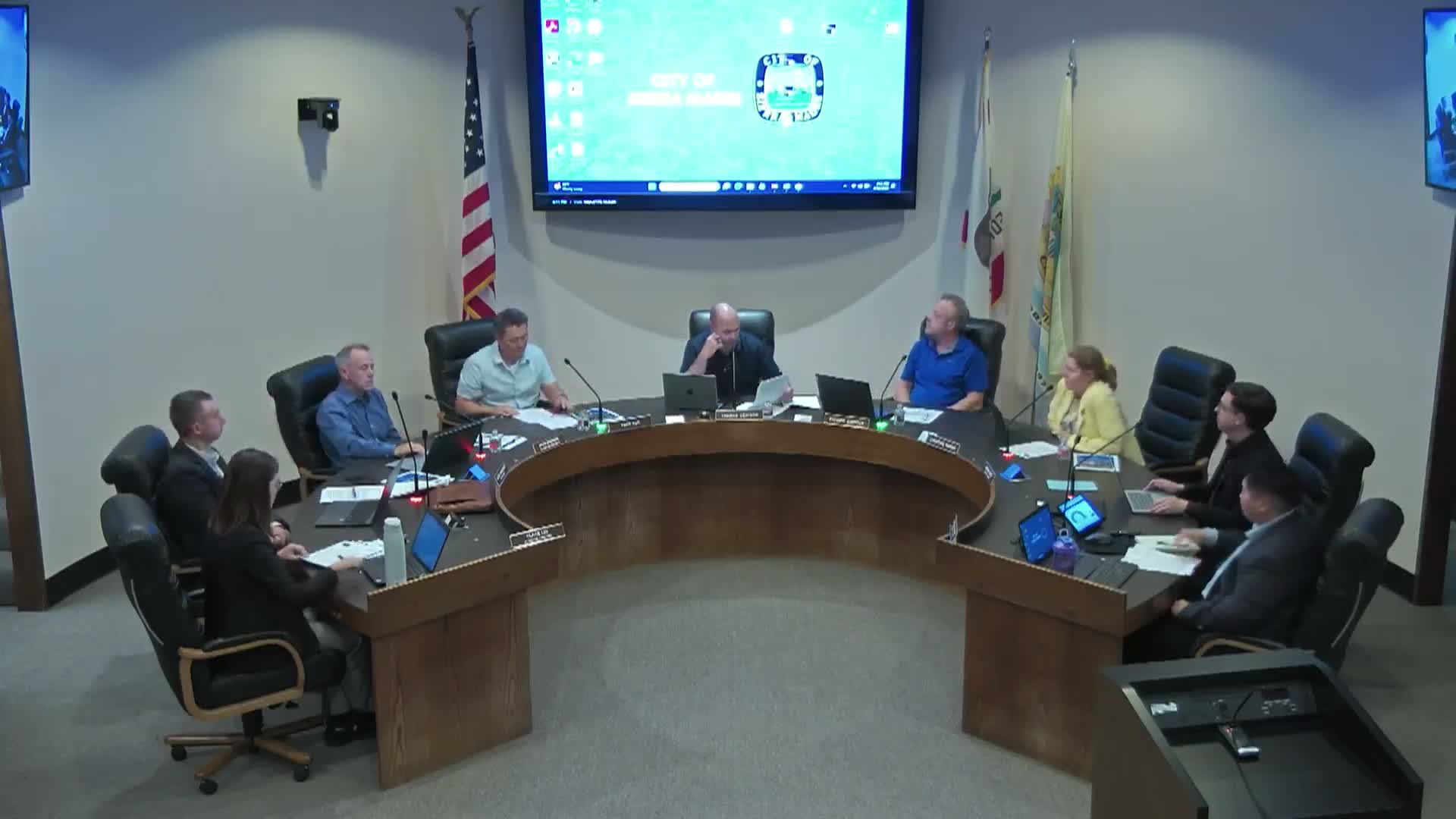
The Sierra Madre Planning Commission voted April 16 to recommend that the City Council adopt Municipal Code Text Amendment MCTA 26‑01, an update to the city's accessory dwelling unit (ADU) ordinance intended to align local code with recent state ADU laws and guidance from the California Department of Housing and Community Development (HCD).
Senior Planner Wolf told commissioners the update is intended “to align with recent state laws” and to remove internal conflicts so applicants and staff can apply standards consistently. The ordinance clarifies categories of state‑mandated ADUs (junior ADU, conversion ADU, detached ADU) and describes a category staff referred to as city‑permitted ADUs that remain subject to local zoning limitations (for example, a city‑permitted detached ADU may be permitted up to 1,200 square feet if the underlying zone allows it, while many state‑mandated ADUs are limited to 800 square feet and a 4‑foot setback).
Wolf explained that HCD has indicated an interpretation allowing up to four ADUs on a lot with a single‑family dwelling — a point one commissioner called “very controversial.” As one commissioner summarized, the HCD interpretation is new and has prompted questions among cities and city attorneys about how it will be applied in practice.
The proposed ordinance also addresses objective design standards, angle‑plane and height measurements for ADUs in the city’s foothill topography, the permit process (consolidating ADU applications into the building‑permit workflow, a 15‑day completeness review and a 60‑day compliance review), and a staff proposal to consider abandoning inactive applications after 90 days of no activity. Staff said the ordinance is exempt from CEQA for local ordinances implementing ADU law.
Commissioners had technical questions about combinations of conversions and additions, the effect of SB‑9 lot splits on deed‑restrictions for ADUs, and whether angle‑plane rules could be enforced for state‑mandated ADUs; staff and the city attorney said some enforcement questions depend on state law and HCD interpretation. After discussion the commission moved the item and voted unanimously to forward the ordinance to City Council with the commission’s recommendation.
Next steps: the commission’s action forwards MCTA 26‑01 to City Council for consideration and possible adoption; staff will provide the redline ordinance text and additional materials to commissioners ahead of the council hearing.
Senior Planner Wolf told commissioners the update is intended “to align with recent state laws” and to remove internal conflicts so applicants and staff can apply standards consistently. The ordinance clarifies categories of state‑mandated ADUs (junior ADU, conversion ADU, detached ADU) and describes a category staff referred to as city‑permitted ADUs that remain subject to local zoning limitations (for example, a city‑permitted detached ADU may be permitted up to 1,200 square feet if the underlying zone allows it, while many state‑mandated ADUs are limited to 800 square feet and a 4‑foot setback).
Wolf explained that HCD has indicated an interpretation allowing up to four ADUs on a lot with a single‑family dwelling — a point one commissioner called “very controversial.” As one commissioner summarized, the HCD interpretation is new and has prompted questions among cities and city attorneys about how it will be applied in practice.
The proposed ordinance also addresses objective design standards, angle‑plane and height measurements for ADUs in the city’s foothill topography, the permit process (consolidating ADU applications into the building‑permit workflow, a 15‑day completeness review and a 60‑day compliance review), and a staff proposal to consider abandoning inactive applications after 90 days of no activity. Staff said the ordinance is exempt from CEQA for local ordinances implementing ADU law.
Commissioners had technical questions about combinations of conversions and additions, the effect of SB‑9 lot splits on deed‑restrictions for ADUs, and whether angle‑plane rules could be enforced for state‑mandated ADUs; staff and the city attorney said some enforcement questions depend on state law and HCD interpretation. After discussion the commission moved the item and voted unanimously to forward the ordinance to City Council with the commission’s recommendation.
Next steps: the commission’s action forwards MCTA 26‑01 to City Council for consideration and possible adoption; staff will provide the redline ordinance text and additional materials to commissioners ahead of the council hearing.
View the Full Meeting & All Its Details
This article offers just a summary. Unlock complete video, transcripts, and insights as a Founder Member.
✓
Watch full, unedited meeting videos
✓
Search every word spoken in unlimited transcripts
✓
AI summaries & real-time alerts (all government levels)
✓
Permanent access to expanding government content
30-day money-back guarantee
