Sheriff warns aging jail infrastructure, staffing and fleet needs will strain the budget
April 17, 2026 | Bradley County, Tennessee
This article was created by AI summarizing key points discussed. AI makes mistakes, so for full details and context, please refer to the video of the full meeting. Please report any errors so we can fix them. Report an error »
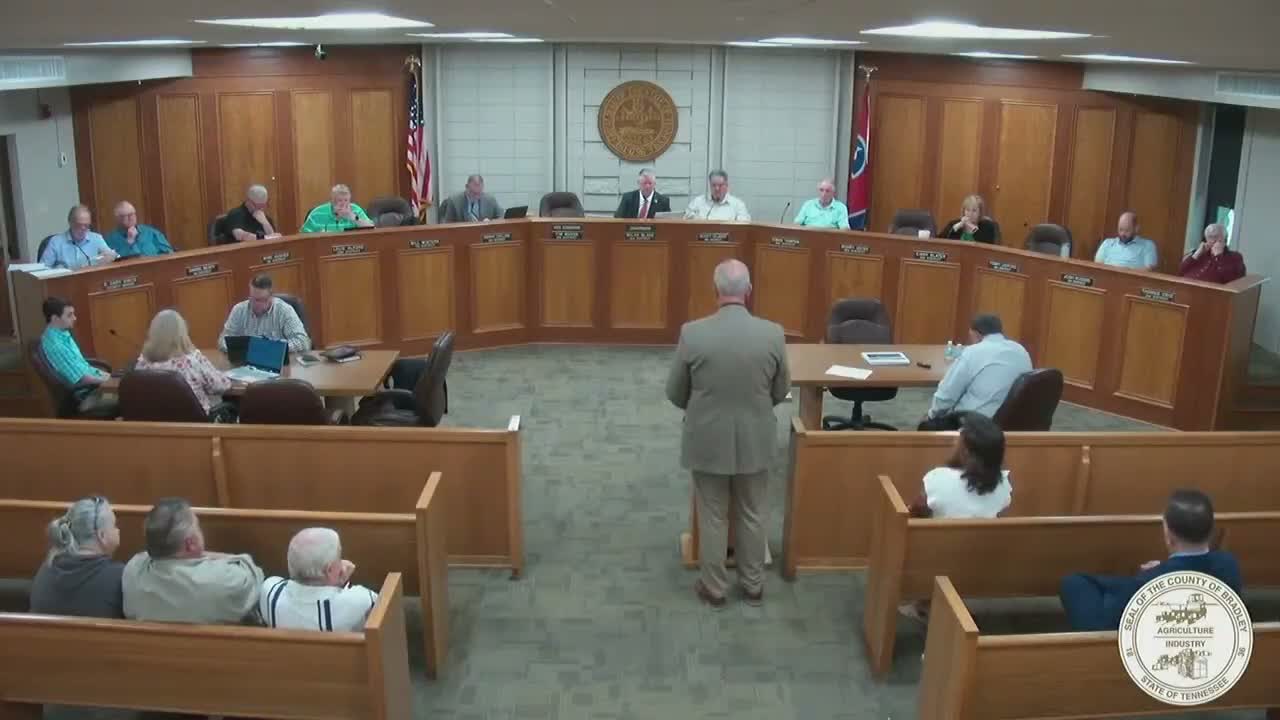
The sheriff told Bradley County commissioners that the county jail requires ongoing maintenance and staffing investments to operate safely and avoid litigation.
"We fix them piece by piece. But sooner or later down the road, that's gonna have to be addressed," Sheriff Fest said, describing copper-pipe sediment, repeated leaks and water in walls. He said the facility is about 22 years old and that some systems are reaching the end of their service lives.
The sheriff described a transition to tankless water heaters and estimated that replacement units, if they fail, could cost "around $22,500 a piece," with roughly 12–14 units in the system. He said recent capital work included a new roof and HVAC funded in part with federal money, and he credited those projects for easing immediate risk while warning other systems still require long-range planning.
On staffing, the sheriff reported about 81 employees assigned to the jail and a total of roughly 100–107 post-certified personnel across courts and SROs. He said about 13 positions remained frozen and needed restoration. Commissioners asked for a clearer step-pay plan and how annual step increases are calculated; county staff laid out that the step plan starts at year 1, identified missing step increases in certain years (’21, ’22, ’24, ’25, ’27, ’28) and said the county needs to refine the plan so long-serving employees do not go years without increases.
Commissioner Collins also asked about an equipment line (7-16) carrying $100,000 that had not been spent through nine months; Jeremy Croy of the sheriff’s office said the funds are planned for vests and SWAT equipment and are often held late in the fiscal year to cover unexpected expenses.
Fleet and fuel were also discussed: the sheriff described buying used vehicles in batches (funded by federal or capital allocations) and prioritizing the best cars for road patrol, and staff provided recent fuel invoices showing month-to-month increases in fuel costs. Commissioners flagged vehicle-to-staff ratios and urged prudence in balancing fleet, maintenance and personnel needs.
Why it matters: deferred maintenance and a mismatch between reimbursement (the county cites a $41/day base from the state) and actual per-inmate costs increase pressure on county property taxes or require program cuts. Commissioners asked the sheriff to provide more detailed cost modeling and to return with refined estimates and procurement timelines before budget adoption.
The commission recessed for a brief break and scheduled continued budget review in the next round of questions.
"We fix them piece by piece. But sooner or later down the road, that's gonna have to be addressed," Sheriff Fest said, describing copper-pipe sediment, repeated leaks and water in walls. He said the facility is about 22 years old and that some systems are reaching the end of their service lives.
The sheriff described a transition to tankless water heaters and estimated that replacement units, if they fail, could cost "around $22,500 a piece," with roughly 12–14 units in the system. He said recent capital work included a new roof and HVAC funded in part with federal money, and he credited those projects for easing immediate risk while warning other systems still require long-range planning.
On staffing, the sheriff reported about 81 employees assigned to the jail and a total of roughly 100–107 post-certified personnel across courts and SROs. He said about 13 positions remained frozen and needed restoration. Commissioners asked for a clearer step-pay plan and how annual step increases are calculated; county staff laid out that the step plan starts at year 1, identified missing step increases in certain years (’21, ’22, ’24, ’25, ’27, ’28) and said the county needs to refine the plan so long-serving employees do not go years without increases.
Commissioner Collins also asked about an equipment line (7-16) carrying $100,000 that had not been spent through nine months; Jeremy Croy of the sheriff’s office said the funds are planned for vests and SWAT equipment and are often held late in the fiscal year to cover unexpected expenses.
Fleet and fuel were also discussed: the sheriff described buying used vehicles in batches (funded by federal or capital allocations) and prioritizing the best cars for road patrol, and staff provided recent fuel invoices showing month-to-month increases in fuel costs. Commissioners flagged vehicle-to-staff ratios and urged prudence in balancing fleet, maintenance and personnel needs.
Why it matters: deferred maintenance and a mismatch between reimbursement (the county cites a $41/day base from the state) and actual per-inmate costs increase pressure on county property taxes or require program cuts. Commissioners asked the sheriff to provide more detailed cost modeling and to return with refined estimates and procurement timelines before budget adoption.
The commission recessed for a brief break and scheduled continued budget review in the next round of questions.
View the Full Meeting & All Its Details
This article offers just a summary. Unlock complete video, transcripts, and insights as a Founder Member.
✓
Watch full, unedited meeting videos
✓
Search every word spoken in unlimited transcripts
✓
AI summaries & real-time alerts (all government levels)
✓
Permanent access to expanding government content
30-day money-back guarantee
