Senate committee passes 'success sequence' information bill after heated debate over naming the measure
April 15, 2026 | 2026 Legislature LA, Louisiana
This article was created by AI summarizing key points discussed. AI makes mistakes, so for full details and context, please refer to the video of the full meeting. Please report any errors so we can fix them. Report an error »
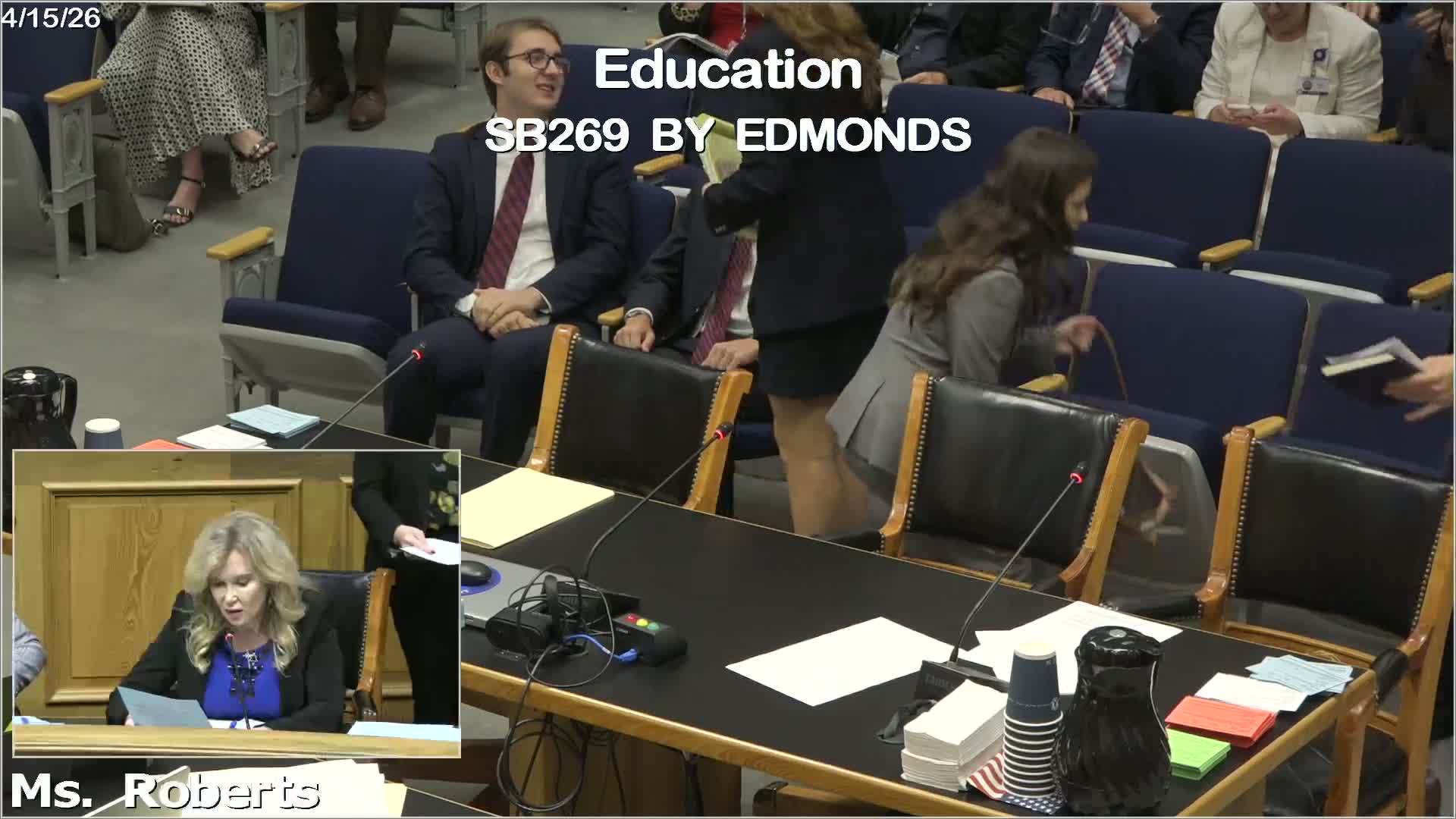
The Senate Education Committee voted to report SB 269 favorably after an extended and sometimes contentious hearing over the bill's content and its name.
The measure requires schools to provide students with information labeled a "success sequence"—finishing high school, entering the workforce and marrying before having children—citing research that associates that pattern with lower poverty rates. A witness presenting research materials told the committee that "if you finish high school... enter the workforce... then you get married before having children, your chances of not being in poverty are 97 percent."
Many witnesses and organizations supported the policy as an awareness or counseling tool, but the bill's sponsor presented it as the "Charlie Kirk Success Sequence Act," honoring a campus advocate whose supporters said inspired young people. Several senators and witnesses objected strongly to that naming. Senator Andrews said he could not "force a high school African American student in this state to honor a legacy of a man... who stated... prowling blacks go around for fun to go target white people," arguing the name could alienate students; Senator Bartholomew cited repeated public remarks by the namesake that she described as derogatory and said the title would be divisive for classrooms that serve diverse students.
The committee considered an amendment to strip the name from the bill; substitute motions were offered and rejected, and the committee ultimately reported SB 269 favorably. When members called the roll on a motion to move the bill to the floor without amendments, the recorded vote was 3 yeas and 2 nays and the bill was reported favorably.
Committee members agreed supporters and opponents intended a common goal—reducing poverty and encouraging student planning—but disagreed sharply about whether naming the bill after a polarizing national figure was appropriate for a curriculum-facing statute. The bill will move to the full Senate for further consideration.
The measure requires schools to provide students with information labeled a "success sequence"—finishing high school, entering the workforce and marrying before having children—citing research that associates that pattern with lower poverty rates. A witness presenting research materials told the committee that "if you finish high school... enter the workforce... then you get married before having children, your chances of not being in poverty are 97 percent."
Many witnesses and organizations supported the policy as an awareness or counseling tool, but the bill's sponsor presented it as the "Charlie Kirk Success Sequence Act," honoring a campus advocate whose supporters said inspired young people. Several senators and witnesses objected strongly to that naming. Senator Andrews said he could not "force a high school African American student in this state to honor a legacy of a man... who stated... prowling blacks go around for fun to go target white people," arguing the name could alienate students; Senator Bartholomew cited repeated public remarks by the namesake that she described as derogatory and said the title would be divisive for classrooms that serve diverse students.
The committee considered an amendment to strip the name from the bill; substitute motions were offered and rejected, and the committee ultimately reported SB 269 favorably. When members called the roll on a motion to move the bill to the floor without amendments, the recorded vote was 3 yeas and 2 nays and the bill was reported favorably.
Committee members agreed supporters and opponents intended a common goal—reducing poverty and encouraging student planning—but disagreed sharply about whether naming the bill after a polarizing national figure was appropriate for a curriculum-facing statute. The bill will move to the full Senate for further consideration.
View the Full Meeting & All Its Details
This article offers just a summary. Unlock complete video, transcripts, and insights as a Founder Member.
✓
Watch full, unedited meeting videos
✓
Search every word spoken in unlimited transcripts
✓
AI summaries & real-time alerts (all government levels)
✓
Permanent access to expanding government content
30-day money-back guarantee
