Committee advances technical fix to let Treasury use ‘bridge purchasers’ to place unsold tax credits
April 16, 2026 | 2026 Legislature CO, Colorado
This article was created by AI summarizing key points discussed. AI makes mistakes, so for full details and context, please refer to the video of the full meeting. Please report any errors so we can fix them. Report an error »
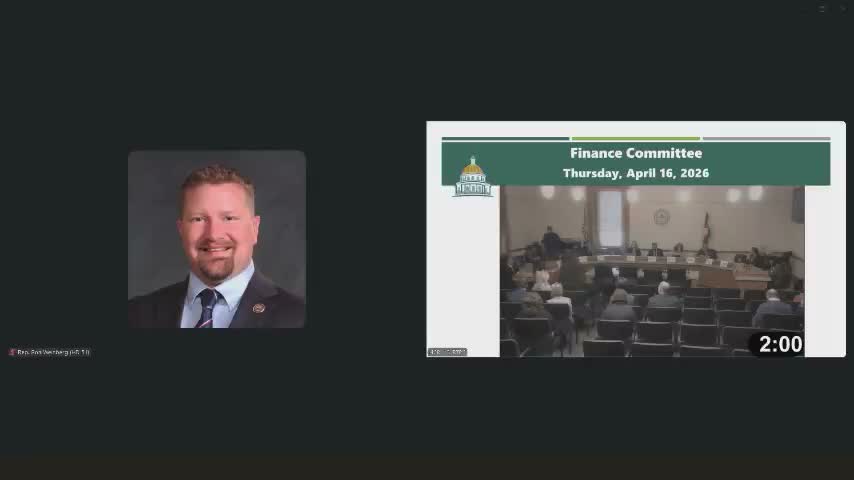
The House Finance Committee advanced a technical change to the state’s tax‑credit sales process on April 17, voting to send House Bill 13‑46 to the Committee of the Whole with a favorable recommendation.
Sponsors and Treasury officials framed the measure as a narrowly tailored fix to ensure the state can sell $200 million in multiyear tax credits by a June 2026 deadline. Representative Titone told the committee the bill would allow a "bridge purchaser" — an intermediary — to buy remaining unsold credits upfront and then transfer them annually to qualified buyers as those buyers become ready to claim the credits.
Leah Marvin Riley, policy director at the Colorado Department of Treasury, said Treasury has sold about $155,000,000 of the $200,000,000 target and described the change as a backstop: "This fix includes a bridge purchaser which is an intermediary that buys all remaining unsold credits by about mid June at the average rate by the deadline then transfers them annually to qualified insurance company buyers as those buyers are ready to purchase them." She added that Treasury would retain oversight and that credits could not be transferred further after the single handoff.
An Advantage Capital representative, Michael Johnson, who contracted with Treasury to market the credits, described the measure as a way to protect the state’s ability to raise the full amount by the statutory deadline: "It's our advice to Treasury that to protect the state's ability to raise the full 200,000,000 by the deadline ... this is basically a backstop," he said.
Committee members pressed witnesses on pricing and whether adding intermediaries could create additional fees or an effective borrowing cost for the state. Several members referenced recent placement prices, noting sales averaged roughly 82¢ on the dollar and raised questions about the economic tradeoff of a near‑term discount. Scott Schuck, a principal economist in the Office of State Planning and Budgeting, said an 80¢ preset floor exists, and the budget has incorporated the expected revenue and the timing of that revenue across fiscal years. He warned that failing to place all credits within the current budget year would harm the starting balance for fiscal year 27.
Sponsors stressed the bill would not increase the number of tax credits and would not change how they are claimed; instead, they said, it broadens who may buy unsold credits so the state can realize the proceeds it has planned for the current year.
A motion to move HB 13‑46 to the Committee of the Whole passed on a 6–5 recorded vote. The committee record shows the motion and the committee’s affirmative tally; details of individual member votes appear on the transcript roll call and committee sheet.
With Treasury and the contracted marketer supporting the change and state budget staff describing a limited and priced‑in impact, sponsors urged the committee to approve the bill as a short‑term tool to meet an existing deadline.
The committee’s favorable recommendation sends HB 13‑46 to the next stage of floor consideration.
Sponsors and Treasury officials framed the measure as a narrowly tailored fix to ensure the state can sell $200 million in multiyear tax credits by a June 2026 deadline. Representative Titone told the committee the bill would allow a "bridge purchaser" — an intermediary — to buy remaining unsold credits upfront and then transfer them annually to qualified buyers as those buyers become ready to claim the credits.
Leah Marvin Riley, policy director at the Colorado Department of Treasury, said Treasury has sold about $155,000,000 of the $200,000,000 target and described the change as a backstop: "This fix includes a bridge purchaser which is an intermediary that buys all remaining unsold credits by about mid June at the average rate by the deadline then transfers them annually to qualified insurance company buyers as those buyers are ready to purchase them." She added that Treasury would retain oversight and that credits could not be transferred further after the single handoff.
An Advantage Capital representative, Michael Johnson, who contracted with Treasury to market the credits, described the measure as a way to protect the state’s ability to raise the full amount by the statutory deadline: "It's our advice to Treasury that to protect the state's ability to raise the full 200,000,000 by the deadline ... this is basically a backstop," he said.
Committee members pressed witnesses on pricing and whether adding intermediaries could create additional fees or an effective borrowing cost for the state. Several members referenced recent placement prices, noting sales averaged roughly 82¢ on the dollar and raised questions about the economic tradeoff of a near‑term discount. Scott Schuck, a principal economist in the Office of State Planning and Budgeting, said an 80¢ preset floor exists, and the budget has incorporated the expected revenue and the timing of that revenue across fiscal years. He warned that failing to place all credits within the current budget year would harm the starting balance for fiscal year 27.
Sponsors stressed the bill would not increase the number of tax credits and would not change how they are claimed; instead, they said, it broadens who may buy unsold credits so the state can realize the proceeds it has planned for the current year.
A motion to move HB 13‑46 to the Committee of the Whole passed on a 6–5 recorded vote. The committee record shows the motion and the committee’s affirmative tally; details of individual member votes appear on the transcript roll call and committee sheet.
With Treasury and the contracted marketer supporting the change and state budget staff describing a limited and priced‑in impact, sponsors urged the committee to approve the bill as a short‑term tool to meet an existing deadline.
The committee’s favorable recommendation sends HB 13‑46 to the next stage of floor consideration.
Don't Miss a Word: See the Full Meeting!
Go beyond summaries. Unlock every video, transcript, and key insight with a Founder Membership.
✓
Get instant access to full meeting videos
✓
Search and clip any phrase from complete transcripts
✓
Receive AI-powered summaries & custom alerts
✓
Enjoy lifetime, unrestricted access to government data
30-day money-back guarantee
