Pasco to install speed cushions on Court Street after six‑month review; council approves funding mix
April 16, 2026 | Pasco City, Franklin County, Washington
This article was created by AI summarizing key points discussed. AI makes mistakes, so for full details and context, please refer to the video of the full meeting. Please report any errors so we can fix them. Report an error »
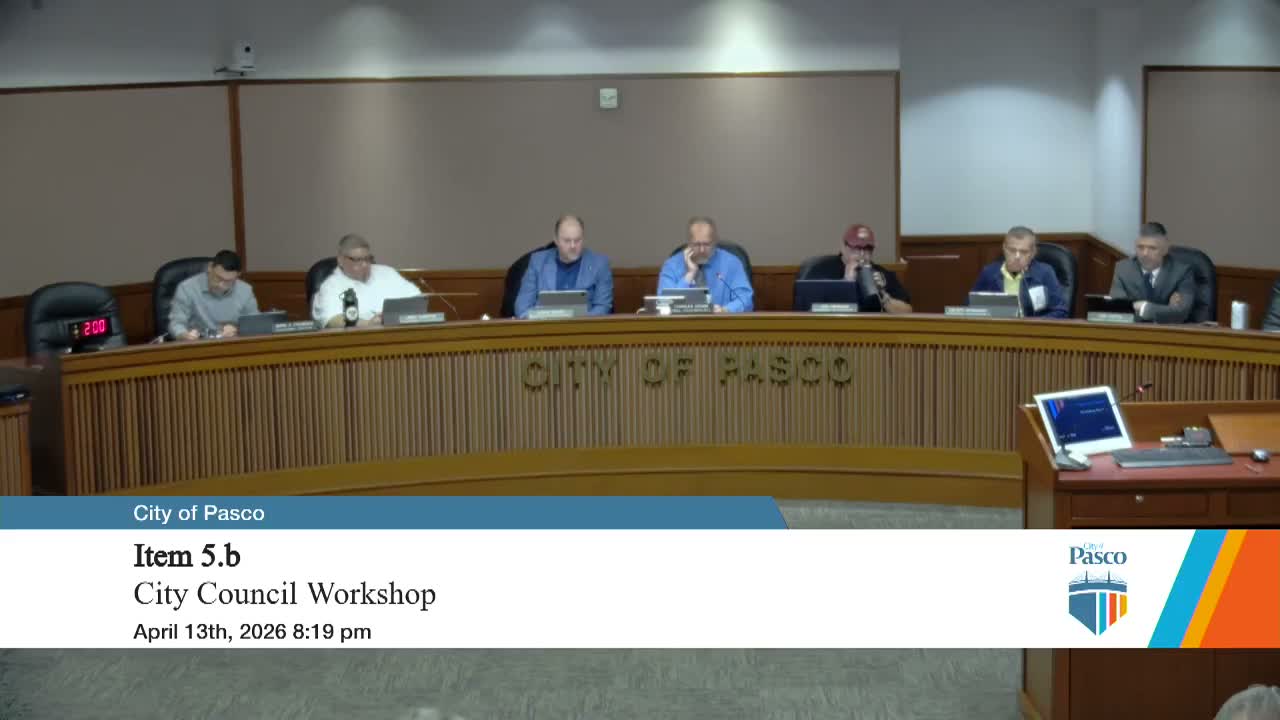
City staff presented results of a six‑month evaluation of passive traffic measures on Court Street and recommended moving to active measures after finding minimal sustained speed reductions.
"We're seeing speeds that go somewhere between 24 and 34 (mph) pretty much across the whole corridor," the staff presenter told the council, summarizing the traffic engineer's findings. The engineer recommended 10 speed cushions spaced about 800 feet apart from just west of I‑182 through Road 100, with accompanying signage and striping. Staff estimated materials and installation by city crews at about $70,000 and an additional $12,000 if the council wanted signs to deter lane encroachment into bike lanes.
Residents who use the Sacagawea Trail and other neighborhood stakeholders urged council action. "It's very dangerous — there's kids out there, bikes, everything, every day," one resident told the council during public comment, citing repeated high‑speed violations.
Council members across districts expressed strong support for the cushions and for adding the signs, but they also weighed funding sources carefully given tight streets‑fund reserves. Staff presented six funding options ranging from temporarily pausing sidewalk maintenance to a general‑fund supplement. Council favored a near‑term solution that splits the cost (part from streets‑fund reallocations such as reduced signal supply/sign maintenance and part from general reserves) so the work can proceed this summer; staff said it would order materials to be available by June.
Deputy City Manager Miss Sigdell and public‑works staff agreed to perform limited outreach (letters to affected residents) before installation and to monitor adjacent streets for potential cut‑through traffic after cushions are installed.
The council did not take a formal vote at the workshop, but members gave staff clear direction to proceed with procurement and installation under the funding approach discussed and to return with any required budget adjustments.
"We're seeing speeds that go somewhere between 24 and 34 (mph) pretty much across the whole corridor," the staff presenter told the council, summarizing the traffic engineer's findings. The engineer recommended 10 speed cushions spaced about 800 feet apart from just west of I‑182 through Road 100, with accompanying signage and striping. Staff estimated materials and installation by city crews at about $70,000 and an additional $12,000 if the council wanted signs to deter lane encroachment into bike lanes.
Residents who use the Sacagawea Trail and other neighborhood stakeholders urged council action. "It's very dangerous — there's kids out there, bikes, everything, every day," one resident told the council during public comment, citing repeated high‑speed violations.
Council members across districts expressed strong support for the cushions and for adding the signs, but they also weighed funding sources carefully given tight streets‑fund reserves. Staff presented six funding options ranging from temporarily pausing sidewalk maintenance to a general‑fund supplement. Council favored a near‑term solution that splits the cost (part from streets‑fund reallocations such as reduced signal supply/sign maintenance and part from general reserves) so the work can proceed this summer; staff said it would order materials to be available by June.
Deputy City Manager Miss Sigdell and public‑works staff agreed to perform limited outreach (letters to affected residents) before installation and to monitor adjacent streets for potential cut‑through traffic after cushions are installed.
The council did not take a formal vote at the workshop, but members gave staff clear direction to proceed with procurement and installation under the funding approach discussed and to return with any required budget adjustments.
View the Full Meeting & All Its Details
This article offers just a summary. Unlock complete video, transcripts, and insights as a Founder Member.
✓
Watch full, unedited meeting videos
✓
Search every word spoken in unlimited transcripts
✓
AI summaries & real-time alerts (all government levels)
✓
Permanent access to expanding government content
30-day money-back guarantee
