Olympia council approves PBIA evaluation recommendations, directs phase‑2 planning
April 14, 2026 | Olympia, Thurston County, Washington
This article was created by AI summarizing key points discussed. AI makes mistakes, so for full details and context, please refer to the video of the full meeting. Please report any errors so we can fix them. Report an error »
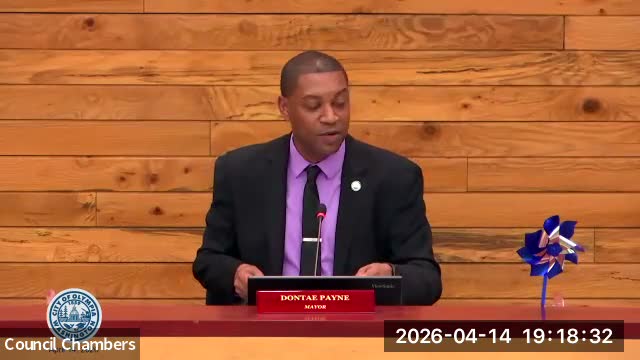
The Olympia City Council voted April 14 to proceed to a phase‑2 implementation plan for the downtown Parking and Business Improvement Area (PBIA) after hearing a presentation from consultant Brian Scott of Uncommon Bridges and an overview from Economic Development Director Jennica Machado.
Scott told the council the PBIA’s assessment structure and rates have not been updated since creation in 2005 and that the district collected roughly $113,000 in 2024 after pausing collection. He summarized national best practices and recommended either moving to a property‑based district or substantially increasing assessments and reconfiguring administration to achieve scale and more effective services. "Your structure does not align with national best practices," Scott said, and offered examples from Everett and West Seattle to illustrate potential budget and structural changes.
Jennica Machado said phase 2 would include additional stakeholder engagement, development of a detailed proposal and options for administration and assessment mechanisms; staff are not asking council to approve changes to the PBIA at this meeting, only to authorize the next step. Brian Scott estimated a peer‑equivalent district budget could be in the range of several hundred thousand dollars annually and suggested building consensus with ratepayers.
Councilmembers asked about possible uses of PBIA funds (clean and safe services, marketing, events, and partnership with the Olympia Downtown Alliance), options to protect affordability, and administrative efficiency. Desiree Freeland, executive director of the Olympia Downtown Alliance, said a larger, dedicated assessment would free the ODA to redirect its funds and better serve downtown businesses.
Mayor Pro Tem moved to "approve the evaluation recommendations and proceed with the roadmap/phase 2"; the motion was seconded and passed by voice vote. Council discussion and the presentation included a request that phase 2 costs could be shared between the PBIA advisory board and the city; staff noted funds are available in the economic development reserve and estimated the phase 2 effort may cost about $50,000.
The vote authorizes staff and stakeholders to begin a more detailed proposal and engagement process; any change to assessments, district boundaries, or administration would return to council for a public hearing and formal approval.
Scott told the council the PBIA’s assessment structure and rates have not been updated since creation in 2005 and that the district collected roughly $113,000 in 2024 after pausing collection. He summarized national best practices and recommended either moving to a property‑based district or substantially increasing assessments and reconfiguring administration to achieve scale and more effective services. "Your structure does not align with national best practices," Scott said, and offered examples from Everett and West Seattle to illustrate potential budget and structural changes.
Jennica Machado said phase 2 would include additional stakeholder engagement, development of a detailed proposal and options for administration and assessment mechanisms; staff are not asking council to approve changes to the PBIA at this meeting, only to authorize the next step. Brian Scott estimated a peer‑equivalent district budget could be in the range of several hundred thousand dollars annually and suggested building consensus with ratepayers.
Councilmembers asked about possible uses of PBIA funds (clean and safe services, marketing, events, and partnership with the Olympia Downtown Alliance), options to protect affordability, and administrative efficiency. Desiree Freeland, executive director of the Olympia Downtown Alliance, said a larger, dedicated assessment would free the ODA to redirect its funds and better serve downtown businesses.
Mayor Pro Tem moved to "approve the evaluation recommendations and proceed with the roadmap/phase 2"; the motion was seconded and passed by voice vote. Council discussion and the presentation included a request that phase 2 costs could be shared between the PBIA advisory board and the city; staff noted funds are available in the economic development reserve and estimated the phase 2 effort may cost about $50,000.
The vote authorizes staff and stakeholders to begin a more detailed proposal and engagement process; any change to assessments, district boundaries, or administration would return to council for a public hearing and formal approval.
View the Full Meeting & All Its Details
This article offers just a summary. Unlock complete video, transcripts, and insights as a Founder Member.
✓
Watch full, unedited meeting videos
✓
Search every word spoken in unlimited transcripts
✓
AI summaries & real-time alerts (all government levels)
✓
Permanent access to expanding government content
30-day money-back guarantee
