Advisory group flags jail funding pressure, DA hire and measles preparedness
April 03, 2026 | Columbia County, Oregon
This article was created by AI summarizing key points discussed. AI makes mistakes, so for full details and context, please refer to the video of the full meeting. Please report any errors so we can fix them. Report an error »
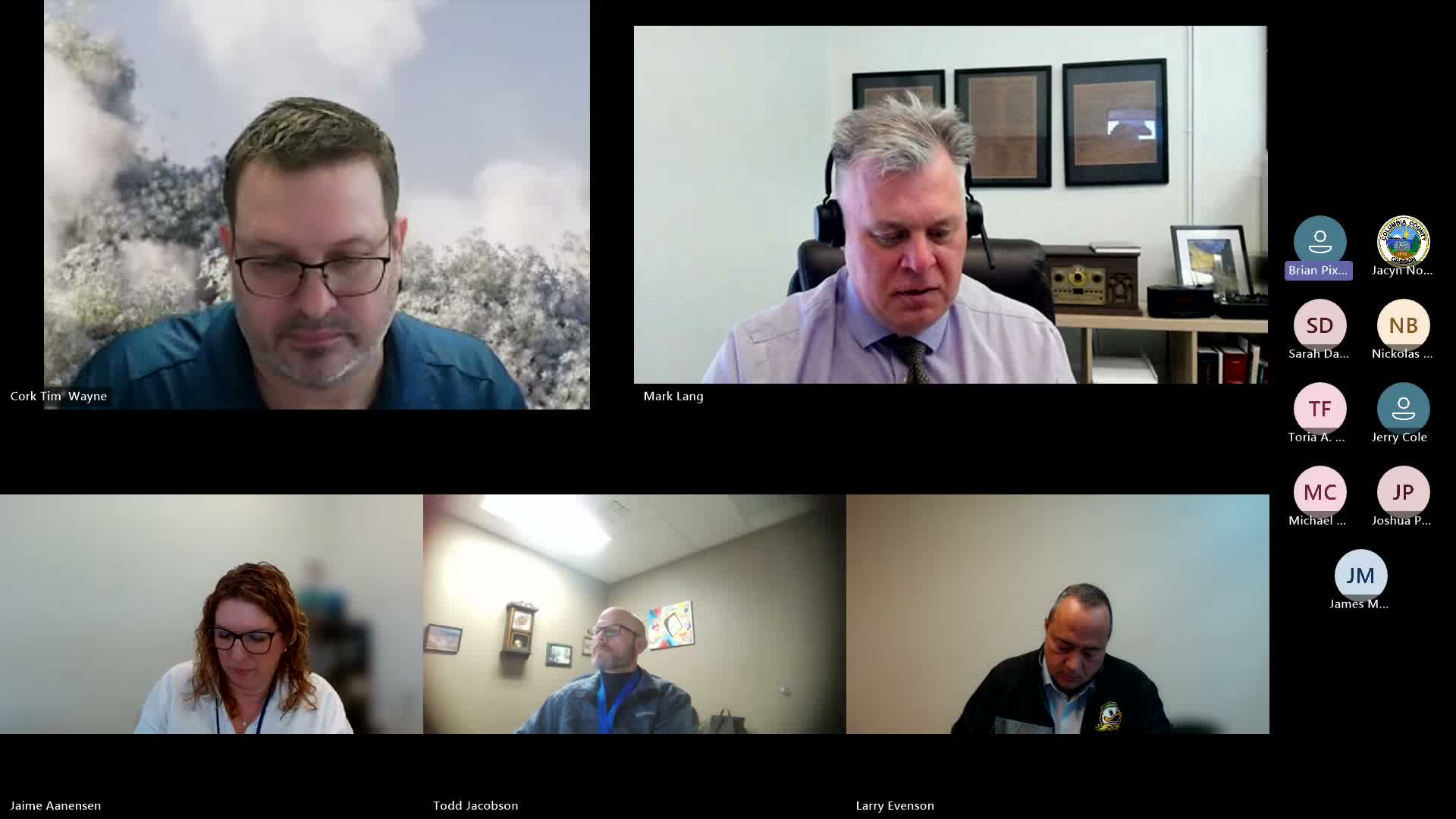
Columbia County advisory members spent a large portion of the meeting on public-safety and health issues, with officials warning that current funding will not fully cover jail operations, staff are recruiting a deputy district attorney, and public-health staff are preparing for possible measles exposures.
Speaker 2 (Brian) said the LEHI renewal that was approved will not cover jail costs for a full four years and that he is considering combining the patrol levy and the jail levy in 2027 to increase flexibility and revenue. "I'm probably going to be trying to... put my patrol levy my jail levy together here next year and '27 to kind of merge them to generate a little bit additional funds," Brian said.
Judge Clark and others said preserving local jail capacity is a top priority because court enforcement depends on it. Clark noted a statewide push for courthouse safety, but said local funding constraints complicate implementation.
On staffing, the district attorney’s office (addressed to Josh during the meeting) said it is "in the process" of hiring a deputy DA and hopes to have a candidate on board once final details are resolved.
Public-health official Jamie said Oregon had 11 confirmed measles cases at the time of the meeting, with at least one additional case pending, and that Columbia County had zero confirmed cases. "We have 11 confirmed cases so far...As of right now, we have 0 in Columbia County," Jamie said. Jamie added that public-health staff are coordinating with the jail, schools and other partners to prepare for potential exposures.
Tim, speaking for the Department of Human Services, said the volunteer-driver program—used by Columbia and Clatsop counties—has exhausted its biennium budget and is paused until additional funding is found. He said volunteer drivers are reimbursed roughly $0.70–$0.77 per mile (the transcript records "70¢ 77¢ a mile"), with additional food stipends and overnight pay in some cases. Tim said the pause means staff are driving more, which delays other services and paperwork.
Tim said the state’s funding changes (referenced in the transcript as the result of a recently passed bill) contributed to the shortfall and staff are "trying to come up with options" to continue service. He offered to be available for further conversations with the group.
The meeting produced no new formal policy on funding or service continuation; members agreed to continue planning and to reconvene with additional proposals and potential levy scenarios.
The advisory group adjourned after approving routine business. The next scheduled meeting is May 1.
Speaker 2 (Brian) said the LEHI renewal that was approved will not cover jail costs for a full four years and that he is considering combining the patrol levy and the jail levy in 2027 to increase flexibility and revenue. "I'm probably going to be trying to... put my patrol levy my jail levy together here next year and '27 to kind of merge them to generate a little bit additional funds," Brian said.
Judge Clark and others said preserving local jail capacity is a top priority because court enforcement depends on it. Clark noted a statewide push for courthouse safety, but said local funding constraints complicate implementation.
On staffing, the district attorney’s office (addressed to Josh during the meeting) said it is "in the process" of hiring a deputy DA and hopes to have a candidate on board once final details are resolved.
Public-health official Jamie said Oregon had 11 confirmed measles cases at the time of the meeting, with at least one additional case pending, and that Columbia County had zero confirmed cases. "We have 11 confirmed cases so far...As of right now, we have 0 in Columbia County," Jamie said. Jamie added that public-health staff are coordinating with the jail, schools and other partners to prepare for potential exposures.
Tim, speaking for the Department of Human Services, said the volunteer-driver program—used by Columbia and Clatsop counties—has exhausted its biennium budget and is paused until additional funding is found. He said volunteer drivers are reimbursed roughly $0.70–$0.77 per mile (the transcript records "70¢ 77¢ a mile"), with additional food stipends and overnight pay in some cases. Tim said the pause means staff are driving more, which delays other services and paperwork.
Tim said the state’s funding changes (referenced in the transcript as the result of a recently passed bill) contributed to the shortfall and staff are "trying to come up with options" to continue service. He offered to be available for further conversations with the group.
The meeting produced no new formal policy on funding or service continuation; members agreed to continue planning and to reconvene with additional proposals and potential levy scenarios.
The advisory group adjourned after approving routine business. The next scheduled meeting is May 1.
Don't Miss a Word: See the Full Meeting!
Go beyond summaries. Unlock every video, transcript, and key insight with a Founder Membership.
✓
Get instant access to full meeting videos
✓
Search and clip any phrase from complete transcripts
✓
Receive AI-powered summaries & custom alerts
✓
Enjoy lifetime, unrestricted access to government data
30-day money-back guarantee
