Vermont committee hears push for 10% cap on ticket resale to curb scalpers
April 16, 2026 | Economic Development, Housing & General Affairs, SENATE, Committees, Legislative , Vermont
This article was created by AI summarizing key points discussed. AI makes mistakes, so for full details and context, please refer to the video of the full meeting. Please report any errors so we can fix them. Report an error »
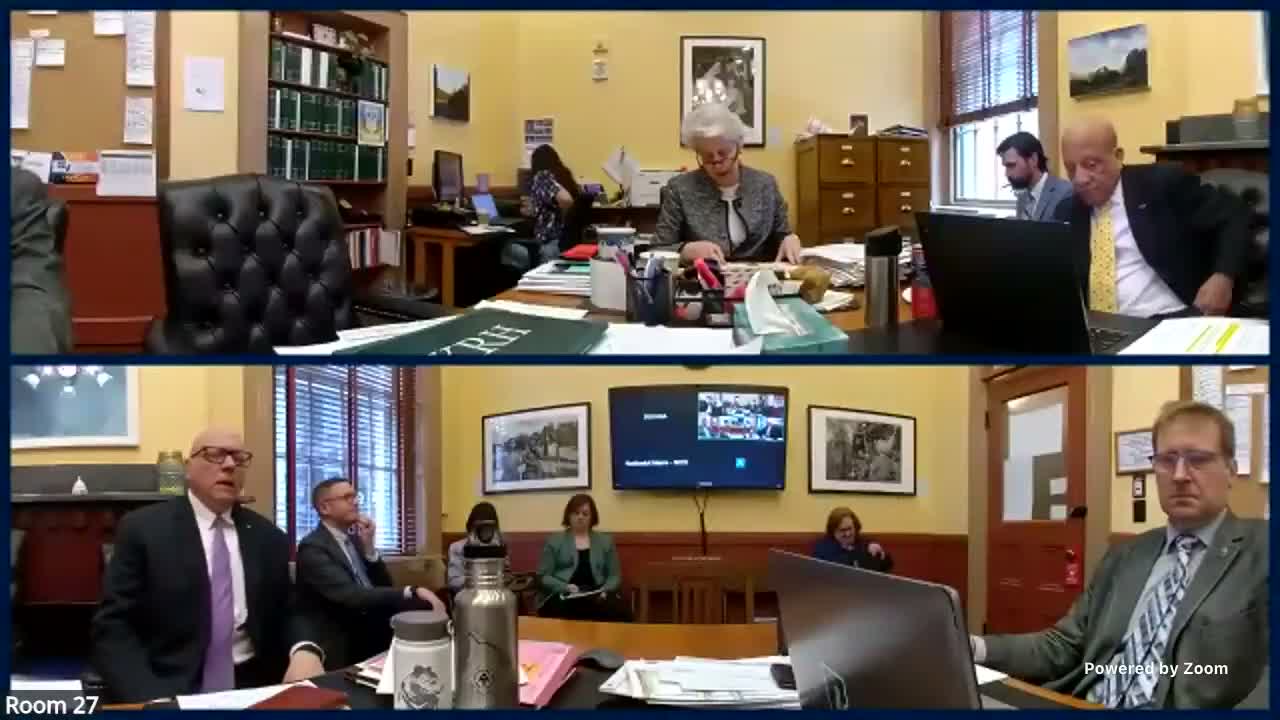
Chair Clarkson convened the Senate Committee on Economic Development, Housing & General Affairs and opened a hearing on H.512, a consumer‑protection bill aimed at regulating the secondary market for event tickets.
The bill would ban deceptive or speculative ticket listings and limit resale prices to 10% above the original ticket price, a cap sponsors say would remove the financial incentive driving industrialized scalping. "Tickets are being sold on resale platforms for dramatically more than the original price," Susan Evans McClure said, describing lost revenue that leaves Vermont venues and artists.
Why it matters: witnesses told the committee that professional resellers and automated bots buy large blocks of tickets, list them at multiples of face value, or list tickets before primary sale, leaving fans stranded even if refunds are later issued. "Even if you do have a fraudulent ticket, even if they do refund you, it doesn't take care of the fact that you showed up to a venue empty handed," Nathaniel, a representative of the National Independent Talent Organization, told the committee.
Sponsor and witness arguments: supporters emphasized three harms the bill targets: (1) price gouging that diverts money out of Vermont’s local economy; (2) speculative or counterfeit listings that deliver nothing to buyers; and (3) industrialized resale that leaves venues with empty seats and lost concessions. Susan Evans McClure said venues frequently resolve individual incidents reactively but have limited enforcement tools under existing consumer‑protection enforcement.
Mechanics and drafting questions: committee members pressed witnesses and counsel on how the cap would be calculated and enforced. Counsel noted the bill as drafted ties the cap to the "price" defined to include taxes and fees, and cited platforms’ practical approaches (for example, Maine guidance requiring resellers to confirm original price before listing). Members worried about potential circumvention — such as routing tickets through intermediary sellers to evade a cap — and asked for clearer statutory language.
Scope and exemptions: witnesses and members discussed whether the statute should be limited to tickets for events at Vermont venues or to sales taking place in Vermont. The bill includes an exemption for venue‑authorized resale when a venue has a signed contract with a reseller; proponents said that preserves partnerships like those some universities and larger venues use to provide managed resale for patrons.
Artist and venue testimony: Nathaniel and Kendall Gilbar of the National Independent Venue Association (NEVA) testified that artists, fans and small venues bear the harm. Nathaniel cited industry data showing resale marketplaces average multiples of face value and said one artist’s Vermont shows generated roughly $65,000 in extra payments by fans on secondary markets. Kendall told the committee that some independent venues report 20–30% of tickets unscanned at events because scalpers hold large blocks on secondary sites, costing venues tens of dollars per empty seat in lost concessions.
Policy tradeoffs and possible fixes: senators suggested several drafting options to narrow the bill's reach and reduce unintended effects: explicitly limit applicability to tickets for Vermont venues, define "individual" resellers (one proposal suggested exempting sellers who list fewer than 10 tickets per year), consider a slightly larger cap to cover transaction costs, and include a multiyear sunset and review to allow reassessment.
Next steps: Chair Clarkson and members asked staff to draft clarifying amendments (including a Vermont‑venue amendment and more precise definitions of reseller and individual seller) for the committee’s next meeting. No formal motion or vote occurred during this session.
The committee will reconvene with revised language and further testimony; witnesses agreed to provide supporting data and documentation requested by members.
The bill would ban deceptive or speculative ticket listings and limit resale prices to 10% above the original ticket price, a cap sponsors say would remove the financial incentive driving industrialized scalping. "Tickets are being sold on resale platforms for dramatically more than the original price," Susan Evans McClure said, describing lost revenue that leaves Vermont venues and artists.
Why it matters: witnesses told the committee that professional resellers and automated bots buy large blocks of tickets, list them at multiples of face value, or list tickets before primary sale, leaving fans stranded even if refunds are later issued. "Even if you do have a fraudulent ticket, even if they do refund you, it doesn't take care of the fact that you showed up to a venue empty handed," Nathaniel, a representative of the National Independent Talent Organization, told the committee.
Sponsor and witness arguments: supporters emphasized three harms the bill targets: (1) price gouging that diverts money out of Vermont’s local economy; (2) speculative or counterfeit listings that deliver nothing to buyers; and (3) industrialized resale that leaves venues with empty seats and lost concessions. Susan Evans McClure said venues frequently resolve individual incidents reactively but have limited enforcement tools under existing consumer‑protection enforcement.
Mechanics and drafting questions: committee members pressed witnesses and counsel on how the cap would be calculated and enforced. Counsel noted the bill as drafted ties the cap to the "price" defined to include taxes and fees, and cited platforms’ practical approaches (for example, Maine guidance requiring resellers to confirm original price before listing). Members worried about potential circumvention — such as routing tickets through intermediary sellers to evade a cap — and asked for clearer statutory language.
Scope and exemptions: witnesses and members discussed whether the statute should be limited to tickets for events at Vermont venues or to sales taking place in Vermont. The bill includes an exemption for venue‑authorized resale when a venue has a signed contract with a reseller; proponents said that preserves partnerships like those some universities and larger venues use to provide managed resale for patrons.
Artist and venue testimony: Nathaniel and Kendall Gilbar of the National Independent Venue Association (NEVA) testified that artists, fans and small venues bear the harm. Nathaniel cited industry data showing resale marketplaces average multiples of face value and said one artist’s Vermont shows generated roughly $65,000 in extra payments by fans on secondary markets. Kendall told the committee that some independent venues report 20–30% of tickets unscanned at events because scalpers hold large blocks on secondary sites, costing venues tens of dollars per empty seat in lost concessions.
Policy tradeoffs and possible fixes: senators suggested several drafting options to narrow the bill's reach and reduce unintended effects: explicitly limit applicability to tickets for Vermont venues, define "individual" resellers (one proposal suggested exempting sellers who list fewer than 10 tickets per year), consider a slightly larger cap to cover transaction costs, and include a multiyear sunset and review to allow reassessment.
Next steps: Chair Clarkson and members asked staff to draft clarifying amendments (including a Vermont‑venue amendment and more precise definitions of reseller and individual seller) for the committee’s next meeting. No formal motion or vote occurred during this session.
The committee will reconvene with revised language and further testimony; witnesses agreed to provide supporting data and documentation requested by members.
View the Full Meeting & All Its Details
This article offers just a summary. Unlock complete video, transcripts, and insights as a Founder Member.
✓
Watch full, unedited meeting videos
✓
Search every word spoken in unlimited transcripts
✓
AI summaries & real-time alerts (all government levels)
✓
Permanent access to expanding government content
30-day money-back guarantee
