North Country superintendent urges pause on PCB testing program after costly, inconsistent results
April 16, 2026 | Education, SENATE, Committees, Legislative , Vermont
This article was created by AI summarizing key points discussed. AI makes mistakes, so for full details and context, please refer to the video of the full meeting. Please report any errors so we can fix them. Report an error »
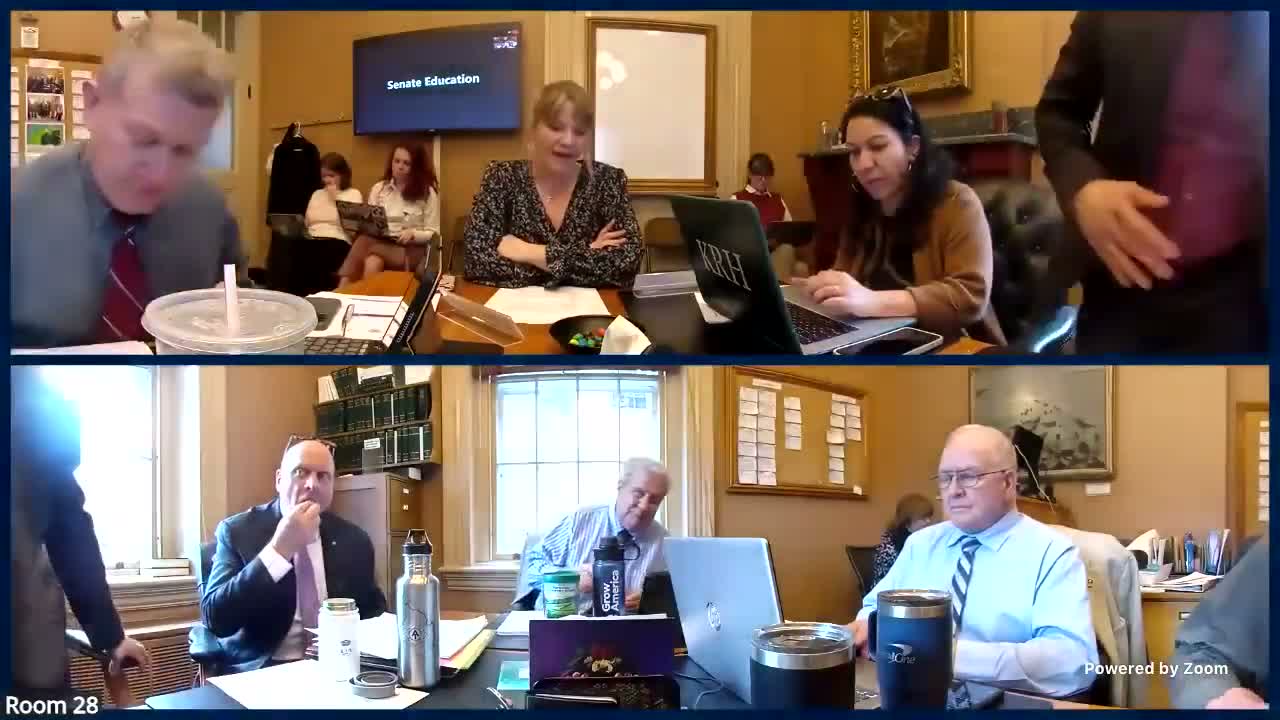
Elaine Collins, superintendent for the North Country Supervisory Union, told a legislative committee that her district has spent about $9 million so far addressing polychlorinated biphenyls (PCBs) found in school buildings and that testing and remediation have been disruptive to learning.
Collins said the union — which serves roughly 2,630 students across 12 schools in a roughly 520-square-mile area — has confronted PCB detections in five schools, with the highest preschool air-sample reading around 200, above the limits she described. "Parents were super grateful to have their kids in school," Collins said, adding, "Again and again they said, 'thank god you didn't go remote.'"
Why it matters: Collins told lawmakers the scale of local remediation is large, the science around air sampling is variable, and continuing the existing program without clearer procedures risks repeatedly spending large sums on buildings that may remain unsafe or need full replacement. She urged the committee to pause the current approach to develop a more consistent testing and response plan and to consider directing some funds toward school construction aid.
Committee members focused questions on test variability and measurement standards. Collins explained that EPA guidance centers on testing building materials, not air; air sampling fluctuates with temperature and humidity and point-in-time tests in hot, humid conditions can spike. She described mitigation steps that reduced readings in classrooms — including increased air exchanges and temporary classroom arrangements — but said results can differ dramatically from room to room.
Collins recounted mitigation and cost figures for local sites: small-scale mitigation in several schools ran about $500,000 each; an originally scoped high-school remediation of about $3.1 million expanded to roughly $5.2 million; district surface mitigation proposals included a rubber membrane (~$135,000) plus stone cover (~$560,000); and options to remove PCBs from the high school ranged in her testimony from about $15 million (mechanical removal) to $21 million (hand removal). She said fully rebuilding the facility could cost on the order of $180 million–$200 million and that institutional monitoring and testing could cost about $250,000 per year.
Collins also described the district’s operational response when tests rose: the system prioritized keeping students in person, erecting temporary tent classrooms and investing in ventilation equipment that replaced classroom air multiple times per hour to bring results down.
On agency coordination and messaging, Collins said Department of Health and Department of Environmental Conservation staff have supported schools but that public communications should be clearer about the difference between short-term air spikes and sustained exposure risk. She recounted earlier public health messaging that emphasized noncancer effects at very high exposures and said newer agency guidance put local readings in a different perspective.
She recommended at minimum pausing the current testing-response program to design a clearer, evidence-based process and questioned whether continued piecemeal spending on older buildings is an efficient use of public funds without a longer-term construction strategy.
The committee did not take a vote; members asked for more information and signaled continued discussion of a related bill. The hearing moved on to separate testimony about school mergers and Act 73.
Collins said the union — which serves roughly 2,630 students across 12 schools in a roughly 520-square-mile area — has confronted PCB detections in five schools, with the highest preschool air-sample reading around 200, above the limits she described. "Parents were super grateful to have their kids in school," Collins said, adding, "Again and again they said, 'thank god you didn't go remote.'"
Why it matters: Collins told lawmakers the scale of local remediation is large, the science around air sampling is variable, and continuing the existing program without clearer procedures risks repeatedly spending large sums on buildings that may remain unsafe or need full replacement. She urged the committee to pause the current approach to develop a more consistent testing and response plan and to consider directing some funds toward school construction aid.
Committee members focused questions on test variability and measurement standards. Collins explained that EPA guidance centers on testing building materials, not air; air sampling fluctuates with temperature and humidity and point-in-time tests in hot, humid conditions can spike. She described mitigation steps that reduced readings in classrooms — including increased air exchanges and temporary classroom arrangements — but said results can differ dramatically from room to room.
Collins recounted mitigation and cost figures for local sites: small-scale mitigation in several schools ran about $500,000 each; an originally scoped high-school remediation of about $3.1 million expanded to roughly $5.2 million; district surface mitigation proposals included a rubber membrane (~$135,000) plus stone cover (~$560,000); and options to remove PCBs from the high school ranged in her testimony from about $15 million (mechanical removal) to $21 million (hand removal). She said fully rebuilding the facility could cost on the order of $180 million–$200 million and that institutional monitoring and testing could cost about $250,000 per year.
Collins also described the district’s operational response when tests rose: the system prioritized keeping students in person, erecting temporary tent classrooms and investing in ventilation equipment that replaced classroom air multiple times per hour to bring results down.
On agency coordination and messaging, Collins said Department of Health and Department of Environmental Conservation staff have supported schools but that public communications should be clearer about the difference between short-term air spikes and sustained exposure risk. She recounted earlier public health messaging that emphasized noncancer effects at very high exposures and said newer agency guidance put local readings in a different perspective.
She recommended at minimum pausing the current testing-response program to design a clearer, evidence-based process and questioned whether continued piecemeal spending on older buildings is an efficient use of public funds without a longer-term construction strategy.
The committee did not take a vote; members asked for more information and signaled continued discussion of a related bill. The hearing moved on to separate testimony about school mergers and Act 73.
Don't Miss a Word: See the Full Meeting!
Go beyond summaries. Unlock every video, transcript, and key insight with a Founder Membership.
✓
Get instant access to full meeting videos
✓
Search and clip any phrase from complete transcripts
✓
Receive AI-powered summaries & custom alerts
✓
Enjoy lifetime, unrestricted access to government data
30-day money-back guarantee
