Board hears $20 million in potential cuts; union and residents urge protecting programs and staff
April 13, 2026 | Battle Ground School District, School Districts, Washington
This article was created by AI summarizing key points discussed. AI makes mistakes, so for full details and context, please refer to the video of the full meeting. Please report any errors so we can fix them. Report an error »
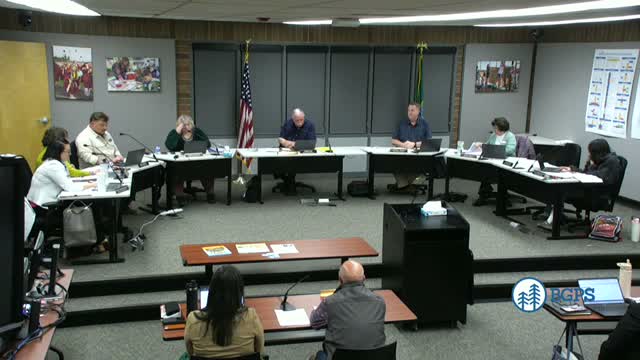
The district’s superintendent (speaker 12) told the board the district has identified roughly $20,000,000 in potential reductions and described a range of areas that could be affected, including district-level director and supervisor positions, reductions to assistant principals and multilingual interpreter services, cuts to the Learning Assistance Program (LAP) intervention team, family and community resource center supports, operations (HVAC, grounds, custodial), counseling and prevention/intervention staff, reductions to transitional kindergarten slots (an estimated 4.9 classroom equivalent), changes to extracurricular participation fees, and potential reductions in CTE and Aspire programming.
"We have identified right at $20,000,000," the superintendent said, and added that the district will present a balanced budget and continue to work with labor partners to refine specifics. She told the board that some services could be restructured (for example special‑assignment district staff returning to classroom work) but that the administration is trying to preserve programs where feasible and would present a resolution on the number and type of impacted positions at the next meeting.
Public speakers and union leadership urged caution. Mary Mendoza Hansel, the BGEA president (speaker 22), said the cuts are causing fear among educators and warned against outsourcing or allowing outside volunteer programs to supplant trained LAP employees and reading specialists. "These are not just budgetary decisions, they are human decisions," she said, and urged the board to prioritize students and retain trained staff under the collective bargaining agreement.
Ryan Anderson (speaker 19) urged the board to "cut nothing" and to consider legal or political remedies to address what he described as a statewide funding shortfall, calling on the board to treat the state’s obligations as paramount. Other public commenters asked the board to resume patron school tours and keep the community informed on credit recovery and intervention staffing changes.
During discussion board members asked clarifying questions about credit recovery costs, SRO funding and the prioritization of safety staff. The administration said SRO funding is partly city/county supported and that if forced to prioritize SRO coverage the south end of the district would retain coverage because of higher needs. The superintendent emphasized that identified reductions are subject to change as the district continues its labor discussions and forecasting.
No formal board decisions on reductions were made at the meeting; staff said a clearer resolution on affected positions will come back to the board at a subsequent meeting.
"We have identified right at $20,000,000," the superintendent said, and added that the district will present a balanced budget and continue to work with labor partners to refine specifics. She told the board that some services could be restructured (for example special‑assignment district staff returning to classroom work) but that the administration is trying to preserve programs where feasible and would present a resolution on the number and type of impacted positions at the next meeting.
Public speakers and union leadership urged caution. Mary Mendoza Hansel, the BGEA president (speaker 22), said the cuts are causing fear among educators and warned against outsourcing or allowing outside volunteer programs to supplant trained LAP employees and reading specialists. "These are not just budgetary decisions, they are human decisions," she said, and urged the board to prioritize students and retain trained staff under the collective bargaining agreement.
Ryan Anderson (speaker 19) urged the board to "cut nothing" and to consider legal or political remedies to address what he described as a statewide funding shortfall, calling on the board to treat the state’s obligations as paramount. Other public commenters asked the board to resume patron school tours and keep the community informed on credit recovery and intervention staffing changes.
During discussion board members asked clarifying questions about credit recovery costs, SRO funding and the prioritization of safety staff. The administration said SRO funding is partly city/county supported and that if forced to prioritize SRO coverage the south end of the district would retain coverage because of higher needs. The superintendent emphasized that identified reductions are subject to change as the district continues its labor discussions and forecasting.
No formal board decisions on reductions were made at the meeting; staff said a clearer resolution on affected positions will come back to the board at a subsequent meeting.
Don't Miss a Word: See the Full Meeting!
Go beyond summaries. Unlock every video, transcript, and key insight with a Founder Membership.
✓
Get instant access to full meeting videos
✓
Search and clip any phrase from complete transcripts
✓
Receive AI-powered summaries & custom alerts
✓
Enjoy lifetime, unrestricted access to government data
30-day money-back guarantee
