Christian County fiscal court approves opioid-settlement agreements, funds local recovery and prevention efforts
April 14, 2026 | Christian County, Kentucky
This article was created by AI summarizing key points discussed. AI makes mistakes, so for full details and context, please refer to the video of the full meeting. Please report any errors so we can fix them. Report an error »
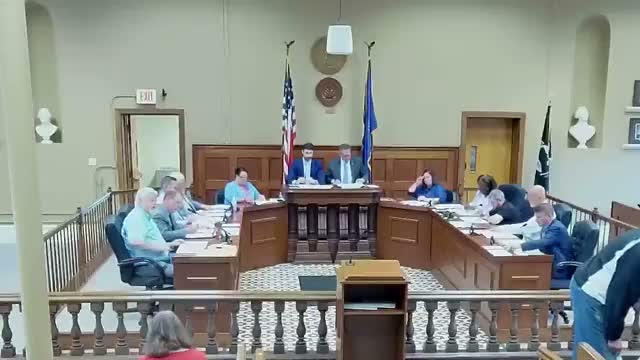
Christian County Fiscal Court on its regular meeting day approved agreements to use opioid-settlement funds for a local digital prevention campaign and for bridge support to a neighborhood recovery house.
The court voted to sign a memorandum of understanding with WHOP (through a parent company referenced in the meeting as “Fork”) to run a targeted digital marketing campaign aimed at people searching for help with opioid addiction. Leanna Bennett, who identified herself as a vendor representative, said the campaign will serve ads to users who enter crisis- or treatment-related search terms and will include a landing page with county branding. “We’re targeting specifically Christian County,” Bennett said, describing adjustable keyword targeting and 60–90 day updates to the campaign. The agreement approved at the meeting was described as $19,270 plus the landing page.
The court also approved a memorandum of understanding with Courage House to provide bridge support for residents entering recovery. Glenda Wooder, introduced to the court as the Courage House representative, said the program operates a 12-bed home at 1414 East 9th Street that takes men from incarceration or treatment and provides wraparound services including clothing, food, transportation assistance and peer support. Fred, who spoke for the program, said 24 people have come through the house and noted that residents who stay at least three months have a better chance of getting work; he and others told the court that longer participation — six to 12 months — tends to produce more durable outcomes.
The Chair announced the county’s contribution to the Courage House project in the meeting as approximately $80,658 and encouraged the city of Hopkinsville to consider matching funding. Officials said the county has created an opioid-funds committee and is developing an application process and reporting requirements for grantees to ensure funds meet state and national eligibility rules.
County counsel also briefed the court on Resolution 2026-10, which authorizes the county to enter participation agreements tied to a national opioid settlement, including smaller “remnant” defendants; counsel said the resolution allows Judge Milton to sign settlement documents so the county can claim its share of available funds. The court moved, seconded and approved the resolution.
What happens next: the vendor said campaign results will be measurable through shared metrics, and county staff said they are preparing application materials and oversight procedures to evaluate and report on all uses of opioid-settlement funds. The approved Courage House funding and the WHOP marketing agreement now move to administrative implementation, with reporting back to the court as required.
The court voted to sign a memorandum of understanding with WHOP (through a parent company referenced in the meeting as “Fork”) to run a targeted digital marketing campaign aimed at people searching for help with opioid addiction. Leanna Bennett, who identified herself as a vendor representative, said the campaign will serve ads to users who enter crisis- or treatment-related search terms and will include a landing page with county branding. “We’re targeting specifically Christian County,” Bennett said, describing adjustable keyword targeting and 60–90 day updates to the campaign. The agreement approved at the meeting was described as $19,270 plus the landing page.
The court also approved a memorandum of understanding with Courage House to provide bridge support for residents entering recovery. Glenda Wooder, introduced to the court as the Courage House representative, said the program operates a 12-bed home at 1414 East 9th Street that takes men from incarceration or treatment and provides wraparound services including clothing, food, transportation assistance and peer support. Fred, who spoke for the program, said 24 people have come through the house and noted that residents who stay at least three months have a better chance of getting work; he and others told the court that longer participation — six to 12 months — tends to produce more durable outcomes.
The Chair announced the county’s contribution to the Courage House project in the meeting as approximately $80,658 and encouraged the city of Hopkinsville to consider matching funding. Officials said the county has created an opioid-funds committee and is developing an application process and reporting requirements for grantees to ensure funds meet state and national eligibility rules.
County counsel also briefed the court on Resolution 2026-10, which authorizes the county to enter participation agreements tied to a national opioid settlement, including smaller “remnant” defendants; counsel said the resolution allows Judge Milton to sign settlement documents so the county can claim its share of available funds. The court moved, seconded and approved the resolution.
What happens next: the vendor said campaign results will be measurable through shared metrics, and county staff said they are preparing application materials and oversight procedures to evaluate and report on all uses of opioid-settlement funds. The approved Courage House funding and the WHOP marketing agreement now move to administrative implementation, with reporting back to the court as required.
View the Full Meeting & All Its Details
This article offers just a summary. Unlock complete video, transcripts, and insights as a Founder Member.
✓
Watch full, unedited meeting videos
✓
Search every word spoken in unlimited transcripts
✓
AI summaries & real-time alerts (all government levels)
✓
Permanent access to expanding government content
30-day money-back guarantee
