Committee advances Alyssa’s Act to expand coach mental-health training and parent notification after youth concussions
April 15, 2026 | 2026 Legislature CO, Colorado
This article was created by AI summarizing key points discussed. AI makes mistakes, so for full details and context, please refer to the video of the full meeting. Please report any errors so we can fix them. Report an error »
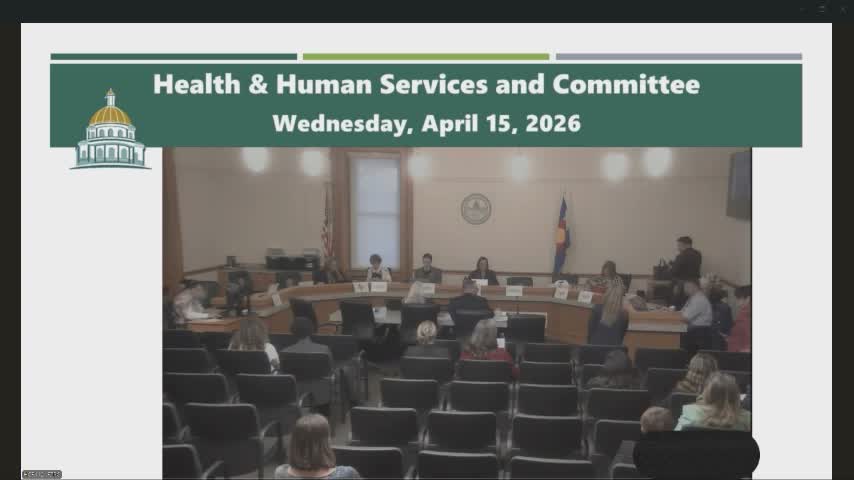
Representative Hamrick and co-sponsors told the committee Senate Bill 60, dubbed Alyssa’s Youth Concussion and Mental Health Protection Act, would close a gap in Colorado’s youth-sports safety framework by adding mental-health education for coaches and ensuring parents are notified when a young athlete is removed from play for a suspected concussion.
“The bill gives [coaches] the tools to act on what they are seeing and ensures parents are equipped to follow up at home,” Representative Hamrick said in opening remarks. Sponsors said the mental-health training would be a biannual, roughly three-hour online course that can be offered alongside existing concussion training; current concussion recognition training is typically an hour, they said.
Family members who lost Alyssa Peterson to suicide and athletes who testified described the human consequences sponsors aim to prevent. Stella DeLongchamp, Alyssa’s mother, asked the committee to pass the bill “so other families recognize the signs earlier and get support before it’s too late.” Emily Peterson, Alyssa’s sister and a student athlete, urged the committee that concussion symptoms can affect “how you feel including your mood, emotions, and mental health.”
Clinicians and advocates also supported the bill. Dr. Mark Allen, a child and sports psychiatrist, described the proposal as a form of “mental health first aid” for youth sports and urged the committee to adopt the measure.
Sponsors offered amendment L005 to fix technical references (clarifying a biennial training phrase) and narrow civil-liability language so protections apply to coaches not already covered by governmental immunity; the amendment passed without objection. Representative Hamrick moved the amended bill with a favorable recommendation to the committee of the whole; the committee recorded a vote of 11 yes, 2 no.
Representative Weinberg expressed concern during debate that greater caution could lead to unnecessary sidelining of athletes; he registered a no vote. Sponsors and supporting witnesses said the change is modest, evidence-based and carries no state fiscal cost according to the bill’s fiscal note.
The committee advanced SB 60 as amended to the committee of the whole, where further floor consideration will occur.
“The bill gives [coaches] the tools to act on what they are seeing and ensures parents are equipped to follow up at home,” Representative Hamrick said in opening remarks. Sponsors said the mental-health training would be a biannual, roughly three-hour online course that can be offered alongside existing concussion training; current concussion recognition training is typically an hour, they said.
Family members who lost Alyssa Peterson to suicide and athletes who testified described the human consequences sponsors aim to prevent. Stella DeLongchamp, Alyssa’s mother, asked the committee to pass the bill “so other families recognize the signs earlier and get support before it’s too late.” Emily Peterson, Alyssa’s sister and a student athlete, urged the committee that concussion symptoms can affect “how you feel including your mood, emotions, and mental health.”
Clinicians and advocates also supported the bill. Dr. Mark Allen, a child and sports psychiatrist, described the proposal as a form of “mental health first aid” for youth sports and urged the committee to adopt the measure.
Sponsors offered amendment L005 to fix technical references (clarifying a biennial training phrase) and narrow civil-liability language so protections apply to coaches not already covered by governmental immunity; the amendment passed without objection. Representative Hamrick moved the amended bill with a favorable recommendation to the committee of the whole; the committee recorded a vote of 11 yes, 2 no.
Representative Weinberg expressed concern during debate that greater caution could lead to unnecessary sidelining of athletes; he registered a no vote. Sponsors and supporting witnesses said the change is modest, evidence-based and carries no state fiscal cost according to the bill’s fiscal note.
The committee advanced SB 60 as amended to the committee of the whole, where further floor consideration will occur.
Don't Miss a Word: See the Full Meeting!
Go beyond summaries. Unlock every video, transcript, and key insight with a Founder Membership.
✓
Get instant access to full meeting videos
✓
Search and clip any phrase from complete transcripts
✓
Receive AI-powered summaries & custom alerts
✓
Enjoy lifetime, unrestricted access to government data
30-day money-back guarantee
