Proposal to shorten fire‑relief vesting to 10 years draws strong debate; commission adopts technical and fraud amendments and lays bill over
April 14, 2026 | 2026 Legislature MN, Minnesota
This article was created by AI summarizing key points discussed. AI makes mistakes, so for full details and context, please refer to the video of the full meeting. Please report any errors so we can fix them. Report an error »
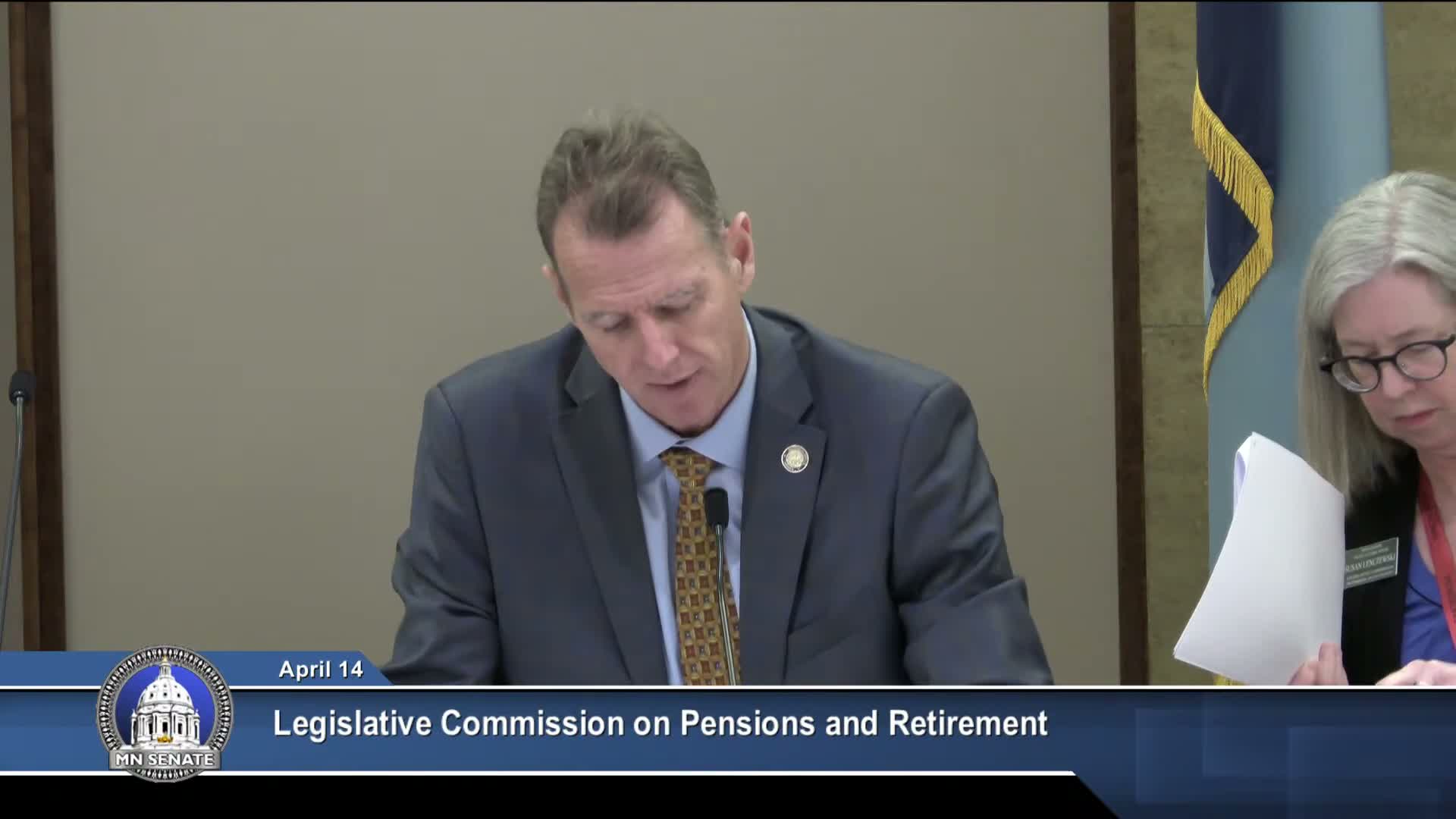
Senate File 4767, introduced by Senator Seaburger, would lower the maximum permissible full‑vesting period in local fire relief associations from 20 years to 10 years with a phased implementation schedule. Seaburger said the change would help recruitment and equity for older recruits and those who serve shorter terms.
State Auditor Julie Blaha provided data showing most relief associations (about 440) still use a 20‑year vesting schedule, while 30 use a 10‑year schedule and seven use 15 years. Blaha urged caution and deeper actuarial study before changing statewide rules. "We really would want to dig into the numbers quite a bit more, to be able to give you some assurance that you know how this will impact fire reliefs," she said.
Fire leadership and association representatives warned a mandated shorter vesting period could trigger earlier retirements, weaken fund solvency and impose unplanned costs on municipalities. Zach Lundberg and Chief Andrew Slama urged more stakeholder work and actuarial forecasting before a statewide mandate.
Senator Seaburger moved several technical amendments. The committee adopted a 4a amendment (technical) and a 5a amendment addressing fraud definitions and forfeiture; the author said the fraud language would allow municipal determinations to forfeit fire‑relief benefits for individuals found to have committed fraud, with appeal rights to the relief trustees and the Court of Appeals.
Members asked for a longer phase‑in runway and additional modeling to avoid unintended short‑term staffing losses. After discussion the author agreed to lay the bill over to allow further work on phased implementation and double‑dip offsets.
Outcome: The commission adopted technical and fraud‑related amendments, discussed extending the phase‑in from three to six years, and laid SF4767 over so authors and stakeholders can refine the bill and supply actuarial analysis.
State Auditor Julie Blaha provided data showing most relief associations (about 440) still use a 20‑year vesting schedule, while 30 use a 10‑year schedule and seven use 15 years. Blaha urged caution and deeper actuarial study before changing statewide rules. "We really would want to dig into the numbers quite a bit more, to be able to give you some assurance that you know how this will impact fire reliefs," she said.
Fire leadership and association representatives warned a mandated shorter vesting period could trigger earlier retirements, weaken fund solvency and impose unplanned costs on municipalities. Zach Lundberg and Chief Andrew Slama urged more stakeholder work and actuarial forecasting before a statewide mandate.
Senator Seaburger moved several technical amendments. The committee adopted a 4a amendment (technical) and a 5a amendment addressing fraud definitions and forfeiture; the author said the fraud language would allow municipal determinations to forfeit fire‑relief benefits for individuals found to have committed fraud, with appeal rights to the relief trustees and the Court of Appeals.
Members asked for a longer phase‑in runway and additional modeling to avoid unintended short‑term staffing losses. After discussion the author agreed to lay the bill over to allow further work on phased implementation and double‑dip offsets.
Outcome: The commission adopted technical and fraud‑related amendments, discussed extending the phase‑in from three to six years, and laid SF4767 over so authors and stakeholders can refine the bill and supply actuarial analysis.
View the Full Meeting & All Its Details
This article offers just a summary. Unlock complete video, transcripts, and insights as a Founder Member.
✓
Watch full, unedited meeting videos
✓
Search every word spoken in unlimited transcripts
✓
AI summaries & real-time alerts (all government levels)
✓
Permanent access to expanding government content
30-day money-back guarantee
