Senate committee advances voluntary tax‑favored ‘catastrophe savings account’ for homeowners amid fraud‑oversight questions
April 14, 2026 | 2026 Legislature CO, Colorado
This article was created by AI summarizing key points discussed. AI makes mistakes, so for full details and context, please refer to the video of the full meeting. Please report any errors so we can fix them. Report an error »
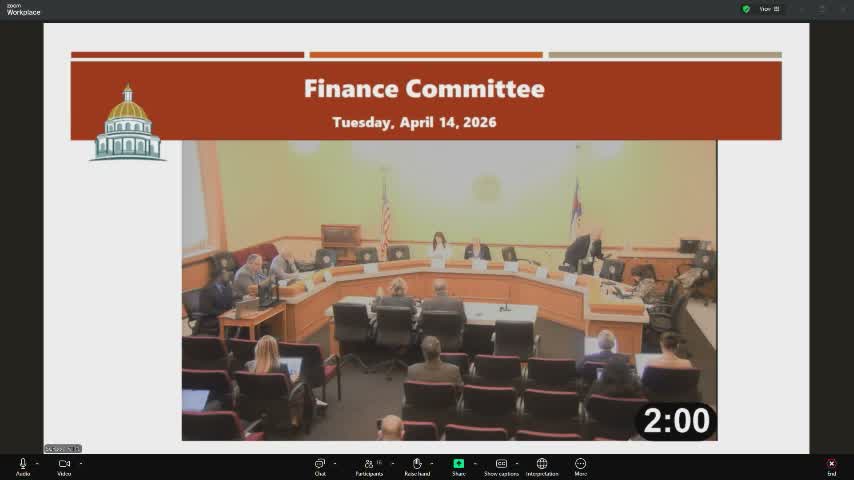
Senate Finance voted to send SB 26‑049, as amended, to Appropriations after hearing hours of testimony for and against the bill’s tax‑favored catastrophic savings accounts (CSAs).
Senator Frizzell, the sponsor, said the strike‑below narrows the original bill to a voluntary income‑tax deduction for contributions to a catastrophe savings account that homeowners could use to pay insurance deductibles or to fund mitigation like hail‑resistant or fire‑resistant roofs. "This is a voluntary, tax‑free savings account money to be used to meet that deductible," she said.
Senator Schneider, co‑prime, said the intent is to help homeowners plan for out‑of‑pocket costs and to encourage mitigation without imposing new fees or mandates. Support came from municipal leagues, chambers of commerce, insurers’ trade groups and industry associations, many of whom moved to neutral or monitor positions after the amendment.
Department of Revenue’s Josh Penns compared the proposed account to 529 and ABLE structures but warned of problems with past tax‑advantaged savings accounts (first‑time homebuyer accounts were repealed after misuse). He described how DOR would expect taxpayers to file a schedule and attach bank statements and receipts for qualifying distributions so examiners can verify qualifying use: "We would... require them to attach bank statements that proved out those amounts," he said. Penns said administration could be manual and would likely require Gentax programming or a third‑party administrator and that the DOR’s oversight would create ongoing costs.
Committee members probed fraud and recapture rules and asked whether CSA funds would be exempt from levy and garnishment; DOR noted that some policy text remained under discussion and that the department would rely on rulemaking and sampling to detect misuse. The sponsors adopted two sponsor amendments (L004 and L005) to clarify administration and levy/attachment language. The committee moved SB 49 to Appropriations by a 7–2 vote.
What happens next: Appropriations will evaluate DOR’s revised fiscal note and the revenue impact of the deduction before the bill advances.
Senator Frizzell, the sponsor, said the strike‑below narrows the original bill to a voluntary income‑tax deduction for contributions to a catastrophe savings account that homeowners could use to pay insurance deductibles or to fund mitigation like hail‑resistant or fire‑resistant roofs. "This is a voluntary, tax‑free savings account money to be used to meet that deductible," she said.
Senator Schneider, co‑prime, said the intent is to help homeowners plan for out‑of‑pocket costs and to encourage mitigation without imposing new fees or mandates. Support came from municipal leagues, chambers of commerce, insurers’ trade groups and industry associations, many of whom moved to neutral or monitor positions after the amendment.
Department of Revenue’s Josh Penns compared the proposed account to 529 and ABLE structures but warned of problems with past tax‑advantaged savings accounts (first‑time homebuyer accounts were repealed after misuse). He described how DOR would expect taxpayers to file a schedule and attach bank statements and receipts for qualifying distributions so examiners can verify qualifying use: "We would... require them to attach bank statements that proved out those amounts," he said. Penns said administration could be manual and would likely require Gentax programming or a third‑party administrator and that the DOR’s oversight would create ongoing costs.
Committee members probed fraud and recapture rules and asked whether CSA funds would be exempt from levy and garnishment; DOR noted that some policy text remained under discussion and that the department would rely on rulemaking and sampling to detect misuse. The sponsors adopted two sponsor amendments (L004 and L005) to clarify administration and levy/attachment language. The committee moved SB 49 to Appropriations by a 7–2 vote.
What happens next: Appropriations will evaluate DOR’s revised fiscal note and the revenue impact of the deduction before the bill advances.
View the Full Meeting & All Its Details
This article offers just a summary. Unlock complete video, transcripts, and insights as a Founder Member.
✓
Watch full, unedited meeting videos
✓
Search every word spoken in unlimited transcripts
✓
AI summaries & real-time alerts (all government levels)
✓
Permanent access to expanding government content
30-day money-back guarantee
